
ai mock interview
A Recruiter's Take: Why You Need an AI Voice-Based Mock Interview Tool
By Job Sparrow Team
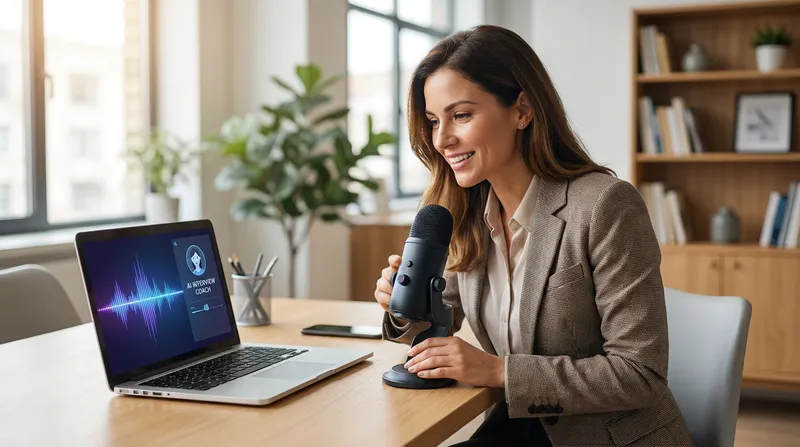
You have rehearsed your answers a dozen times. You typed them into a text generator, read them off a screen, and practiced in front of a mirror. But the moment the hiring manager asks the first question, you freeze. Your mind goes blank, you start rambling, and you fill the silence with filler words.
This happens because typing answers or talking to a mirror fails to replicate the heavy cognitive load of speaking to a real person. When you are in the hot seat, you are not just recalling facts. You are managing your breathing, maintaining eye contact, and trying to sound natural.
Our team has reviewed over 100,000 resumes and hired candidates across Australia, New Zealand, the United States, Singapore, and Hong Kong. We know exactly what hiring managers look for, and a perfectly typed script is not it. Landing a job requires a structured journey: Diagnose, Position, Execute, Prepare, and Close.
Mock interviews sit right at the heart of the Prepare stage. To truly succeed, you need an AI mock interview tool that tests your verbal delivery under pressure. Here is a recruiter's perspective on why voice-based practice is the ultimate key to landing your next job offer.
The illusion of interview readiness: why mirror practice fails
Many job seekers rely on text-based tools to prepare for interviews. They type prompts into ChatGPT, copy the generated answers, and try to memorize them. This creates a dangerous false sense of security. Reading a perfect answer on a screen feels great, but it does not prepare your nervous system for a live conversation.
Speaking out loud requires a completely different set of neurological pathways than writing. When you practice in front of a mirror, you are not experiencing the pressure of an unpredictable dialogue. When you practice with friends or family members, they often provide biased, overly polite feedback that fails to prepare you for tough, probing questions.
According to research on performance anxiety published by the American Psychological Association, candidates experience a neurological threat response during interviews that causes them to freeze. Closing this delivery gap requires realistic practice sessions under simulated pressure to rewrite the nervous system's expectations. This is why a high-quality job interview simulator is so critical.
Actionable Tips to Improve Your Readiness:
- Stop writing word-for-word scripts. Bullet point your main ideas instead. Memorizing scripts makes you sound robotic and increases the chances of freezing if you forget a single word.
- Use a realistic interview simulation. You need a tool that asks you unexpected questions out loud, forcing you to think on your feet.
- Prepare for conversational pivots. If you are worried about tricky topics, read our guide on How to Answer 'What Are Your Salary Expectations?' in Australia (2026 Scripts & Strategies) to build a flexible response strategy.
What hiring managers actually listen for (the recruiter lens)
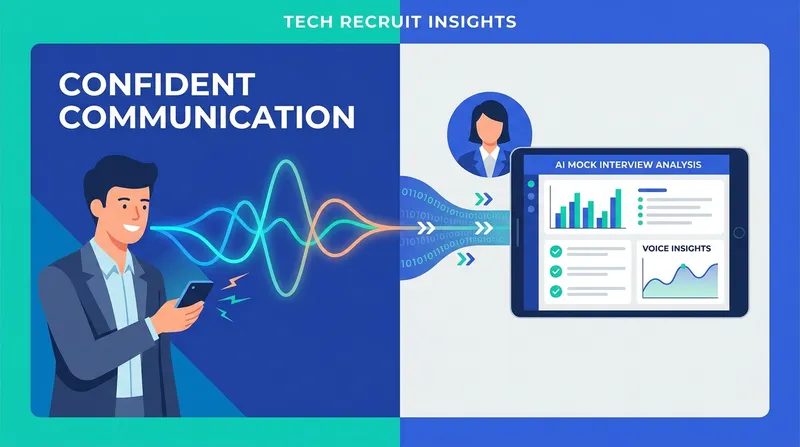
Most candidates believe that interviews are simply about having the right experience. From the recruiter's side of the table, the reality is very different. Hiring panels are actively listening for tone, pacing, and clarity.
If you have a habit of trailing off at the end of your sentences, a recruiter might subconsciously interpret that as a lack of confidence. Excessive filler words like "um," "like," and "you know" dilute the impact of your achievements. Delivering structured, well-paced answers demonstrates competence and authority, proving that you can communicate effectively with future clients or stakeholders.
Insights from Indeed's career research highlight that tone of voice is a critical nonverbal cue in interviews. A secure, confident tone builds rapport, while a monotonous or highly pitched voice often signals severe nervousness. Mastering your vocal delivery is only half the battle. Once your pacing and clarity are locked in, you need a structured framework to ensure your content is just as strong.
Structuring your success: the role of the STAR method
Recruiters love the STAR method (Situation, Task, Action, Result) because it provides a predictable framework for evaluating candidates. However, candidates often rush through the most important part of the framework: the Result.
When you use an AI interview prep tool, you can see exactly how much time you spent describing the background situation versus the actual business impact you delivered. The U.S. Department of Labor strongly recommends practicing interview responses out loud to build a framework for delivering clear, structured answers that highlight your measurable skills.
Actionable Tips for STAR Method Interview Practice:
- Keep the situation brief. Spend only 20 percent of your time setting the scene.
- Focus on "I" not "We." Clearly state the specific actions you took, not just what your team accomplished.
- Always end with metrics. Quantify your results whenever possible to leave a lasting impression.
How an AI interview coach builds real speaking confidence
Job hunting is incredibly stressful. For recent graduates and career changers, the emotional weight of proving yourself in a new arena can be overwhelming. Voice-based interview practice acts as a form of exposure therapy. By repeatedly placing yourself in a simulated high-pressure environment, you gradually desensitize yourself to the stress of being evaluated.
An AI mock interview tool provides objective, real-time feedback without the judgment you might fear from a human coach. You can stumble, pause, and try again in a completely safe environment. In fact, a dedicated AI mock interview session allows you to refine your messaging at your own pace.
Psychological insights from the Harvard Business Review confirm that conducting mock interviews helps candidates control their breathing under pressure and manage the physical symptoms of interview anxiety. This is especially crucial for migrants and career changers who are adapting to a new professional culture.
Ready to practice? Paste your job description URL into JobSparrow's AI mock interview tool and complete a full voice simulation now - free to start.
Actionable Tips to Build Confidence:
- Practice daily in short bursts. Do a 15-minute mock interview every day leading up to your real interview rather than cramming for three hours the night before.
- Focus on your breathing. Use the time while the AI is asking the question to take a deep breath from your diaphragm.
- Understand local nuances. If you are new to the market, read our comprehensive guide on How to Get a Job in Australia Without Local Experience (2026 Guide) to tailor your talking points to local employer expectations.
Role-specific scenarios: moving beyond generic questions
Generic interview questions like "What is your greatest weakness?" are becoming less common. Today, recruiters use predefined rubrics to score candidates objectively based on highly specific, role-based scenarios.
Industry reports from the Society for Human Resource Management (SHRM) note that recruiting teams are increasingly deploying AI to evaluate candidates beyond the written resume. If hiring managers are using AI rubrics to score you, you need an interview feedback AI to help you prepare.
Practicing role-specific interview questions prepares you for the exact pushback you will face. For example, a career changer moving into tech needs to practice defending their transferable skills, while an aspiring mining professional needs to prove their commitment to safety.
Actionable Tips for Targeted Preparation:
- Feed the job description into your practice tool. Ensure your mock interview AI is generating questions based on the exact requirements of the role you want.
- Prepare for industry-specific scenarios. Think about the worst-case scenarios in your target job and practice explaining how you would solve them.
- Tailor your entry-level narrative. If you are breaking into a new field, review our resource on FIFO Resume Australia 2026: How to Write an Entry-Level Mining Resume (No Experience) to learn how to position a lack of direct experience as an asset.
The JobSparrow advantage: from diagnosis to offer
JobSparrow is not just a resume builder. We are your AI career advisor, coaching you through the entire hunt from your initial diagnosis to your final job offer. Built by recruiters who have sat on both sides of the hiring table, our platform knows exactly what works in today's competitive job market.
In under 60 seconds, you can be mid-simulation, answering real, role-specific questions out loud, using nothing more than the job listing URL. You get a completely tailored, voice-based simulation that evaluates your answers, your tone, and your pacing.
Instead of paying hundreds of dollars for a single hour with a traditional career coach, you can practice as many times as you need. Start with a free CV diagnosis to see your recruiter-lens score, then unlock the full Offer Path for a one-time fee of $129 to access unlimited mock interviews. This ensures you walk into your real interview feeling prepared, polished, and confident.
Actionable Tips for Your Next Steps:
- Start with a free diagnosis. Upload your current resume to JobSparrow to identify the gaps costing you interviews.
- Launch a mock interview. Paste the link to your dream job into our AI interview practice online portal and complete a full simulation today.
- Prepare your closing strategy. A great interview ends with great questions. Use our guide on 15+ Best Questions to Ask at the End of an Interview in Australia & NZ (2026) to leave a lasting impression.
Ready to land more interviews and ace them with confidence? Start free at JobSparrow to diagnose your resume, then unlock the full Offer Path for a one-time fee of $129, with no auto-renewal.
Frequently Asked Questions
What exactly is an AI mock interview?
An AI mock interview is a dynamic, voice-based simulation where advanced software acts as the hiring manager. It asks role-specific questions, listens to your spoken answers, and provides instant, objective feedback on your delivery, tone, and content quality.
Can an AI interview prep tool really improve my confidence?
Yes. By simulating the pressure of a real conversation, it acts as a form of exposure therapy. Candidates get comfortable hearing their own voice, managing their breathing, and structuring their thoughts under simulated pressure, which directly translates to real-world confidence.
How does voice-based interview practice differ from using ChatGPT?
ChatGPT is text-based, which only helps you draft a written script. Voice-based practice forces you to speak out loud. This tests your memory, your pacing, and your ability to sound conversational and authentic rather than robotic and rehearsed.
Will an AI interview coach help me with the STAR method?
Absolutely. Advanced AI tools analyze the transcript of your spoken answers to ensure you clearly defined the Situation, Task, Action, and Result. The AI will flag areas where you rambled, missed key details, or failed to quantify your business impact.
Are AI interview simulators useful for career changers and migrants?
They are highly effective. They allow career changers to practice pivoting their transferable skills out loud. For migrants, these tools help candidates adapt to local communication styles, cultural expectations, and pacing norms in competitive markets like Australia and New Zealand.
Tags
Keep reading
Recommended articles.
ai mock interview · interview prep
Last-Minute Interview Prep: Generate a Custom AI Mock Interview from Any Job URL
Need last-minute interview prep? Generate a custom AI mock interview from any job URL in seconds with JobSparrow. Practice out loud and land the offer.
interview preparation · career advice
Ace Your AU & NZ Interview: 5 Signs You Need an AI Prep Tool
Beat interview anxiety with AI mock interviews for AU & NZ. Practice role-specific questions, get instant feedback, and build real confidence. Try free.
ai · interview preparation
Ethical AI for Interviews: How to Prepare and Build Confidence Without Cheating
Learn how to use AI ethically for interview prep without cheating. Build real confidence with mock interviews and tailored practice for AU/NZ jobs.