
australia visa sponsorship
How to Get a Job in Australia from Overseas in 2026: Visa Sponsorship and Resume Strategy
By Job Sparrow Team
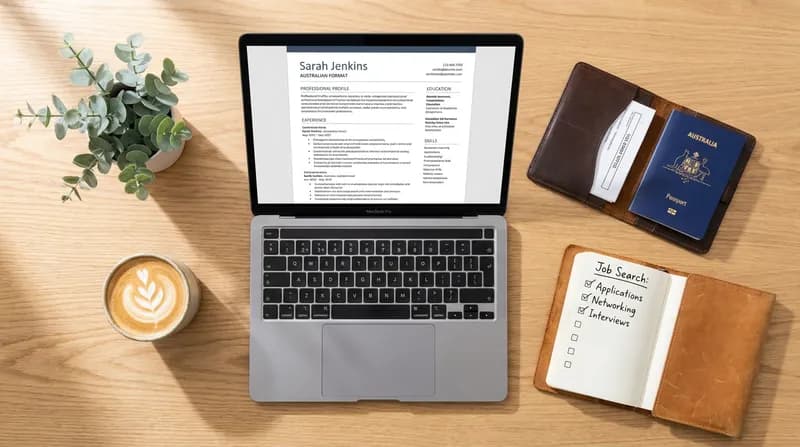
The offshore penalty: Why applying for Australian jobs from abroad is so hard
You have sent dozens, perhaps hundreds, of applications to Australian employers this month. The result is almost always complete silence or an automated rejection email. The problem is not your skill level or your years of experience. The problem is that your resume format screams "overseas applicant", you lack local work rights, and employers are terrified of the visa sponsorship paperwork, costs, and wait times.
We know this because the team behind JobSparrow has reviewed over 100,000 resumes and hired across four major global markets, including Australia and New Zealand. We understand both sides of the hiring table. When recruiters look at an offshore application, they see risk. They see a candidate who might take six months to arrive or who might fail the visa health checks. To get a job in Australia from overseas in 2026, you must eliminate that perceived risk. You need to position yourself as a safe, ready-to-hire professional.
This guide walks you through the JobSparrow Offer Path, from diagnosis to close. We will show you exactly how to navigate the 2026 visa changes, format an Australian-style resume, and write a cover letter that directly addresses employer hesitation.
Actionable Tip: Not sure where your current CV stands? Get your free recruiter-lens score at JobSparrow and see the exact gaps holding you back.
The 2026 visa landscape: Moving from the 482 TSS to the Skills in Demand visa
The Australian immigration system is undergoing a massive transformation. For years, the Temporary Skill Shortage visa subclass 482 was the primary route for employer-sponsored migration. However, the government is officially phasing out the 482 visa in favor of the new Skills in Demand (SID) visa.
This legislative shift introduces three distinct pathways for skilled workers. The Specialist Skills pathway targets highly paid professionals in cutting-edge industries. The Core Skills pathway focuses on the bulk of the skilled workforce, relying on updated occupation lists. Finally, the Essential Skills pathway is designed for lower-paid workers in critical sectors like caregiving and agriculture. Note that the SID framework is specific to Australia. If you are applying to New Zealand employers, you should explore the Accredited Employer Work Visa (AEWV) system instead.
According to the Parliament of Australia, visa applicants must still be nominated by an approved sponsor and prove they have the required skills via a formal assessment. The core requirements remain strict, but the new SID visa offers faster processing times and clearer pathways to Permanent Residency (PR).
Actionable Tip: You must update your vocabulary immediately. When speaking to recruiters or writing your cover letter, stop referencing the "482 visa". Instead, state that you are seeking sponsorship under the new "Skills in Demand visa program". This signals to employers that you are highly informed and proactive about your migration journey.
Is your profession on the skill shortage list Australia 2026?
Applying for jobs that are not officially recognized as being in shortage is a massive waste of your time. Employers cannot legally sponsor you unless your occupation is listed on the government's approved registers.
In 2026, the old MLTSSL and STSOL lists are being replaced by the Core Skills Occupations List (CSOL). This consolidated list targets the Core Skills Stream for the new Skills in Demand visa. According to Jobs and Skills Australia (JSA), the CSOL serves as the official government baseline for which jobs are eligible for employer sponsorship. If your job is not on this list, your chances of securing an employer-sponsored visa are virtually zero.
Actionable Tip: First, find your exact ANZSCO (Australian and New Zealand Standard Classification of Occupations) code. Second, and most importantly, secure a formal skills assessment from the relevant Australian authority before you start applying for jobs. Whether it is the Australian Computer Society (ACS) for IT professionals or another body, having this document ready drastically reduces the perceived risk for the employer. If you are an engineer, you can learn more by reading our Engineers Australia CDR guide.

Where to find Australia visa sponsorship jobs in 2026
Not all Australian cities are hiring equally, and not all industries have the budget to sponsor overseas talent. If you want to increase your success rate, you must target the right locations and the right sectors.
Research from the SEEK Employment Report shows that Western Australia and South Australia are experiencing continued job ad growth. These regions have massive skills deficits in Engineering, Construction, Mining, and Artificial Intelligence. Employers in these states are far more willing to navigate the visa sponsorship process because local talent is simply unavailable.
To streamline your search, JobSparrow's smart job search feature aggregates and ranks sponsored roles across SEEK, LinkedIn, and Indeed into one unified dashboard, matched directly to your profile and preferences.
Actionable Tip: Use SEEK (Australia's largest job board) strategically. Do not just search for your job title. Add keywords like "sponsorship available", "visa sponsorship", or "Skills in Demand visa" to your search queries. Furthermore, make sure your professional online presence clearly states your readiness to relocate. For specific examples on how to do this, check out our guide on LinkedIn profile examples for migrants.
How to format an Australian resume to beat the ATS (and look local)
A major reason offshore candidates fail is that their resumes look distinctly foreign. Furthermore, up to 75% of applications are rejected by Applicant Tracking Systems (ATS) before human review. If you submit a one-page US-style resume or a European CV with a photograph and your marital status, Australian recruiters will reject it immediately.
Australian recruiters expect a detailed, comprehensive document. A standard Australian style CV format is typically three to four pages long. It must thoroughly outline your responsibilities, key achievements, and technical skills for each role you have held over the past ten years. To pass these digital filters, you must embed your exact ANZSCO code and occupation title directly into your resume summary.
Actionable Tip: Remove your photograph, date of birth, religion, and marital status from your resume. These details violate Australian anti-discrimination laws and make recruiters highly uncomfortable. Focus heavily on quantifiable achievements. If you are unsure about length, read our detailed breakdown on resume length in Australia.
To make this process effortless, JobSparrow's AI can analyze your master profile and generate a perfectly formatted, ATS-compliant Australian resume in under 60 seconds. Our system automatically structures your experience to meet local expectations, allowing you to choose from five tailored templates (Professional, Two Column, Elegant, Colorful, and Contemporary) that export directly to PDF or DOCX format.
Addressing your offshore status in the cover letter
Your cover letter is where you win or lose the sponsorship battle. Tailored applications can increase response rates by 40%, and your cover letter is the perfect place to customize your pitch. You cannot hide the fact that you are currently overseas. If you try to obscure your location, employers will feel misled when they eventually find out during the interview process.
Instead, tackle the employer's hesitation head-on. According to corporate immigration experts at BDO Australia, visa applicants must have at least two years of relevant skilled work experience in their nominated occupation. You need to explicitly confirm that you meet these strict criteria right in your opening paragraph.
Actionable Tip: Use this exact script framework in your cover letter:
"I am currently based in [Your Country] and am seeking employer sponsorship under the Skills in Demand visa. I have already completed my formal skills assessment with [Assessing Authority], I meet the two-year work experience requirement, and I am prepared to relocate within [Number] weeks of visa approval."
By stating this upfront, you answer the recruiter's biggest questions immediately. To ensure every cover letter is perfectly aligned with the job description, learn more about our automated approach in using AI to tailor your resume.
Nailing the interview: Beating the 'local experience' trap
We know this process is exhausting. Months of silence from employers, uncertainty about visa timelines, and the pressure of uprooting your life take a real toll. But if your resume and cover letter do their job, you will land an interview. The next step is designed to give you back a sense of control.
During the interview, you will immediately face the "local experience" trap. Australian hiring managers have a well-documented bias against candidates without local Australian experience. They worry that you will not understand the local market dynamics, workplace culture, or regulatory environment.
You must bridge the gap between your overseas achievements and the Australian context. If you managed a budget of 50 million rupees, convert it to Australian dollars. If you worked for the largest telecom company in your home country, compare it to an Australian equivalent like Telstra or Optus. This makes your experience tangible and relevant.
Actionable Tip: Preparation breeds confidence. Before your interview, use JobSparrow's AI mock interviews feature. Our system simulates real interview scenarios tailored to your specific role. For example, if you are applying for a civil engineer role in Perth, JobSparrow generates questions specific to Australian infrastructure regulations and the STAR method (Situation, Task, Action, Result), then gives you instant feedback on your answer clarity and delivery tone. For more strategies on this topic, read our guide on Australian job interview tips for migrants.
Your next steps on the Offer Path
Securing a job in Australia from overseas is a complex journey, but it is entirely possible when you use the right strategy. You must confirm your occupation is in demand, get your skills assessed early, target regions with genuine shortages, and format your application documents to meet strict local standards.
In our analysis of over 100,000 resumes, generic applications had a success rate of less than 1 percent. If you want to stand out, you need expert guidance to tailor every single application.
Actionable Tip: Ready to land more interviews? Start with a free diagnosis from JobSparrow at https://jobsparrow.ai/free-cv-review. Upload your current CV to see your recruiter-lens score and discover the exact gaps that are costing you interviews. Once you know where you stand, you can unlock the full Offer Path with the Land the Job membership, cancel anytime. Before you pay anyone for resume help, read the truth about free resume reviews.
Frequently asked questions
Can I apply for jobs in Australia without a visa?
Yes, you can apply for jobs without a visa, but you must target employers who are approved standard business sponsors. You must also clearly state in your application that you require sponsorship under the new Skills in Demand visa program. Without this upfront honesty, employers may feel misled later in the process.
What is the difference between the 482 visa and the new Skills in Demand visa?
The Skills in Demand visa is officially replacing the legacy 482 visa in 2026. The new program offers clearer pathways to Permanent Residency (PR), faster processing times, and gives workers the ability to change employers more easily without immediately losing their visa status.
How long should an Australian resume be in 2026?
Unlike the United States market which heavily favors a one-page document, Australian recruiters expect a highly detailed three to four-page CV. This document must thoroughly outline your daily responsibilities, key achievements, and technical skills for every role.
Do I need a skills assessment before applying for sponsored jobs?
While it is not legally required just to submit an application, having a completed skills assessment from a recognized body (like ACS or Engineers Australia) drastically increases your chances of getting hired. It removes a major hurdle and potential delay for the sponsoring employer.
How do I find companies that sponsor visas in Australia?
Use major job boards like SEEK and filter your searches using specific keywords such as "sponsorship available" or "visa sponsorship". Additionally, you can check the Australian government's official public register of approved standard business sponsors to identify companies with a history of hiring overseas talent.
Tags
Keep reading
Recommended articles.
ats resume checker · ai resume writer
Why a 90% ATS Resume Checker Score Still Gets Rejected (And How an AI Resume Writer Fixes Your Gaps)
Hitting 90% on an ATS resume score checker and still getting rejected? Fix seniority mismatch and vague impact with a free CV diagnosis.
ats optimization · job search strategy
ATS Scanners vs Job Trackers: The $100/Month Trap (And Why You Are Still Rewriting Resumes at Midnight)
Stop paying for ATS scanners that leave you rewriting resumes at midnight. See why the manual approach fails and get a free recruiter-lens diagnosis today.
ai resume builder · chatgpt resume
AI Tool for Resume Writing: 7 Mistakes Costing You Interviews (And How to Fix Them)
Avoid common ChatGPT resume mistakes costing you interviews. Discover the best AI tool for resume writing to safely tailor your ATS-friendly CV.