
ats
ATS Resume Optimisation in AU & NZ (2026): Your Guide to Beating the Bots
By Job Sparrow Team
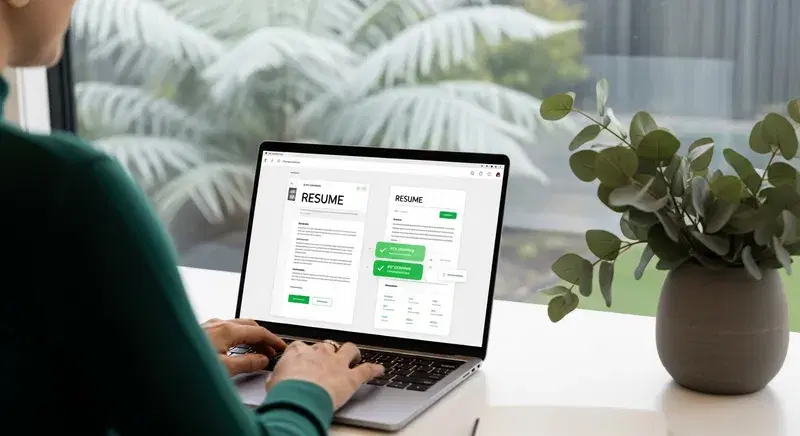
Are you sending your resume into a digital black hole? You spend hours perfecting it, hit 'submit', and then… silence. You're not alone: estimates suggest up to 75% of applications are rejected by software before ever reaching human eyes. It's a frustratingly common experience for job seekers in Australia and New Zealand. The problem often isn't your experience; it's that your resume never passed the bot.
Welcome to the world of Applicant Tracking Systems (ATS). These platforms are the gatekeepers of modern recruitment, and if your resume isn't formatted for them, you're starting at a major disadvantage. But the advice you find online is often generic, conflicting, or based on the US market, leaving you anxious and confused about AU & NZ conventions.
This guide cuts through the noise. We will provide a clear, localised strategy to conquer the ATS of today and tomorrow. We will explore whether resume optimisation is worth it, dive deep into the specific systems used in Australia and New Zealand, and show you how to blend the power of AI with your unique human touch to land your next role in 2026 and beyond.
What is an ATS and Why Does it Matter in Australia & New Zealand?
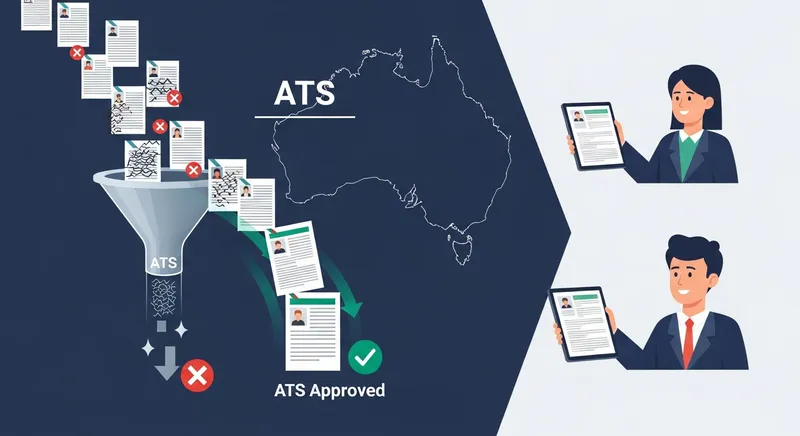
An Applicant Tracking System (ATS) is a software application that employers use to manage the recruitment process. Think of it as a digital filing cabinet for job applications. Its primary job is to collect, sort, and rank the hundreds, sometimes thousands, of resumes received for a single job opening.
For job seekers, its most critical function is the initial screening. The ATS parses your resume data, extracts key information like your skills, work history, and education, and then ranks your suitability against the job description. It is a filtering tool, designed to help recruiters focus on the most qualified candidates first. In the competitive AU & NZ job markets, understanding how to make your resume ATS-friendly is no longer optional; it's essential.
How Applicant Tracking Systems Actually Work (Beyond the Myths)
It's easy to imagine an ATS as a ruthless robot looking for any excuse to reject you. The reality is more nuanced. The process generally follows three steps:
- Parsing: The system scans your resume document and attempts to translate your text into structured data fields (e.g., 'Contact Info', 'Work Experience', 'Skills'). This is where formatting is crucial. Complex tables, columns, headers, or unusual fonts can confuse the parser, leading to your information being jumbled or lost.
- Storing: Your newly categorised information is stored in a candidate profile within the system.
- Ranking: When a recruiter searches for candidates, the ATS ranks profiles based on how well they match the keywords and criteria from the job description. This is where keyword optimisation comes into play.
Crucially, modern systems are rapidly evolving into 'Talent Intelligence' platforms. According to talent software leader PageUp, intelligent platforms are moving beyond simple keyword searching to skills-based matching. By 2026, we can expect more systems to use predictive analytics to suggest roles to candidates before they even apply. This means simply stuffing your resume with keywords is an outdated strategy; demonstrating a clear skills profile is the future.
Want to see how your current resume performs? Get an instant ATS analysis and match score with our Free AI CV Checker for AU & NZ.
The AU & NZ Difference: Localising Your ATS Strategy
Generic advice can be a trap. Here's what you need to know to adapt your resume for the Australian and New Zealand markets.
Resume vs. CV
In Australia and New Zealand, the terms 'resume' and 'CV' are used interchangeably. Don't stress about the name; focus on the content.
The Right Length
Forget the one-page rule common in the US. According to job market leader SEEK, a resume in Australia and New Zealand should be two to four pages, depending on your experience. Quality and relevance are more important than brevity. A graduate resume might be two pages, while a senior professional's could be four.
Personal Details to Exclude
To comply with local anti-discrimination laws and professional standards, your AU/NZ resume should not include a photo, your age, date of birth, marital status, or gender. Stick to your name, contact number, email, LinkedIn profile link, and general location (e.g., 'Sydney, NSW' or 'Auckland').
Best File Format: PDF or DOCX?
This is a common point of confusion. A text-based PDF is often the safest bet, as it preserves your formatting across all devices. However, some older ATS can struggle with PDFs. A simple, cleanly formatted .docx file is a reliable alternative. The golden rule: if the job application specifies a format, follow it exactly.
A Deep Dive into Common AU & NZ ATS Platforms
Not all ATS are created equal. Optimising for the specific platform can give you a significant edge.
Optimising for SEEK
As the region's largest job board, SEEK's platform is a unique ecosystem. When you apply, your SEEK profile information and your uploaded resume are both considered. Ensure your profile is 100% complete and that the resume you upload is tailored to the job. Use keywords from the ad in both your resume and your profile's 'Skills & Experience' summary to maximise visibility.
Understanding JobAdder (for Recruiters)
JobAdder is a popular platform used by many recruitment agencies across Australia and New Zealand. A key feature is its integration with powerful parsing technology. For example, their partnership with Daxtra allows for high-accuracy parsing of resumes in over 40 languages. This is excellent news for migrants, as it suggests the system is well-equipped to understand experience from international CVs, provided the formatting is clean.
Navigating PageUp (for Corporate Roles)
PageUp is a talent management platform used by many large corporations and universities in the region. As mentioned, PageUp focuses on intelligent 'skills matching' rather than just basic keyword counting. For you, this means focusing on clearly articulating your skills and abilities with real-world examples, not just listing them. A dedicated 'Key Skills' section with a mix of hard and soft skills is highly effective.
For example, see how a simple point can be optimised for a platform like PageUp:
- Before: Responsible for project management.
- Optimised: Led a portfolio of 5 concurrent projects, delivering 95% on time and within budget by leveraging advanced stakeholder engagement and Agile methodologies.
AI Resume Builders: A Modern Job Seeker's Toolkit
AI resume tools like JobSparrow promise to optimise your resume in minutes. But is the investment worth it?
The Pros: Speed, Optimisation, and Confidence
AI-powered platforms are brilliant at ensuring your resume passes the initial ATS test. They save you hours of tedious work by automatically tailoring your experience to match the keywords and requirements of a specific job. JobSparrow's Job-Specific Resume Tailoring feature, for instance, analyzes a job description and intelligently selects the most relevant points from your career history, giving you a highly targeted document in seconds. This speed allows you to focus on quality and apply for more of the right roles.
The Cons: The Dangers of Over-Optimisation
While powerful, AI is a tool, not a magic wand. Over-reliance can be risky. According to research, using AI to write your resume can create a generic document that lacks personality. Recruiters can often spot language that is too polished or full of buzzwords, which can be a red flag.
Furthermore, studies have found that some AI screening tools can exhibit biases. This underscores the need for a human to always be in control of the final product. Tools that use a 'Master Career Profile' built by you ensure the AI tailors your real achievements, not generating content from scratch, which significantly reduces these risks.
The Verdict: A Cost-Benefit Analysis
So, is it worth it? For a serious job seeker in 2026, the answer is a resounding yes, provided you use the tools correctly.
- Free Tools: Can offer basic formatting checks but lack the sophisticated tailoring needed for competitive roles.
- Professional Writers: Can be very expensive (hundreds of dollars) and provide you with a single great resume, but that doesn't help you tailor it for the 20 other jobs you want to apply for.
- AI Platforms (like JobSparrow): Offer the best of both worlds. They are a scalable, cost-effective investment that empowers you to create dozens of tailored, high-quality applications quickly.
The Human + AI Hybrid: Your Winning Strategy for 2026
The most effective approach is not AI-only or human-only; it's a hybrid. Use technology for efficiency and your own expertise for authenticity.
- Build Your Foundation: Start by creating a comprehensive career history. A tool like JobSparrow's
Master Career Profileacts as your single source of truth, storing every role, skill, and achievement. You can think of this as The Master Resume: Your Secret Weapon for a Faster, Smarter Job Search. - Generate with AI: For each job you apply for, use an AI tool like JobSparrow to instantly generate a first draft. It will do the heavy lifting of keyword matching and relevance ranking, creating a resume that is structurally optimized to Beat the Bots.
- Refine with Human Intelligence: This is the crucial final step. Read the AI-generated resume. Does it sound like you? Is the narrative compelling? Add your personal touch, quantify achievements with specific metrics (e.g., 'increased sales by 15%'), and ensure it tells a story of your unique value. You can then use JobSparrow to create an Intelligent Cover Letter to complete your application.
The Hybrid Advantage: Job seekers using this method report reducing their application time from over an hour per role to just a few minutes, without sacrificing quality.
Actionable Guides for Your Situation
Your circumstances shape your job search. Here's targeted advice for migrants and career changers.
For Migrants to Australia & New Zealand
Moving to a new country presents unique challenges. The Australian Government's Job Search site advises matching your skills to the job and keeping personal information minimal.
- Actionable Tip: Clearly and concisely state your work rights or visa status (e.g., 'Australian Permanent Resident' or 'Holds a Post-Study Work Visa valid until 2028') in your contact information section. This immediately answers a key question for employers.
- For those applying in New Zealand, the government's official careers.govt.nz site offers a CV builder to ensure you include what local employers expect.
For Career Changers
When changing careers, your resume must connect your past experience to your future goals. As experts note, you must be strategic in highlighting transferable skills.
- Actionable Tip: Create a 'Summary' or 'Professional Profile' at the top of your resume. Use this 3-4 line section to explicitly state your career goal and connect your top 2-3 transferable skills (e.g., project management, stakeholder engagement) to the requirements of the new industry. For more detailed guidance, explore this How to Write a Career Change Resume in 2026.
Your Path to More Interviews
Navigating the world of ATS in Australia and New Zealand doesn't have to be a game of chance. By understanding local conventions, tailoring for specific platforms, and adopting a smart human-AI hybrid strategy, you can beat the bots and get your resume into the right hands.
This approach transforms your resume from a passive document into a powerful tool that actively works to get you interviews. Once you've secured that meeting, you can use tools like JobSparrow's AI Mock Interviews to Ace Your AU & NZ Interview.
Ready to stop guessing and start getting results? Upload your resume to JobSparrow and let your personal AI career assistant create a job-winning application in minutes.
Frequently Asked Questions
What is a good ATS score?
There is no universal 'good' score; it depends on the recruiter's settings. However, a strong target is a match score of 80% or higher for the specific job you're targeting. This indicates a high alignment between your resume and the job description. Instead of a generic score, focus on achieving the highest possible match for each individual application through careful tailoring.
Is it keyword stuffing if I match the job description?
It becomes keyword stuffing when terms are used unnaturally or out of context, making the resume unreadable for a human. The goal is 'keyword optimisation'. A good strategy is to mirror the job description's language naturally within your achievement-based bullet points. For example, if the ad requires 'stakeholder engagement', describe a project where you 'successfully engaged key stakeholders to deliver the project ahead of schedule'. This provides context that satisfies both the ATS and the recruiter.
Do I need a photo on my CV for New Zealand jobs?
No. Similar to Australia, professional convention in New Zealand is to not include a photograph on your CV. This helps prevent unconscious bias in the hiring process. The official advice from careers.govt.nz does not include a photo as a standard component.
Can I use an AI resume builder for free?
Many platforms offer limited free versions, which are useful for basic checks. However, premium AI resume builders provide the most crucial features for a competitive job search: unlimited tailored resumes, advanced keyword optimisation, and matching cover letters. The free version is a good starting point, but a paid service provides a true competitive advantage.
How is JobSparrow different from other AI resume tools?
JobSparrow is specifically designed for the Australia and New Zealand job markets, understanding local conventions like resume length and key platforms like SEEK.
Should I use a two-column resume for jobs in Australia?
It is strongly recommended to avoid two-column resumes. Many ATS parsers read content from left to right, line by line. A two-column format can cause the system to read across the columns, jumbling your information into nonsensical sentences (e.g., merging a job title from the left column with a university name from the right). A single-column format is the safest and most reliable choice.
Tags
Keep reading
Recommended articles.
seek · job search
Stand Out on SEEK in 2026: A Guide to Beat the Algorithm
Beat the SEEK algorithm in AU & NZ. Our guide helps you rank higher in recruiter searches, optimize your profile, and land more interviews. Get noticed.
ai · job search
The AI Co-Pilot: How to Write, Practice & Track Your Way to a Job in Australia & NZ
Create ATS-optimized resumes in 60 seconds with AI. Tailor applications, practice interviews, and track your search—all in one platform. Land your dream job.
job search · resume tips
Job Application Black Hole AU/NZ: 8 Reasons You're Not Hearing Back & How to Fix It
Getting ghosted by jobs in AU/NZ? We reveal 8 reasons your application is ignored and a framework to get seen. Get your free resume match score now.