
resume writing
Master Resume vs. Tailored Resume: A Strategy to Beat the ATS and Land More Interviews
By Job Sparrow Team

Introduction: Stop Applying, Start Strategizing
You've spent hours perfecting your resume. You've applied to dozens, maybe even hundreds, of jobs. And the response? Silence. It's a frustrating and demoralizing experience that leaves many talented professionals questioning their skills and experience. But what if the problem isn't you, but your strategy?
It's time to stop treating your resume as a historical log of everything you've ever done and start viewing it as a strategic marketing tool. The key to getting more interviews isn't applying more; it's applying smarter. This guide will teach you the two-part resume strategy used by top career coaches: maintaining a comprehensive Master Resume while submitting a highly Tailored Resume for every single application. This approach will help you beat the bots and finally get your qualifications in front of a human recruiter—and we'll show you how to automate it with a free trial.
Ready to build a resume that beats the bots? Upload your existing resume to JobSparrow and create your Master Career Profile in minutes—get started today with our free trial.
Why Your Generic Resume is Being Ignored: The ATS Black Hole
Before a hiring manager ever sees your application, it first has to pass a digital gatekeeper: the Applicant Tracking System (ATS). Imagine spending hours on your application, only to have it rejected by a robot in seconds. For many, that's the reality. An ATS is software used by companies to manage and filter the high volume of applications they receive. In fact, according to research from recruitment firm Robert Half, over 95% of large companies rely on these systems.
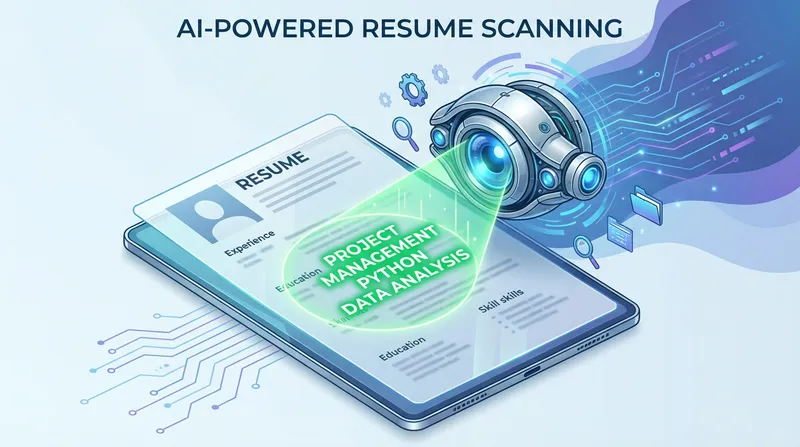
The ATS doesn't read your resume like a human does. It scans for specific keywords and phrases that match the job description. If your resume doesn't contain a high enough percentage of these keywords, it gets automatically rejected. Sending the same generic resume to every job is the fastest way to get lost in this ATS "black hole."
Master Resume vs. Tailored Resume: At a Glance
To beat the system, you need two documents. Here's a quick breakdown of the difference:
| Feature | Master Resume | Tailored Resume |
|---|---|---|
| Purpose | Personal Career Database | Targeted Marketing Document |
| Audience | For Your Eyes Only | Recruiters & Hiring Managers |
| Length | Unlimited | 1-2 Pages Maximum |
| Content | Every job, skill, & project ever | Only the most relevant details for a specific job |
| When to Use | To build tailored resumes from | For every single job application |
The Two-Part Solution: What is a Master Resume?
The idea of customizing every application can sound exhausting, but that's where the Master Resume comes in. Think of it as your private, all-in-one career database. As career experts at the University of Southern Maine explain, a Master Resume is a "living document" that contains the full length and breadth of your professional life.
This document is for your eyes only. It has no page limit and should include every single role, responsibility, project, skill, and accomplishment from your entire career. It's your single source of truth, a comprehensive repository that you will pull from to create targeted resumes. You don't send this to employers; you use it as your strategic foundation.
How to Build Your Comprehensive Master Resume
Creating your Master Resume is a one-time investment that will save you countless hours later. Open a simple document and start building. As guidance from Santa Monica College suggests, this is a living document you'll continuously update.
- Contact Information: Start with your name, phone number, email, and LinkedIn profile URL.
- Professional Summary: Write several versions of your summary tailored to different career goals you might have.
- Work Experience: For every job you've held, list the company, your title, and dates. Under each role, write down every responsibility and accomplishment you can think of. Don't worry about length; focus on being comprehensive. Quantify achievements with numbers wherever possible.
- Skills: Create a massive list of every skill you possess. Categorize them: technical skills (e.g., Python, Salesforce), soft skills (e.g., Leadership, Communication), languages, and certifications.
- Projects: Detail any significant projects you've worked on, both professionally and personally. Describe the project's goal, your role, and the outcome.
- Education & Awards: List all degrees, certifications, publications, and professional awards.
For Recent Graduates: Your Master Resume should include relevant coursework, academic projects, volunteer work, and extracurricular leadership roles. These all count as valuable experience! Our How to Write a Resume With No Experience guide can help you brainstorm.
JobSparrow Tip: You can kickstart this process by uploading your existing resume to JobSparrow. Our AI will import your information into a Master Career Profile, creating a centralized, easy-to-manage database that you can build upon.
From Master to Masterpiece: How to Tailor Your Resume for Any Job
With your Master Resume complete, you're ready to create the masterpiece: the tailored resume. This is the concise, 1-2 page marketing document that you'll actually send to employers. The goal is simple: to hold up a mirror to the job description, showing the recruiter that you are the perfect solution to their problem. This process involves three key steps: Analyze, Bridge, and Optimize.
Step 1: Perform a Job Description Analysis
Before you write a single word, become an expert on the job description (JD). This document is your cheat sheet. Print it out or copy the text into a document and grab a highlighter.
- Identify Keywords: Highlight the core responsibilities and qualifications. Look for specific nouns, skills, and software mentioned repeatedly. These are your primary keywords.
- Note Soft Skills: Pay attention to cultural words like "fast-paced environment," "collaborative team," or "strong attention to detail."
- Create Your Blueprint: Make two lists: one for "hard skills" (e.g., SEO, Financial Modeling) and one for "soft skills" (e.g., Stakeholder Management).
According to Harvard Business Review, an effective resume demonstrates a mix of both technical skills and the soft skills mentioned in the job description to show you are both capable and a good cultural fit.
JobSparrow Tip: A Job Application Tracker with Skill Gap Analysis automates this. When you track a job in JobSparrow, our AI reads the job description, identifies the top 10-15 must-have skills, and shows you exactly how your profile stacks up, providing a clear blueprint for tailoring.
Step 2: Bridge the Gap with Your Master Resume
Now, turn to your Master Resume. With your keyword list in hand, you're going "shopping" for the most relevant experiences. Copy and paste the bullet points, skills, and project descriptions that best align with the job description into a new, blank document. Your goal is to build a new resume from these powerful, pre-written components.
Don't just copy and paste, though. Tweak the wording to mirror the language in the job description. If the JD asks for "client relationship management," and your Master Resume says "account management," change it. As career advisors at Ohio Northern University recommend, this is critical for passing the ATS.
Example: Before & After Tailoring
- Generic Bullet Point (from Master Resume):
Managed team projects and ensured timely completion.
- Tailored Bullet Point (for a Project Manager role requiring Agile & Jira):
Led cross-functional Agile team of 8 developers using Jira, delivering all 12 sprint cycles on schedule and 10% under budget.
Step 3: Optimize for ATS and Human Eyes
Finally, ensure your formatting is clean and professional. While a creative design might look nice, it can be unreadable to an ATS. The University of Arizona's Career Services warns against using templates with columns, text boxes, or special formatting that can confuse the software.
Follow these best practices for an ATS-friendly resume:
- Use a simple, chronological format.
- Choose a standard, readable font like Arial, Calibri, or Georgia.
- Use standard section headings like "Work Experience," "Skills," and "Education."
- Avoid graphics, charts, and photos.
- Save your final document as a .docx or PDF, based on the employer's instructions.
JobSparrow Tip: The manual process of tailoring can take hours. JobSparrow's Job-Specific Resume Tailoring automates it. Our AI analyzes the job, selects the most relevant details from your Master Profile, and rewrites them with the right keywords—generating a perfectly formatted, tailored resume in under 60 seconds.
Special Strategy: Tailoring a Resume for a Career Change
For career changers, the tailored resume strategy is even more critical. Your goal is to connect the dots for the recruiter, showing how your past experience is relevant to this new field. As experts at Wharton Executive Education recommend, a "combination" resume format can be highly effective.
This format starts with a powerful Summary of Qualifications section at the top. This section explicitly highlights your key transferable skills, matching them to the new role's requirements before the recruiter even gets to your work history. Your Master Resume is the perfect place to brainstorm these translations.
Example: Translating Transferable Skills
- Career Change: Teacher → Project Manager
Classroom Management→Stakeholder Communication & Training DeliveryLesson Planning→Project Timeline Development & Resource AllocationParent-Teacher Conferences→Client Relationship Management & Reporting
Feeling like you don't meet every requirement? Learn How to Apply for a Job You're Not 100% Qualified For.
Conclusion: Work Smarter, Not Harder
The modern job search is a game of strategy, not just volume. Mastering the difference between a master resume vs. tailored resume is the most effective change you can make. Your Master Resume acts as your career database, saving you time, while your Tailored Resume becomes a powerful marketing document designed to beat the ATS and capture a recruiter's attention.
This strategic effort shows employers that you are diligent, thoughtful, and genuinely interested in the role. It is the single most effective way to increase your interview rate. You've got this.
Ready to land more interviews with less effort? Upload your resume to JobSparrow to create your Master Career Profile and let our AI generate your first tailored resume in minutes. Start your free trial today and discover how easy it is to build a winning application.
Frequently Asked Questions
What is the main difference between a master resume and a tailored resume?
The key difference in the master resume vs. tailored resume strategy is their purpose and audience. The master resume is your private, comprehensive career database (unlimited pages) that includes every skill and accomplishment. The tailored resume is a concise, 1-2 page document you create from it, customized specifically for the job you're applying to. You never send the master resume to employers.
How long should my master resume be?
There is no page limit for a master resume. It should be as long as necessary to capture your entire professional history in detail. Think of it as your personal career archive that you will continuously update, not a document with length constraints.
Is it really necessary to tailor my resume for every single job application?
Yes, it is absolutely critical in today's job market. Most companies use Applicant Tracking Systems (ATS) that prioritize resumes matching the keywords in the job description. A generic resume will likely be filtered out before a human ever sees it.
How do I find the right keywords to add to my resume?
The best place to find keywords is in the "Responsibilities" and "Qualifications" sections of the job description itself. Look for specific skills, software, and qualifications that are mentioned multiple times. These are the terms the ATS and the recruiter will be looking for.
Can I use a creative or graphically designed resume template?
While creative templates can be visually appealing, they are often unreadable by Applicant Tracking Systems. For online applications, it is safest to use a clean, standard, single-column format with no graphics, tables, or columns. This ensures your information is parsed correctly by the software.
Does this master resume strategy work for career changers?
This strategy is especially powerful for career changers. Your master resume allows you to inventory all your skills, making it much easier to identify transferable skills (like communication or project management) that are relevant to your new field. You can then strategically highlight these skills on your tailored resume.
Tags
Keep reading
Recommended articles.
job search · resume writing
Seek Profile vs Tailored Resume: Your 2026 Guide to Getting More Interviews in Australia
Stop guessing how to get interviews. Learn the 2026 AU/NZ strategy for using your Seek profile and tailored resume to get hired faster. Your guide to winning.
ai resume writer · resume writing
Pros & Cons of Resume Optimization: AI vs Human | Job Sparrow
Explore the pros and cons of resume optimization. Compare AI vs. human writers to see what lands more interviews. Start optimizing with Job Sparrow now!
job search · resume tips
Job Application Black Hole AU/NZ: 8 Reasons You're Not Hearing Back & How to Fix It
Getting ghosted by jobs in AU/NZ? We reveal 8 reasons your application is ignored and a framework to get seen. Get your free resume match score now.