
spark hire
Spark Hire Interview Questions & Answers (2026): Think Time, Retake Rules & AI Scoring
By Job Sparrow Team
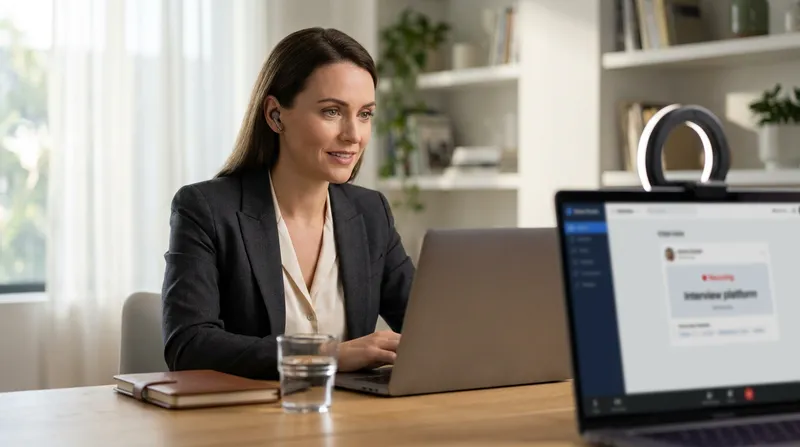
Why the Spark Hire 'selfie' video screen feels so intimidating (and how to take back control)
Your resume (or CV) finally made it past the initial screen. Then an email lands in your inbox inviting you to complete a one-way video interview within 48 hours. Immediately, the questions start racing through your head. Will clicking the link turn on your webcam right away? How many retakes do you get? What happens if your mind goes blank while a countdown timer ticks down? Searching for spark hire interview questions and answers is the smartest move you can make before opening that invitation.
If you feel a knot in your stomach at the thought of talking to your own reflection on a screen, you are not alone. Asynchronous video interviews place you in a high-stakes evaluation environment without human conversational cues like nodding or smiling. That makes prior familiarity with the platform and structured rehearsal essential to your confidence.
At JobSparrow, we know how jarring that experience feels because we have sat on both sides of the hiring table. Our team and advisors have collectively reviewed 100,000+ resumes and bring 10+ years of hands-on recruiting and hiring experience across four markets (Australia/NZ, the United States, Singapore, and Hong Kong), tuned alongside two of New Zealand's award-winning HR leaders. Passing the initial ATS friendly resume builder vs. recruiter reality filter gets you into the funnel. That covers the Diagnose, Position, and Execute stages of our five-stage Offer Path (Diagnose -> Position -> Execute -> Prepare -> Close). Now you are in the Prepare stage.
In this guide, we will break down the exact platform rules, the six factors Spark Hire's AI scores, and seven high-converting sample answers tailored for corporate and retail employers in Australia, New Zealand, the United Kingdom, and the United States. Want to know which gaps a recruiter will probe before you hit record? Start with a free diagnosis to see your recruiter-lens score out of 100 and map your full Offer Path.

How Spark Hire works: think time, retake rules, and the hidden 1-take lock
Let us clear up the biggest fear first: clicking the invitation link in your email will not immediately turn on your camera or start Question 1.
When you click your invitation link, you enter a welcome lobby. Here, you can read the employer's instructions, select your microphone and webcam, and record an unlimited number of test clips using the spark hire practice video tool. Nobody at the company can ever see your practice recordings. Your actual interview only begins after you pass the technical check and explicitly click to reveal the first prompt.
Once you begin, every interview is governed by three custom settings chosen by the hiring team. Here is how spark hire think time and retakes work behind the scenes:
| Setting | Employer Configuration Range | What Happens When the Timer Hits Zero | What the Recruiter Actually Sees |
|---|---|---|---|
| Think Time | 30 seconds to 5 minutes, or Unlimited | Your webcam automatically starts recording Take 1 after a 3-second countdown. | Recruiters cannot see you during Think Time, and they do not see how much Think Time you used. |
| Number of Takes | 1 to 5 takes, or Unlimited | If you have takes remaining, you can review your clip and click "Re-record" or "Submit". | Recruiters only see the final submitted video for each question, never your discarded retakes. |
| Answer Length | 30 seconds to 3 minutes | Recording stops immediately at 0:00 and locks in that take. | Recruiters see your final submitted video, plus a transcript if the employer has turned on Spark Hire's AI transcription. |
The hidden 1-take lock most candidates miss
There is a crucial technical rule documented in the Spark Hire Official Help Center that many applicants miss: whenever an employer sets a limited Think Time (such as 30 or 60 seconds), Spark Hire automatically restricts you to 1 take.
Employers can only allow multiple retakes if they set Think Time to "Unlimited." Fortunately, Spark Hire displays the exact Think Time, number of takes, and maximum answer duration on your screen before you open each individual question. Just like learning how to pass a Sapia.ai chat and video interview in 2026, knowing the rules before you start removes the element of surprise.
What you should do right now:
- Use the pause between questions: Because questions are delivered one at a time, you can stop after submitting Question 1, drink some water, and reset before clicking to reveal Question 2.
- Protect your energy on retakes: Avoid burning retakes over minor stumbles of a word or two. Recruiters prefer a warm, slightly imperfect Take 1 over a robotic, exhausted Take 3. Only re-record if you completely lose your train of thought or forget to share the measurable result of your story.
Inside Spark Hire AI video review: the 6 factors the algorithm actually scores
Many job seekers worry that an algorithm is secretly measuring their eyebrows, eye movement, or regional accent. In reality, modern spark hire ai video review is built on speech-to-text transcription and structured competency rubrics, not facial analysis.
According to the Spark Hire Official Help Center, the platform's AI Video Review evaluates your recorded responses across six core factors (divided into four Competencies and two Personal Qualities) and assigns each factor a rating of Strong, Neutral, or Weak, alongside an overall rating of Strong, Moderate, or Weak:
- Communication (Competency): How clearly, logically, and concisely you organize your thoughts from start to finish.
- Execution (Competency): Evidence in your stories that you take ownership, follow through on tasks, and deliver measurable outcomes.
- Comprehension (Competency): Whether you actually answered all parts of the specific question asked, rather than pivoting to an unrelated memorized speech.
- English Proficiency (Competency): Your spoken vocabulary, grammar, and structural clarity as captured in the interview transcript.
- Enthusiasm (Personal Quality): Vocal energy, warmth, and genuine engagement with the prompt.
- Motivation (Personal Quality): Clear alignment between your career goals, your preparation, and the specific role or employer.
If you are a migrant or non-native English speaker applying in the UK, Australia, New Zealand, or the US, focus on helping the transcription engine capture every word accurately. Because AI video platforms transcribe your spoken answers to analyze sentence structure and job-specific keywords, speaking clearly and at a steady pace helps ensure your response is captured properly.
Similarly to how we recommend formatting for AI application review in Ashby ATS, you can optimize your spoken transcript with three quick adjustments:
- Answer the prompt in your first sentence: This helps show you understood the question.
- Mirror three to four core skills from the job ad: If the job posting asks for "inventory reconciliation" and "stakeholder management," speak those exact phrases out loud.
- End with a quantified outcome: Measurable results give clear evidence that you deliver.
Does Spark Hire record your screen or detect AI scripts?
Candidates frequently ask: does spark hire record your screen while you are answering questions? During a standard one-way video interview, Spark Hire only records your webcam video and microphone audio during an active take. It does not capture your full desktop screen.
However, Spark Hire includes proctoring (on by default when an employer uses AI Video Review) that scans responses for signs of AI-generated or scripted content. If you use a "live AI teleprompter" overlay to read generated paragraphs off your monitor during the interview, your eyes will scan horizontally and your vocal cadence will flatten. Spark Hire flags this behavior to the hiring manager with a "Possible Misconduct" badge, which prompts the hiring team to review your answer more closely, much like a potential concern on a Greenhouse ATS recruiter scorecard.
Instead of reading a script on your screen, prepare concise bullet points woven with job-specific keywords and practice speaking into a camera beforehand. Write three short trigger words on a sticky note and place it directly beneath your webcam lens so your eyes stay locked on the camera.
7 common Spark Hire interview questions and answers (corporate and retail examples)
Across corporate and retail employers in the US, the UK, Australia, and New Zealand, recruiters use one-way video screens to filter out rambling speakers. Local hiring managers use pre-recorded video interviews to evaluate how concisely you connect your past responsibilities to the target role while projecting natural warmth on camera, a standard that mirrors what Kiwi hiring managers expect on New Zealand CVs.
To keep your pacing sharp on every prompt, use our 90-Second Spark Hire Timing Formula:
- 0:00 to 0:15 (The Hook & Context): Answer the question directly and set the scene in two sentences.
- 0:15 to 1:00 (Your Specific Actions): Share two to three concrete actions you took.
- 1:00 to 1:30 (The Result & Bridge): State the measurable outcome and connect it to the role you are applying for.
Here are the seven most common spark hire interview questions and answers you should rehearse before clicking your link.
1. Walk us through your background and why you applied for this role (90 seconds)
- What the recruiter and AI score: Motivation, Comprehension, and career coherence (especially important for career changers and migrants explaining international experience).
- How to structure it: Use the Present-Past-Future framework. Start with your current expertise, highlight one quantified past achievement, and explain why this role is your logical next step.
- Sample Answer: "I am an operations and customer experience professional with five years of experience leading high-volume retail and service teams. Over the past three years as an Assistant Store Manager in Auckland, I oversaw a team of 14 staff, managed weekly inventory audits, and improved our customer satisfaction score from 81% to 94% by redesigning our click-and-collect workflow. Before that, I spent two years in hospitality logistics, where I learned how to troubleshoot supply chain delays under intense time pressure. I applied for this Area Operations Coordinator role because you are expanding your omnichannel fulfillment across the region, and I want to bring my hands-on floor leadership and process improvement skills to help your store network scale smoothly."
2. Tell us about a time you turned an unhappy customer or stakeholder around (2 minutes)
- What the recruiter and AI score: Communication, empathy, and commercial resolution.
- How to structure it: Briefly state why the person was frustrated, walk through how you de-escalated the conversation without blaming company policy, and share the retention result.
- Sample Answer: "In my previous role as a Client Support Specialist in Manchester, a key commercial client threatened to cancel a £45,000 annual contract after a software update delayed their monthly billing report by 48 hours. Instead of sending a defensive email, I called the account director within 15 minutes of seeing the ticket. First, I acknowledged the disruption to their finance team and gave them an honest timeline for the fix. Next, I manually exported their raw transaction data into an Excel summary so their team could close their weekly ledger on time. Finally, once engineering resolved the bug that afternoon, I set up an automated backup alert on their account. Not only did the client renew their contract the following quarter, but they also upgraded their service tier by 15%."
3. Describe a time you managed competing priorities under a tight deadline (2 minutes)
- What the recruiter and AI score: Execution and structured triage. For deeper practice on prioritization rubrics, see our guide on PM mock interviews and behavioral prep.
- How to structure it: Show how you evaluated urgency versus commercial impact, communicated proactively with stakeholders, and delivered on time.
- Sample Answer: "During peak Q4 trading at my previous retail employer, I was scheduled to finalize our seasonal visual merchandising reset by 5:00 PM on Friday. At noon that same day, an unexpected delivery of 400 promotional stock units arrived early, and two team members called in sick. Rather than trying to do everything halfway, I triaged the workload by revenue impact. First, I moved two cross-trained stockroom staff onto the shop floor to protect customer service levels. Second, I contacted my regional manager to agree on staging the highest-margin promotional displays at the front of the store first, while scheduling the secondary window signage for Saturday morning at 7:00 AM. We opened on time for Friday evening trade and exceeded our weekend sales target by 18%."
4. Tell us about a time you adapted quickly to a sudden process or system change (90 seconds)
- What the recruiter and AI score: Agility, Comprehension, and positive leadership during ambiguity.
- How to structure it: Focus on how fast you learned the new tool or workflow and how you helped your teammates adopt it.
- Sample Answer: "Last year, our finance and administration team transitioned to a new cloud ERP system with only two weeks of notice before month-end close. Several colleagues were anxious because the invoice approval workflow had completely changed. I volunteered to spend two hours after my shift testing the sandbox environment and created a one-page cheat sheet with screenshots covering the five most common daily tasks. I ran a 15-minute morning huddle for our eight-person team to walk through the new shortcuts. Because everyone had a clear reference guide, our team completed month-end reconciliation with zero late filings and cut our average invoice processing time by 22%."
5. Share an example of when you worked with a difficult team member to hit a shared goal (2 minutes)
- What the recruiter and AI score: Collaborative maturity and conflict resolution. In Australian, New Zealand, and UK workplaces, bashing a coworker is an immediate red flag, while US panels want to see clear ownership similar to Amazon and Microsoft behavioral interview scoring rubrics.
- How to structure it: Frame the conflict around differing work styles or priorities rather than personality flaws, and explain how you found common ground.
- Sample Answer: "While co-leading a store inventory audit in Sydney, I was paired with a senior warehouse supervisor who preferred logging stock discrepancies on paper clipboards at the end of the night, whereas I wanted to enter counts into our handheld scanners in real time. During our first shift, this mismatch caused double-counting and tension. Before day two, I asked him for a quick five-minute coffee chat to understand his concern. He explained that the Wi-Fi in the back loading bay frequently dropped out, causing the scanners to freeze. Together, we agreed to use his paper batching method in the loading bay dead zone and my live scanner method on the main floor, syncing both logs every two hours. We finished the full 12,000-unit stocktake four hours ahead of schedule with 99.6% accuracy."
6. Tell us about a mistake you made at work and how you fixed it (90 seconds)
- What the recruiter and AI score: Accountability, honesty, and preventative problem-solving.
- How to structure it: Choose a real operational mistake (not a fake weakness like "I work too hard"), own it immediately without excuses, and highlight the safeguard you built so it never happened again.
- Sample Answer: "Early in my role as a Marketing Coordinator, I scheduled an email promotional campaign for 15,000 subscribers using the wrong regional discount code, which meant UK customers briefly saw a US dollar offer. I spotted the error on my test check 10 minutes after launch. I immediately paused the remaining send queue, alerted my manager with a solution already drafted, and worked with web support to redirect the promo code link to a universal 15% checkout discount so no customer experienced a broken link. Afterward, I built a mandatory four-point pre-flight checklist requiring a second teammate to sign off on regional currency tags before any campaign goes live. We had zero campaign errors over the next 18 months."
7. Why do you want to work for our company specifically, and what will you bring in your first 90 days? (90 seconds)
- What the recruiter and AI score: Enthusiasm and Motivation (two of the six core AI Video Review factors).
- How to structure it: Reference one specific company initiative, product launch, or value, then outline a realistic 30-60-90 day contribution, much like crafting a targeted QLD Government Statement of Suitability.
- Sample Answer: "I have been following your company's push into sustainable packaging and neighborhood store formats over the past year, and as a regular customer, I admire how knowledgeable your floor staff are without ever feeling pushy. In my first 90 days as a Department Supervisor, my priority in month one is to learn your daily operational standards, POS reporting, and team strengths from the ground up. By day 60, I will take full ownership of roster scheduling and stock replenishment to reduce out-of-stock gaps during weekend peak hours. By day 90, I aim to coach our new casual hires on consultative cross-selling so our department consistently beats its quarterly basket-size targets."
What is the Spark Hire predictive behavioral assessment?
Depending on the employer, your invitation email might also include a second step: the spark hire predictive behavioral assessment. Following Spark Hire's integration of the Chally talent assessment science, corporate and retail employers frequently use this 118-question multiple-choice questionnaire (which takes under 20 minutes) to evaluate how your natural work style aligns with the demands of the job.
Unlike a video prompt, this assessment asks multiple-choice questions about your workplace behavior. Employers compare your results against benchmark profiles for roles like consultative sales, customer service, or team leadership, similar to how public sector panels evaluate alignment against the Victorian Government Key Selection Criteria and VPS Capability Framework.
How to approach the assessment without overthinking it:
- Do not try to fake an extreme persona: The 118 prompts include built-in consistency checks. If you claim to be a lone-wolf risk-taker on Question 12 and a cautious consensus-builder on Question 74, your profile will flag low internal consistency.
- Anchor your mindset in the specific role: Before starting, re-read the job description and answer every prompt from the perspective of how you operate at work in that specific function, not how you relax on the weekend.
How to rehearse out loud with JobSparrow's instant AI mock interviews
The biggest mistake candidates make when preparing for a pre-recorded video interview is typing out word-for-word scripts in a notebook. Silent reading does not build muscle memory for speaking under a 90-second countdown clock. The moment the red recording light turns on, written paragraphs vanish from your head.
This is why the Prepare stage of JobSparrow's Offer Path is built around out-loud rehearsal. Instead of guessing how you sound, you can use JobSparrow's AI mock interviews to rehearse role-specific questions out loud before you ever open your real Spark Hire link:
- Run your free CV diagnosis first: Upload your resume or CV to see your recruiter-lens score out of 100 and uncover the exact experience gaps or vague metrics a hiring manager will question.
- Launch an Instant Interview from the job posting: Paste the target job description or URL into JobSparrow to generate role-specific behavioral and motivational prompts tailored to the company.
- Record your answers out loud and get instant AI coaching: Speak your answers into your microphone in a safe environment. JobSparrow analyzes your recording in real time, giving you actionable feedback on your answer quality, clarity, and delivery tone so you can tighten a rambling three-minute story into a crisp 90-second response.
Once you nail the Spark Hire screen and pass the live panel, our Offer Path stays with you into the Close stage, helping you evaluate your package and negotiate with confidence (for example, understanding Total Fixed Remuneration (TFR) vs. Base Salary in Australia).
A traditional career consultant charges around US$300 for one resume and around US$2,000 for a coaching program. With JobSparrow, you can Start with a free diagnosis today to see your recruiter-lens score and the gaps costing you interviews at no cost. When you are ready for unlimited mock interviews, tailored resumes, and full coaching, you can try the full Offer Path for 7 days for US$5.99, then US$45 a month (or £4.99 then £35/month in the UK, A$8.99 then A$59/month in Australia, and NZ$9.99 then NZ$59/month in New Zealand), cancel anytime in one click.
Frequently asked questions
Can employers see my practice video or discarded retakes on Spark Hire?
No. Any practice videos you record in the technical setup lobby are strictly for your own equipment check and are never saved or sent to the employer. Furthermore, if an employer allows multiple takes per question, the hiring team only sees the final recording you submit, never your discarded earlier takes.
Does clicking the Spark Hire invitation link start the interview immediately?
No. Clicking the link in your invitation email opens a welcome page and equipment test lobby. Your camera will not start recording an official answer until you verify your audio and video settings, review the instructions, and explicitly click the button to begin Question 1.
How long are Spark Hire answers and think time?
Employers customize both timers for each question. Think Time ranges from 30 seconds to 5 minutes (or Unlimited), and maximum answer length can be set from 30 seconds to 3 minutes. Remember that if an employer sets a limited Think Time, Spark Hire automatically limits you to 1 take.
What happens if the timer runs out while I am still speaking on Spark Hire?
When the recording countdown timer reaches 0:00, Spark Hire immediately stops recording and locks in your video clip. If you only had 1 take (or have used all your retakes), that clip is automatically submitted as your final answer. Watch the progress bar in your peripheral vision and wrap up your final sentence with 10 seconds to spare.
Can I pause a Spark Hire interview between questions and come back later?
Yes. Because Spark Hire reveals one question at a time, you can take a break or even close your browser tab after a video answer has fully uploaded and saved, then return to complete the remaining questions before your deadline. Never close your browser while a Think Time or recording timer is actively counting down, or you will forfeit that question.
Does Spark Hire AI Video Review penalize non-native English accents?
Spark Hire's AI Video Review evaluates English-language responses and scores English proficiency as one of six factors. Spark Hire states that AI scores support, not replace, human review.
Tags
Keep reading
Recommended articles.
interview questions · job interview tips
How to Answer 'Why Are You Leaving Your Current Job?' Without Red Flags (+ Sample Scripts)
Need why are you looking for a new job example answers? Use our 3-step recruiter framework and 7 scripts to explain leaving without red flags.
interview preparation · tell me about yourself
How to Answer 'Tell Me About Yourself' in Australia: The Present-Past-Future Formula (2026)
Master the tell me about yourself question with JobSparrow's Present-Past-Future framework. Real examples for Australia. Start free.
job interview tips · migrant job search
Australian Job Interview Tips for Migrants: How to Beat the 'Local Experience' Trap
Master Australian job interview tips for migrants. Learn to beat the 'lack of local experience' trap, pass the coffee test, and get hired faster.