
ats optimization
ATS Keyword Stuffing: Why Your 'Optimized' Resume Fails the Human Test (And How to Fix It)
By Job Sparrow Team
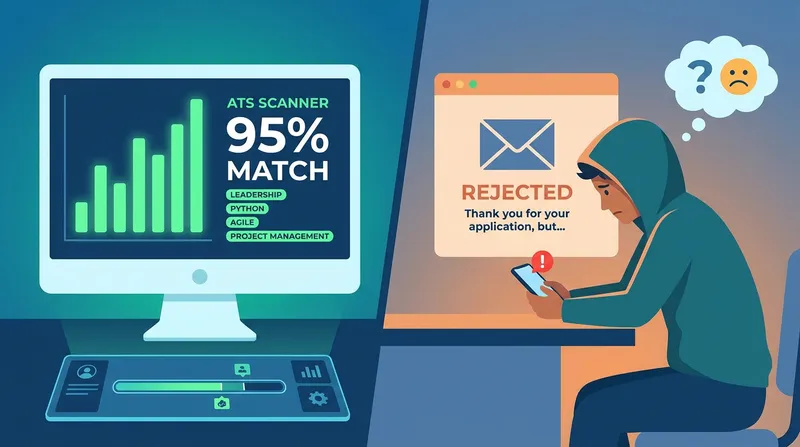
You have spent hours meticulously tweaking your resume. You run it through a popular online scanner to prevent ATS keyword stuffing, and the results come back glowing: a 95% match with the job description. Feeling confident, you hit submit. Two days later, you receive a generic, automated rejection email.
If this sounds familiar, you are not alone.
Thousands of job seekers, career changers, and migrants fall into this exact cycle every day. They spend all their energy trying to appease a software algorithm, completely forgetting about the person on the other side of the screen. The painful truth is that your perfectly optimized resume might be passing the software filters, but it is failing the human test.
At JobSparrow, our team has reviewed over 100,000 resumes and hired across five major markets, including Australia, New Zealand, the United States, Singapore, and Hong Kong. We know exactly what happens when a robotic, keyword-stuffed application lands on a hiring manager's desk. In this guide, we will break down exactly why traditional resume keyword optimization is costing you interviews and how to use modern, contextual tailoring to impress both the bots and the humans.
Before you submit your next application, get a free CV diagnosis on JobSparrow to see your true recruiter-lens score.
The 90% Match Trap: Why High ATS Scores Don't Equal Interviews
Many candidates believe that passing applicant tracking systems is a simple numbers game. The logic seems sound: if the job description asks for "project management" five times, putting "project management" in your resume six times should guarantee an interview.
This is a dangerous misconception.
Scoring a 90% or higher on a generic resume scanner only proves that you know how to copy and paste text. It does not prove that you are qualified for the job. When you focus entirely on hitting an arbitrary percentage, your resume loses its narrative flow. It becomes a disjointed list of buzzwords rather than a compelling story of your career achievements.
If you want to understand why chasing these high scores is a flawed strategy, read our deep dive on The ATS Score Trap: Why a 90% Match Will Cost You the Interview in 2026. The ultimate goal is not to trick a scanner. The goal is to move along the Offer Path, a five-stage journey from CV diagnosis through to a signed contract. To do that, your resume must survive the initial software filter and then immediately impress the human recruiter who reads it next.
What is ATS Keyword Stuffing? (And Why It Used to Work)
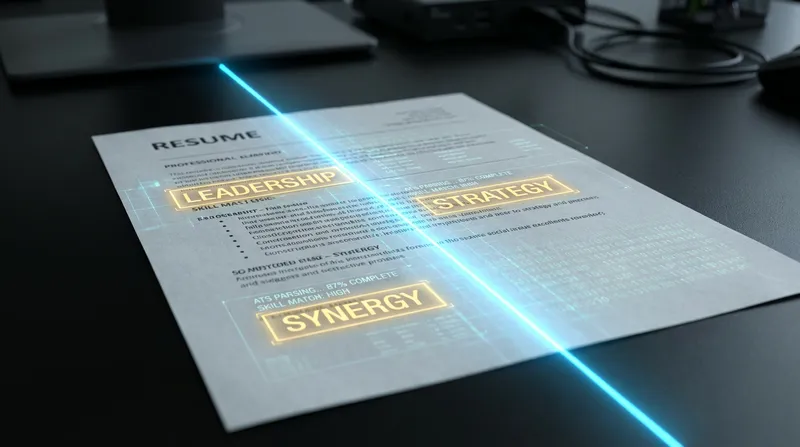
ATS keyword stuffing is the practice of unnaturally cramming exact match keywords from a job description into your resume to manipulate search rankings.
Ten years ago, early Applicant Tracking Systems were incredibly basic. They operated like simple search engines. If a recruiter searched for "B2B Sales," the system would rank candidates based on how many times that exact phrase appeared in their document. This limitation led to desperate tactics.
Candidates would copy the entire job description, paste it at the bottom of their resume, and change the font color to white. This "white font resume trick penalty" is still talked about today, even though it has been obsolete for years.
Here are the most common signs of keyword stuffing in a resume today:
- Unnatural phrasing: "As a marketing manager, I used marketing strategies to manage marketing campaigns for digital marketing."
- The buzzword block: A "Core Competencies" section that takes up half the page and lists 40 different skills without any context.
- Copying and pasting: Lifting entire bullet points directly from the job description.
These tactics used to work when algorithms were easily fooled. Today, they are a fast track to the rejection pile.
How ATS 2.0 Semantic Analysis Actually Works in 2026
The recruitment technology landscape has evolved dramatically. We have moved from simple keyword matching to ATS 2.0 semantic analysis.
Modern resume parsing software does not just count words. It reads for context, meaning, and relationships between concepts. If a job requires "leadership," the software knows that phrases like "mentored a team of five," "directed a cross-functional project," or "promoted to senior supervisor" are all strong indicators of leadership, even if the exact word is missing.
More importantly, these advanced systems are designed to detect manipulation. According to SHRM, modern platforms use contextual parsing and semantic matching to flag unnatural repetition, which can lead to incredibly high rejection rates for stuffed resumes. If the system detects hidden text or an abnormal density of keywords, it will flag your profile as fraudulent.
To see exactly how these modern parsers evaluate your documents, check out our guide on Workday Illuminate 2026: The Exact Resume Format to Pass Parsers and Semantic AI.
The Psychological Cost of Over-Tailoring: What Hiring Managers Actually Think
Let us look at this from both sides of the table. Imagine a hiring manager who has been staring at a screen for four hours, reviewing dozens of applications. They finally open a resume that scored a 98% match in their system.
They start reading. The sentences are clunky. The bullet points sound exactly like the job description they wrote last week. There are no measurable achievements, just a regurgitation of duties.
What is the psychological reaction? It breaks trust.
Research from LinkedIn Talent Insights highlights that recruiters actively dislike keyword-stuffed resumes because they look cluttered and read unnaturally. These documents signal that the candidate is trying to manipulate the hiring system rather than showcase genuine value.
An over-tailored resume looks desperate. It tells the recruiter that you do not have a strong professional identity of your own, so you are just mirroring theirs. Recruiters want to hire confident professionals with a track record of solving real problems, not candidates who simply echo the job description back at them. For more on this dynamic, read Why Recruiters Reject Disjointed Applications (And How an AI Resume and Cover Letter Creator Fixes It).
How to Beat the ATS Without Keyword Stuffing (The Human-First Approach)
So, how do you pass the software filters without alienating the human reader? The answer is contextual resume tailoring.
Guidelines from the University of Wyoming validate that getting past an ATS is about clarity, relevance, and alignment with employer needs, not about tricking the software. You need to weave the required skills into your existing career narrative naturally.
Instead of managing dozens of messy, over-tweaked documents, we recommend maintaining one central profile. Learn more about this in The 'Master CV' Method: Why Managing 50 Resume Versions is Sabotaging Your Job Search. From that master profile, you can extract targeted achievements for specific roles.
Here is exactly how to execute this human-first approach.
Write Achievement-Based Resume Bullets
The most effective way to include keywords naturally is to tie them directly to a measurable outcome. This is called writing achievement-based resume bullets.
Career experts at Columbia University advise against using hidden text and note that keywords are graded by how they are used in context.
Use this simple formula: Action Verb + Keyword in Context + Measurable Metric.
- Weak and Stuffed: "Responsible for data analysis, analyzing data, and data visualization using Tableau."
- Strong and Contextual: "Spearheaded data analysis initiatives using Tableau, uncovering inefficiencies that saved the company $45,000 in Q3."
The second bullet point includes the necessary keywords (data analysis, Tableau) but wraps them in a compelling achievement that a human recruiter will love. If you struggle to remember your metrics, our guide on Resume Blank Page Syndrome: How an AI Coach Extracts Your Forgotten Achievements can help you uncover them.
Stick to an ATS-Friendly Resume Format
Even the best contextual writing will fail if the software cannot read your document. An ATS friendly resume format is clean, predictable, and free of digital clutter.
To ensure your resume parses correctly, follow these rules:
- Avoid complex columns: Most parsers read left to right, top to bottom. Multi-column layouts scramble your text.
- Remove graphics and charts: Software cannot read a pie chart of your skills.
- Use standard headings: Stick to "Work Experience," "Education," and "Skills." Do not use clever titles like "My Professional Journey."
This is particularly important for migrants entering new markets. Migrants often face additional formatting challenges, such as international date formats, unfamiliar credential terminology, and regional tone expectations. Adapting your document to local standards is just as critical as choosing the right keywords. For specific regional formatting advice, read Resume Localization for AU/NZ: How Migrants Can Use AI to Adapt Tone & Beat 'Tall Poppy Syndrome'.
Common Resume Tailoring Mistakes to Avoid
Before you submit your next application, make sure you are not falling into these common traps:
- Relying solely on a generic ATS scanner score: High scores do not guarantee interviews if the human reader finds the text robotic.
- Using a two-column layout: This often confuses older parsers, causing them to read across columns and scramble your history.
- Failing to quantify achievements: Listing duties without measurable outcomes makes it impossible to stand out from other applicants.
Use an AI Resume Tailoring Tool the Right Way (Context, Not Copy-Paste)
We know that manually rewriting your resume for every single application is exhausting. It leads to burnout, which is why candidates resort to keyword stuffing in the first place.
Technology should solve this problem, but you have to use it correctly. If you paste your resume into a generic chatbot and ask it to "add keywords," it will spit out a robotic, over-tailored mess. You can read more about avoiding that trap in How to Use ChatGPT to Write a Resume (Without Sounding Robotic or Getting Rejected).
This is why JobSparrow built Job-Specific Resume Tailoring, alongside a suite of advanced features designed to fix disjointed applications.
Instead of blindly stuffing words into your document, JobSparrow acts as your AI career advisor. The platform's Match Score and Gap Analysis show you exactly how well you fit a role before applying. If you are missing key experiences, the Gap Filler actively surfaces missing achievements and walks you through a Q&A to fill them.
Once your Master Career Profile is complete, JobSparrow intelligently selects your most relevant experiences and generates your tailored resume in under 60 seconds. Your new document is available in five professional templates and downloads with a smart filename like YourName_MarketingManager_Resume.pdf, ready to submit without renaming. You get a highly relevant, ATS-optimized resume that reads beautifully to a human hiring manager.
Conclusion: Pass the Bots, Impress the Humans
Your resume has two distinct audiences: the semantic AI parser that filters out irrelevant applications, and the human recruiter who decides who gets an interview.
Keyword stuffing forces you to choose the bot over the human, a strategy that ultimately leads to silent rejections. By adopting contextual resume tailoring, you satisfy the software's need for relevance while giving the hiring manager the compelling career narrative they crave.
Ready to see how your current resume performs? Start your Offer Path journey today with a free CV diagnosis at https://jobsparrow.ai/free-cv-review. You will see your true recruiter-lens score and discover the exact gaps costing you interviews in minutes. Unlock the full Offer Path (resume tailoring, gap analysis, cover letters, and mock interviews).
Frequently Asked Questions
Does the white font resume trick still work in 2026?
No. Modern ATS platforms easily detect hidden text and will actively flag your application as fraudulent, almost always leading to an automatic rejection.
How do I know if my resume is over-tailored?
If your bullet points read exactly like the job description rather than a list of your personal achievements, you have over-tailored. Unnatural phrasing and a lack of a cohesive career narrative are major warning signs.
What is the difference between exact match keywords and semantic analysis?
Exact match technology looks for specific words like "leadership." Semantic analysis understands related concepts and context like "mentored a team of five," meaning you do not have to repeat the exact same word endlessly.
Can an AI resume tailoring tool guarantee I pass the ATS?
No tool can guarantee a pass if you lack the core qualifications for the role. However, a smart AI advisor like JobSparrow ensures your existing qualifications are framed perfectly for both the parser and the human reader.
How many keywords should I include in my resume?
Do not focus on a specific number. Instead, focus on the contextual integration of the top 5 to 7 core skills mentioned in the job description, tying them directly to your measurable achievements.
Tags
Keep reading
Recommended articles.
resume tailoring · ats optimization
How to Tailor Your Resume to Any Job Description (& Beat the ATS in 60 Seconds)
Learn how to tailor a resume to a job description and beat the ATS in seconds with JobSparrow. Stop getting auto-rejected and land more interviews today.
ats optimization · job search strategy
ATS Scanners vs Job Trackers: The $100/Month Trap (And Why You Are Still Rewriting Resumes at Midnight)
Stop paying for ATS scanners that leave you rewriting resumes at midnight. See why the manual approach fails and get a free recruiter-lens diagnosis today.
ai resume builder · ats optimization
Tailor Applications Fast with an AI Resume Creator
Stop choosing between time and quality. Use an AI resume and cover letter generator to tailor your applications fast. Try free with JobSparrow.