
resume format
Australian Resume Format 2026: The Ultimate Guide with Examples & Templates
By Job Sparrow Team

Introduction: Your Guide to the Perfect 2026 Australian Resume
You've spent hours perfecting your resume. You have the skills, the experience, and the drive. You send out application after application, only to be met with silence. It's a deeply frustrating experience, especially if you're new to the Australian job market or changing careers. You start to wonder, "Is there a secret I'm missing?"
The problem often isn't your experience, but how you present it. The Australian resume format has unique rules and expectations that can feel like an unwritten code. One small misstep, a cultural misunderstanding, or a format that isn't machine-readable can get your application rejected before a human even sees it.
This guide is here to crack that code. We'll provide a clear, step-by-step blueprint for the perfect 2026 Australian resume, complete with examples and templates. You'll learn exactly what recruiters and hiring systems are looking for, so you can showcase your skills with confidence. With a tool like JobSparrow, you can instantly put these strategies into action, creating tailored, professional resumes in minutes. Start building a job-winning resume for free.
Why Your Resume Format is Crucial for the Australian Job Market
In Australia, your resume isn't just a document; it's your first handshake. It needs to be professional, clear, and, most importantly, easy for both humans and software to read. Many Australian companies use Applicant Tracking Systems (ATS) to manage the high volume of applications they receive. These systems scan your resume for keywords and specific formatting before it ever reaches a hiring manager.
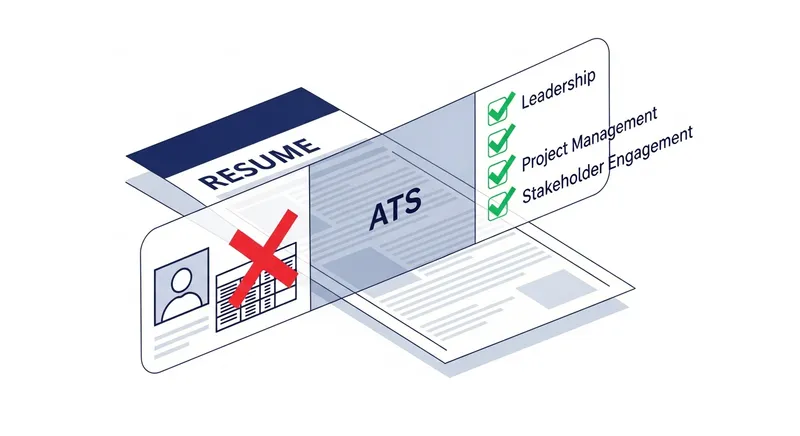
A poorly formatted resume can be automatically disqualified. According to HR platform Employment Hero, adapting your resume with job-specific keywords is critical for passing through these systems. Furthermore, Australian recruiters have expectations for layout and content. A clean, standard format shows you're professional and have researched local conventions.
If you're worried about getting past the bots, a dedicated guide on ATS resume optimisation in AU & NZ can give you an edge.
The Ideal Australian Resume Length: How Many Pages in 2026?
One of the most common points of confusion is resume length. Unlike the strict one-page rule in the US, Australian resumes are expected to be more detailed.
So, what's the magic number? For most professionals in 2026, the sweet spot is 2 to 3 pages. This provides enough space to detail your achievements without overwhelming the reader.
- Graduates & Early Career (0-3 years experience): Aim for 1-2 pages.
- Mid-Career & Senior Professionals: 2-3 pages is standard.
- Executives & Academics: A 4-page resume can be acceptable for very senior roles with extensive publications or project histories, as noted by recruitment firm Robert Half.
Actionable Tip: Focus on relevance, not just length. Every piece of information should serve a purpose and be tailored to the job you're applying for. As career advisors at UNSW Sydney suggest, experienced individuals can use more space to detail their accomplishments. For advice tailored to senior roles, see our Ultimate Executive Resume Guide.
The Standard Australian Resume Structure: A Section-by-Section Breakdown
To ensure your resume is easy to follow, use a reverse-chronological format (listing your most recent experience first). This is the structure recruiters expect and what ATS software is designed to understand. According to the Victorian Government's Youth Central career site, a standard resume should follow a clear and logical order.
Here are the essential sections in the correct order:
- Contact Details
- Professional Summary or Career Objective
- Work Experience / Professional History
- Education and Qualifications
- Skills
- Referees
1. Contact Details
This section sits at the very top of your resume. Keep it clean and professional.
- What to Include: Your full name, phone number, a professional email address, your LinkedIn profile URL, and your suburb and city (e.g., Parramatta, NSW).
- What to Exclude: Your full street address, date of birth, marital status, and a photograph. These are not expected and are removed to prevent unconscious bias in the hiring process.
Actionable Tip: If your email is still partylover99@email.com, it's time for an upgrade. Create a simple, professional address like firstname.lastname@email.com.
2. Professional Summary or Career Objective
This is a 3-4 line introductory pitch that sits just below your contact details. It should be tailored for every job you apply for.
- Professional Summary: For experienced candidates. It summarises your key skills and achievements.
- Career Objective: For graduates or career changers. It focuses on your aspirations and transferable skills.
Actionable Tip: A strong summary follows a simple formula: [Your Title] with [X years] of experience in [Key Skills/Industry], known for [a key quantifiable achievement]. Seeking to apply my expertise in [Target Area from Job Ad].
- Weak Example: I am a hard-working marketing professional looking for a new challenge.
- Strong Example: A Digital Marketing Manager with over 8 years of experience in the SaaS industry, known for increasing lead generation by 150% through targeted SEO and content strategies. Seeking to apply my expertise in campaign management to drive growth at a leading tech company.
This advice is echoed by government resources like Workforce Australia, which highlights the importance of a targeted opening statement.
3. Work Experience / Professional History
This is the heart of your resume. List your roles in reverse-chronological order.
For each role, include:
- Job Title
- Company Name & Location (e.g., Sydney, NSW)
- Dates of Employment (Month, Year - Month, Year)
Under each role, use 3-5 bullet points to describe your achievements, not just your duties. As the University of Sydney's careers service recommends, you should quantify your impact wherever possible.
Actionable Tip: Start every bullet point with a strong action verb. Instead of saying "Responsible for managing social media," say "Managed and grew 5 corporate social media channels, increasing follower engagement by 45% in 6 months." Global recruitment firm Michael Page advises using words like 'completed', 'developed', and 'managed' to present your accomplishments confidently.
Pro Tip with JobSparrow: Struggling to turn duties into achievements? JobSparrow's Gap Filler tool asks targeted questions about your roles to help you uncover and quantify the hidden metrics that recruiters love to see.
4. Education and Qualifications
List your highest qualification first. Keep this section concise.
- What to Include: The name of the qualification, the institution, and the year of completion. You don't need to list your high school if you have a university degree.
- For Recent Graduates: You can place this section above your work experience and include your GPA or academic awards if they are impressive.
Actionable Tip for Migrants: If your degree is from an overseas university, you can add a note about its local equivalent if you're certain, for example: "Master of Engineering (equivalent to Australian Masters Degree)."
5. Skills
This section is a quick, scannable list of your key capabilities. It's perfect for getting past ATS scans.
Actionable Tip: Create sub-headings to make it even easier to read:
- Technical Skills: Python, SQL, AWS, Google Analytics
- Software: Salesforce, Adobe Creative Suite, Microsoft Office 365
- Languages: English (Fluent), Mandarin (Conversational)
Scan the job description for required skills and make sure you list them here to show you're a forward-thinking candidate.
6. Referees
Modern Australian resumes have a simple and clear rule for referees: don't list their contact details.
Actionable Tip: Simply write the phrase, "Referees available upon request." This is the professional standard. Prepare a separate document with the names, job titles, and contact details of 2-3 professional referees. Crucially, always ask for their permission before you provide their details to a potential employer.
Australian Resume Rules: What to Include and What to Leave Out
Here's a quick 'Do's and Don'ts' checklist to ensure your resume meets Australian standards.
- DO keep the length between 2-3 pages.
- DON'T put a photo on your resume. This is a firm rule in Australia to prevent bias.
- DO use Australian English spelling (e.g., 'organise', 'analyse', 'colour'). This shows attention to detail.
- DON'T include personal information like your age, date of birth, marital status, or religion.
- DO (for migrants) clearly and concisely state your work rights or visa status.
- DON'T use elaborate fonts, colours, or graphics. Keep the design clean and professional to ensure it's ATS-friendly.
Special Guide for Migrants: How to Address Visa Status
If you're new to Australia, you may be worried about how to mention your visa status. This uncertainty is a major source of stress for many job seekers. The best approach is to be clear and upfront.
Where to put it: Add a single line in your contact details section at the top of the resume.
Actionable Tip: Use simple, direct phrasing. Here are some examples:
- "Australian Citizen"
- "Australian Permanent Resident"
- "Full working rights in Australia"
- "Partner Visa (subclass 820) with unrestricted work rights"
- "Temporary Graduate visa (subclass 485) with full work rights until December 2027"
Being transparent saves the recruiter time and shows you understand professional norms.
Customising Your Resume for Specific Roles
Recruitment giant Hays stresses that the most successful job seekers tailor their resume for every single application. A generic resume sent to 100 companies will be less effective than 10 highly-tailored resumes. This is especially true for career changers and those applying for their first professional role.
JobSparrow's Job-Specific Resume Tailoring feature makes this easy. Our AI analyzes the job description you're targeting and intelligently pulls the most relevant skills and experiences from your profile, rewriting bullet points to match the employer's needs.
Example for Career Changers
If you're changing industries, your goal is to bridge the gap between your past and your future.
- Focus on Transferable Skills: Your professional summary and a dedicated 'Skills' section should highlight capabilities that are relevant to the new role, like "Project Management," "Stakeholder Communication," or "Data Analysis."
- Reframe Your Experience: Instead of describing duties specific to your old industry, reframe your achievements to show their relevance to the new one.
Actionable Tip: If you're moving from retail management to an office administration role, focus on achievements related to budget management, team scheduling, and inventory reporting, not sales targets. Once your resume is ready, you can practice articulating these transferable skills with JobSparrow's AI Mock Interviews, tailored to Australian interview expectations.
Example for Entry-Level Applicants
When you have limited professional experience, your resume needs to showcase your potential.
- Lead with Education: Place your 'Education' section above 'Work Experience'.
- Highlight Everything: Include internships, volunteer work, university projects, and relevant coursework.
- Use a Career Objective: State your ambitions clearly and show you have a direction.
Actionable Tip: Quantify your academic achievements. Instead of just listing your degree, add a bullet point like, "Achieved a High Distinction average in all final-year marketing subjects, including a capstone project on digital campaign strategy."
Create Your ATS-Friendly Australian Resume for 2026
Ready to get started? Instead of downloading a static file, you can build a dynamic, ATS-friendly resume designed for the 2026 Australian job market directly in our platform. JobSparrow's professionally designed templates provide the structure, so all you need to do is add your details and let our AI help you shine.
Create Your ATS-Optimized Australian Resume Now - Start for Free
Frequently Asked Questions
Is a CV the same as a resume in Australia?
Yes. In the Australian job market, the terms 'CV' (Curriculum Vitae) and 'resume' are used interchangeably. Both refer to the same document that outlines your professional experience, skills, and education. You can confidently use whichever term you prefer.
Should I include hobbies or interests on my Australian resume?
Generally, no. Hobbies and interests are considered personal information and are best left off a professional resume to save space for more critical information. The exception is if your hobby is highly relevant to the job you're applying for. For example, mentioning your personal blog about digital marketing for a Content Manager role, or a portfolio of coding side-projects for a Software Developer position.
What is the difference between an Australian resume and a US resume?
There are several key differences. The most notable are:
- Length: US resumes are typically kept to a strict one page. Australian resumes are longer, with 2-3 pages being the standard.
- Photos: You should never include a headshot or photo on an Australian resume to prevent unconscious bias. This is more common in some other countries but is a firm 'no' in Australia.
- Personal Details: Australian resumes contain less personal information. You should not include your age, date of birth, marital status, or nationality (unless clarifying visa status).
Do I need a cover letter in Australia?
Yes, a tailored cover letter is highly recommended for almost every application. Many recruiters see it as a sign of genuine interest and professionalism. Unless the job advertisement explicitly states not to include one, you should always write one. To make this easier, JobSparrow's Intelligent Cover Letter Generator creates personalized letters for every application in minutes, ensuring you never miss this critical component.
What file format should I use to save my resume?
You should have two versions ready: PDF and Microsoft Word (.docx).
- Use PDF when you're emailing your application directly to a recruiter or hiring manager. This locks in the formatting and ensures your resume looks exactly as you designed it on any device.
- Use .docx when you're uploading your resume to an online application portal or job board. Some older Applicant Tracking Systems (ATS) can parse information from a .docx file more accurately than from a PDF.
Conclusion: Land Your Next Interview with Confidence
Crafting the perfect Australian resume doesn't have to be a mystery. By following a clear structure, tailoring your content for every application, and focusing on your achievements, you can create a powerful document that gets results.
Remember these three key takeaways:
- Structure is King: Use the standard 2-3 page, reverse-chronological format.
- Tailoring is Essential: Customise your professional summary and skills for every job.
- Quantify Everything: Use numbers and data to prove your impact.
You now have the blueprint for success. A great resume is often the first step, so be sure to follow up with a professional thank you email after an interview.
Stop guessing and start landing interviews. Create your first tailored Australian resume with JobSparrow in under 2 minutes-it's free to try, and you only pay when you land an offer. Start now.
Tags
Keep reading
Recommended articles.
resume tips · ats
ATS Resume Format: How to Avoid Rejection | Job Sparrow
Stop getting rejected by ATS. Learn essential formatting rules beyond keywords to ensure your resume reaches recruiters. Optimize your application now!
job search · resume tips
Job Application Black Hole AU/NZ: 8 Reasons You're Not Hearing Back & How to Fix It
Getting ghosted by jobs in AU/NZ? We reveal 8 reasons your application is ignored and a framework to get seen. Get your free resume match score now.
job search · resume writing
Seek Profile vs Tailored Resume: Your 2026 Guide to Getting More Interviews in Australia
Stop guessing how to get interviews. Learn the 2026 AU/NZ strategy for using your Seek profile and tailored resume to get hired faster. Your guide to winning.