
assessment centre
How to Pass an Assessment Centre in 2026: Assessor Scoring Criteria, Exercises & Tips
By Job Sparrow Team

Introduction: why smart candidates fail the final hurdle (and how both sides of the table see it)
Learning how to pass an assessment centre is the difference between walking away with a career-defining job offer and starting your job search all over again. You have already survived the resume (or CV) screen, passed the timed psychometric tests, and cleared the one-way Spark Hire video interview. Then the final invitation lands in your inbox: a grueling half-day assessment centre or corporate Superday alongside six to eight other highly qualified finalists.
For most candidates, this stage triggers immediate anxiety. You walk into the room (or join the Zoom lobby) completely blind to the scoring sheet. Within minutes, a loud candidate dominates the group discussion, a ticking clock pressures you through simulated inbox items, and you freeze. Even worse, many analytical candidates do brilliant problem-solving inside their own heads, unaware that silent thinking cannot be graded.
At JobSparrow, we look at this challenge from both sides of the hiring table. Our platform is built by recruiters and hiring managers who have reviewed 100,000+ resumes and hired across four markets, tuned with two of New Zealand's award-winning HR leaders. Here is the insider truth candidates rarely hear: you are not competing directly against the person sitting next to you. Assessors do not have a rule that says only the loudest person at the table gets hired. According to leadership simulation pioneers at Development Dimensions International (DDI), an assessment centre works like a corporate flight simulator where trained raters score your real-time behaviors against an objective competency benchmark.
If everyone in your group hits the benchmark, everyone can pass. This guide sits squarely in the Prepare and Close stages of JobSparrow's five-stage Offer Path (Diagnose, Position, Execute, Prepare, Close). Before you step into your assessment day, start with a free diagnosis to see your recruiter-lens score and see the gaps costing you interviews.
How assessors score assessment centres behind the scenes
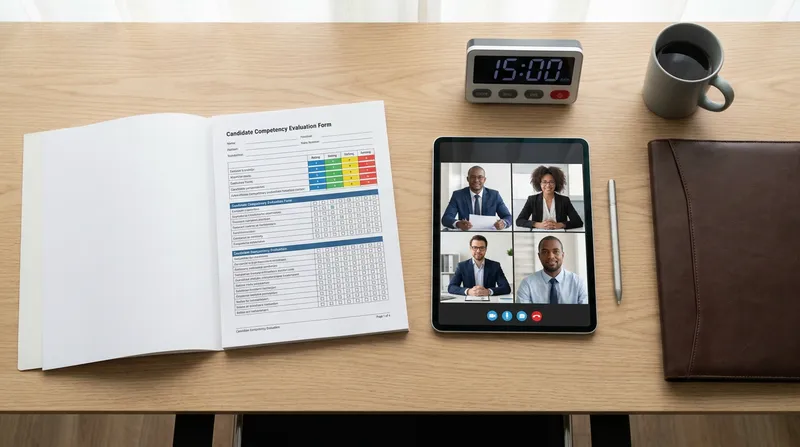
When you see assessors scribbling furiously on clipboards or typing on muted laptops in the corner of a Zoom room, they are not writing subjective personal opinions. They are not grading your outfit or deciding whether you seem fun to have a drink with after work.
To understand how assessors score assessment centres, you must memorize one golden rule: if a behavior is not audible or visible, it cannot be scored. Assessors are strictly forbidden from assuming what you were thinking. If you notice a critical financial error in a case study packet, nod quietly to yourself, and agree with a teammate's final choice without speaking up, the assessor cannot credit you for commercial acumen.
The International Task Force on Assessment Center Guidelines states that a hiring event only qualifies as a legitimate assessment centre when multiple trained observers evaluate constructed behavioral responses across clearly defined competency dimensions. To keep human bias out of the room, employers train their facilitators on two strict frameworks: the ORCE method and Behaviourally Anchored Rating Scales (BARS).
The ORCE methodology: observe, record, classify, evaluate
Every assessor in the room is assigned one or two specific candidates to watch during each exercise. According to assessment platform Clevry, facilitators are trained to separate watching from grading using the four-step ORCE framework:
- Observe: During the live 30-minute exercise, the assessor simply watches your body language, eye contact, and verbal interventions without assigning any numerical grade.
- Record: The assessor writes down timestamped, verbatim quotes and physical actions. Instead of writing "Candidate was a good leader," they must write: "At 10:14 AM, candidate said, 'We have eight minutes left, let's vote on option B and check the budget math.'"
- Classify: Once the exercise ends and you leave the room, the assessor maps each recorded quote to a specific bucket on the company's assessment centre competency framework (such as Stakeholder Management, Analytical Thinking, or Resilience).
- Evaluate: Finally, the assessor compares the volume and quality of your classified quotes against a 1-to-5 rating scale to lock in your score for that exercise.
What you can do right now: Feed the assessor easy-to-record "verbal signposts." Speak in structured, quotable sentences that clearly announce which competency you are demonstrating. Saying, "To keep us aligned with the client's budget goal on page three, I suggest we compare the ROI of Project Alpha and Project Beta," hands your observer a verbatim quote they can immediately classify under Commercial Acumen.
Sample BARS scoring rubric: what a 1/5 vs. 5/5 looks like
After classifying your quotes, assessors grade them using Behaviourally Anchored Rating Scales (BARS), as detailed by Clevry's assessment design guidelines. Many employers set a minimum benchmark score on each core competency, often the middle point of the scale. Notice how similar this structured grading is to public sector written applications, such as the QLD Government LC4Q capability rubric.
Here is what an actual assessor BARS sheet looks like behind closed doors:
| Core Competency | Score 1/5 (Clear Fail Indicators) | Score 3/5 (Pass Benchmark Indicators) | Score 5/5 (Strong Hire Indicators) |
|---|---|---|---|
| Collaborative Leadership | Talks over peers repeatedly, dismisses alternative ideas without explanation, or stays completely silent for 10+ minutes. | Contributes relevant points clearly, listens respectfully, and helps the group stay on track when prompted. | Actively brings quieter peers into the conversation, synthesizes two conflicting viewpoints into a compromise, and secures group consensus on time. |
| Commercial & Analytical Acumen | Makes recommendations based purely on gut feeling, ignores numerical data in the brief, or miscalculates basic margins. | Identifies the main financial pros and cons in the packet and uses them to support a logical choice. | Spots hidden connections between separate documents, calculates ROI or risk trade-offs aloud, and ties the decision to long-term company strategy. |
| Adaptability Under Pressure | Freezes or becomes visibly defensive when handed a last-minute curveball prompt or challenged during Q&A. | Acknowledges the new information calmly and adjusts the plan without losing composure. | Welcomes the curveball prompt, immediately re-prioritizes the group's remaining time, and explains how the change impacts risk. |
The assessor wash-up meeting and multi-exercise matrix
One of the biggest pain points candidates experience is thinking that a shaky morning exercise ruins the entire day. If you get talked over in the 9:30 AM group discussion, it is tempting to mentally give up before lunch.
Do not quit on yourself. At the end of the day, all facilitators gather for a consensus debrief known in HR circles as the "wash-up" meeting. According to the International Task Force on Assessment Center Guidelines, assessment centres achieve meaningful predictive validity specifically because they combine multiple exercise types and pool judgments from rotating observers.
As the UK graduate careers authority Prospects points out, well-designed assessment centres typically test each core competency in more than one exercise on a multi-exercise matrix. If you score a 2/5 on Communication during the morning group task because you were nervous, you can still deliver a 4/5 or 5/5 during the afternoon case study presentation and role play. During the wash-up meeting, assessors weigh your stronger afternoon evidence alongside the morning, which can lift your overall rating.
Regional formats compared: UK, Australia & NZ vs. the US corporate Superday
While the underlying behavioral psychology is universal, assessment day schedules and cultural expectations vary noticeably across the United Kingdom, Australia, New Zealand, and the United States. If you are an international student, career changer, or skilled migrant, adjusting your approach to local norms is just as critical as knowing how to translate overseas experience for local resumes.
Here is how the four major markets run their final-stage assessments in 2026:
United Kingdom (Graduate Schemes, Big 4, Magic Circle & Civil Service)
- Format: The UK uses the most structured, multi-simulation format in the world. According to official guidance from UK Civil Service Careers (GOV.UK), the Fast Stream Assessment Centre (FSAC) runs as a half-day virtual event where candidates are independently marked across a Written Advice Exercise, a Stakeholder Communication Exercise, and a Personal Development Conversation.
- Private Sector Focus: Employers frequently combine a leaderless group task, an e-tray simulation, and a strengths-based interview.
Australia and New Zealand (Corporate Programs, Banking & Public Sector)
- Format: Australian and Kiwi employers run half-day virtual or in-person centres that closely mirror the UK structure. As outlined by the Australian Government Department of the Prime Minister and Cabinet (PM&C), candidates in PM&C's graduate assessment centre complete a written exercise, a collaborative group activity, and a five-question competency interview.
- Cultural Nuance: Egalitarian teamwork is prized above all else. Due to local "tall poppy" cultural norms, candidates who bark orders, brag about their seniority, or steamroll teammates in Sydney, Melbourne, or Auckland group exercises often score poorly on teamwork.
United States (Wall Street, Management Consulting & Tech "Superdays")
- Format: In the US corporate sector, the final assessment centre is usually called a Superday or Power Day.
- Corporate Focus: While US federal agencies and law enforcement use classic multi-rater simulations, corporate Superdays place much less emphasis on leaderless group discussions. Instead, you will face three to five back-to-back, 45-minute 1-on-1 interviews (mixing behavioral questions, technical drills, and executive presence) paired with an individual case study presentation or technical whiteboarding session.
Step-by-step strategies for the 5 core assessment centre exercises
As the U.S. Office of Personnel Management (OPM) explains in its federal hiring policy, an assessment centre is a process rather than a physical place, built around realistic work-sample simulations. Below are tactical playbooks you can execute immediately across the five core assessment centre exercises.
1. Leaderless group discussions (and exact scripts to handle dominant peers)
According to the U.S. Office of Personnel Management (OPM), a leaderless group discussion puts a small team of candidates together to solve a complex business problem without assigning anyone to be in charge. Sometimes every candidate receives the same briefing packet. In other variations, each person is handed a secret departmental brief (for example, Marketing, Finance, or Operations) and must negotiate for a share of a fixed budget.
The biggest mistake candidates make is thinking that speaking for 60% of the session equals leadership. In reality, assessors fail loud monopolizers and reward facilitative leadership.
Your 3-step action plan:
- Claim a functional role in the first 90 seconds: Right after reading time ends, speak first or second to propose a structure and volunteer for a role. Say: "We have 25 minutes to rank these four expansion options and prepare a two-minute summary. Shall we spend five minutes sharing our initial top picks, 15 minutes debating the financials, and the final five minutes locking in our consensus? I am happy to keep track of time and log our key points."
- Use the "Yes, And + Evidence" technique: Never say "I disagree with you" or simply repeat what someone else said. Build on a teammate's point by adding a number from the brief.
- Deploy this Verbal Toolkit when things go wrong:
- To politely interrupt a dominant, rambling candidate: Wait for them to take a breath, smile, use their first name, and validate their point before pivoting. "James, that point about supply chain costs is really strong. So we don't lose track of time and miss the other three criteria on the sheet, let's capture that under Logistics and quickly hear how the rest of the team views the staffing budget."
- To invite a quiet candidate in (an instant 5/5 teamwork indicator): Look toward the quietest person in the room or Zoom grid and hand them a low-pressure opening. "Priya, I noticed you were taking detailed notes on the customer retention table earlier. What is your take on how Option C affects client churn?"
- To rescue a deadlocked group with three minutes left: "We have three minutes remaining on the clock, and assessors need a unified decision from us. We all agree on items one and two. For item three, can we compromise on launching the pilot in Q3 so we satisfy both the budget limit and the safety timeline?"
2. In-tray and e-tray simulations: the triage matrix
An in-tray (paper-based) or e-tray (software-based) exercise places you in a simulated email inbox on your first day back from vacation. As described in OPM's in-basket assessment standards, in a typical in-basket exercise, you review a set of emails, memos, and documents under time pressure, choosing multiple-choice actions and drafting full written responses.
In-tray and e-tray exercises are explicitly designed to overwhelm you. They contain traps where Email #3 is an angry demand from a VIP client, while Email #17 (buried near the bottom of the inbox) is a quiet update from an engineer explaining that the bug has already been patched.
Your 4-step triage protocol:
- Spend the first four minutes scanning subject lines and senders before answering anything: Sketch a quick org chart on your scratchpad so you know who your boss is, who your direct reports are, and who your external clients are. Link related email threads together so you do not authorize an emergency refund on Email #3 that Email #17 already resolved.
- Sort tasks into the 4Ds (Do Now, Delegate, Defer, Drop):
- Do Now (High Urgency / High Impact): Legal compliance breaches, PR crises, safety hazards, or major revenue-at-risk issues occurring today.
- Delegate (High Urgency / Lower Complexity): Operational tasks that match the job title of one of your direct reports on the org chart.
- Defer (High Impact / Low Urgency): Strategic planning requests due next month. Schedule a calendar block for next week.
- Drop / Acknowledge Briefly (Low Urgency / Low Impact): Office social announcements or expired vendor pitches.
- Check the company's core values before picking multiple-choice options: If two choices look equally logical, always pick the option that balances commercial results with ethical governance and team wellbeing.
- Structure written replies with bullet points: When asked to type an email response, write a clear subject line, open with an empathetic acknowledgment, use three bullet points covering facts and actions, and end with a concrete next step and deadline.
3. Case study presentations and oral briefings
In a typical corporate assessment centre case study presentation, you are given 30 to 45 minutes alone with a 15-page dossier of charts, press clippings, and financial statements. You must then present a 5-to-10-minute recommendation to a senior assessor, followed by 10 minutes of rapid-fire Q&A (though public sector formats like the UK Civil Service Fast Stream use their own specific preparation and meeting timings).
Many candidates fail this exercise because they spend 38 minutes reading every single word in the packet and only two minutes throwing together a rambling presentation. When the timer stops, they have a great background summary but run out of time before explaining their actual recommendation.
How to structure a 5/5 presentation:
- Split your prep time 50/50: If you have 40 minutes to prepare, stop reading at minute 20. Spend minutes 20 to 35 building your slide deck or flipchart structure, and minutes 35 to 40 rehearsing your opening and closing sentences out loud.
- Use the "Answer-First" Pyramid Principle: Do not treat your presentation like a mystery novel. State your final conclusion in the very first 30 seconds: "Good morning. After reviewing the market data, I recommend we acquire Competitor X rather than building the software in-house. This option delivers a 22% higher net return over three years and gets us to market six months faster. I will walk you through this across three areas: Financial Impact, Operational Feasibility, and Risk Mitigation."
- Always include a Risk & Mitigation slide: Assessors automatically penalize candidates who pretend their chosen option has zero downsides. Name the two biggest risks of your choice and explain how you would hedge against them.
- Welcome pushback during Q&A: During the Q&A, the assessor is scripted to challenge your math or ask, "What if interest rates double next quarter?" Do not get defensive, and do not immediately abandon your whole recommendation. Pause, say, "That is a critical stress test for this model," and explain at what financial threshold you would pivot to your backup option.
4. Assessment day role play exercises
Role play exercises test your emotional intelligence, negotiation skills, and conflict resolution in real time. You are given a 15-minute briefing about a difficult workplace scenario and then placed in a room (or virtual call) with a professional role-play actor or trained assessor.
The actor might play an underperforming direct report making excuses, an angry retail or corporate client demanding a contract termination, or a stubborn department head refusing to share resources. Here is the secret to assessment day role play exercises: the actor has a hidden conditional script. For example, an actor's brief might tell them to stay agitated until the candidate shows empathy and offers a workable timeline.
If you jump straight into cold logic or corporate policy, the actor is required to stay angry for the full 15 minutes. Use the AAPC Conversational Loop to unlock their script:
- Acknowledge the emotion first: "Alex, I can hear how frustrating this software delay has been for your team, especially with your quarter-end audit next week. You have every right to expect reliable uptime from us."
- Align on the shared goal: "Both of us want your audit next week to go smoothly without pulling your staff into weekend overtime."
- Propose a structured compromise (with boundaries): Never give away the farm by breaking company rules or offering unauthorized 50% refunds. Offer a policy-compliant solution: "While our compliance policy prevents me from waiving the annual license fee, I can assign two dedicated implementation engineers to manually migrate your audit files by Thursday at 5:00 PM, and credit next month's maintenance tier."
- Confirm and lock in follow-up: Ask open-ended questions ("How does that timeline work for your audit prep?") and summarize agreed actions before the timer ends.
5. The final competency or strengths-based interview
Almost every assessment centre concludes with a 1-on-1 or 2-on-1 interview, such as the five-question structured interview used in PM&C's graduate assessment centre. Unlike first-round screening calls, assessment day interviewers often tailor their follow-up probes to verify competencies that looked borderline earlier in the day.
To score 4s and 5s here, use a tightened STAR method framework where at least 60% of your spoken answer focuses on your specific Actions and quantifiable Results. Even better, include a brief reflection at the end of your story connecting it to the assessment day itself: "If I had the chance to run that morning group exercise again, I would apply that exact same stakeholder mapping technique two minutes earlier to bring our finance and marketing briefs together."
Virtual assessment centre preparation: winning on Zoom and Teams in 2026
Since 2020, many graduate and corporate employers have moved some or all of their assessment centres online, hosting them on Microsoft Teams, Zoom, or SHL's integrated platforms. As noted in Clevry's assessment centre guide, online events are often shortened to prevent screen fatigue and use smaller breakout groups so every candidate gets airtime.
Virtual assessment centre preparation requires mastering digital body language and overcoming audio lag:
- Exaggerate visual active listening: In a physical room, an assessor can tell who you are looking at. On a Zoom gallery grid, everyone stares straight ahead. Nod visibly when peers speak, keep your camera at eye level, and smile when acknowledging a teammate's point so your observer records positive non-verbal engagement.
- Beat the virtual audio lag without talking over people: On Teams or Zoom, a half-second audio delay makes accidental interruptions feel aggressive. If two people speak at once and you yield the floor, physically raise your hand slightly in the camera frame so the current speaker (and the watching assessor) sees that you want the microphone next.
- Use the meeting chat box as a leadership tool: In virtual leaderless group exercises, type the agreed time checkpoints and final option rankings into the Zoom or Teams chat every five minutes. Assessors have the chat log open right beside their scoring sheet. Seeing your name organize the group's notes in writing is a huge boost to your Planning and Organization score.
- Set up a dual-screen or paper-first workspace: Never try to read a 12-page PDF case brief and watch four video tiles on a single 13-inch laptop screen. Connect a second monitor, or keep a physical legal pad and a silent digital kitchen timer right underneath your webcam so your eyes stay facing the lens.
The unwritten tests: icebreakers, networking breaks, and assessor debriefs
Between formal exercises, your schedule will often include a 15-minute icebreaker, a virtual breakout room with current graduate trainees, or an in-person networking lunch. Employers will always tell you: "Relax! This Q&A session with our junior analysts is completely informal and not assessed."
Speaking from the recruiter side of the table, take that statement with a healthy grain of salt. Much like how recruiters leave internal scorecards inside an ATS like Greenhouse after every interaction, the junior employees hosting your break room are sometimes asked for feedback afterward: "Did anyone stand out positively, or did anyone raise any red flags?"
While a networking break will not earn you a 5/5 BARS score on its own, treating receptionists, HR coordinators, or graduate buddies dismissively, staring at your phone with your camera off, or complaining about how unfair the e-tray exercise was will be flagged in the wash-up meeting.
Actionable move: Use the informal break to gather insider terminology you can quote in your afternoon interview. Ask a current employee: "What has been the biggest priority for your team over the last quarter, and what surprised you most during your first six months here?" Two hours later, weave that insight into your final interview to prove unmatched commercial curiosity.
How to prepare and close the offer with JobSparrow
Walking into an assessment centre or Superday with a clear tactical plan gives you a clear advantage. However, knowing the frameworks intellectually is different from executing them out loud when an assessor challenges your assumptions under a ticking clock.
That is why JobSparrow coaches you along the entire Offer Path: Diagnose, Position, Execute, Prepare, and Close. While a traditional career consultant charges around US$300 for a single resume rewrite and around US$2,000 for a coaching program, JobSparrow acts as your personal AI career advisor from your very first application all the way to salary negotiation:
- Sharpen your evidence before the day (Position & Execute): During your final assessment day interview, assessors will probe the bullet points on your submitted application. Our Gap Filler and AI profile tools help you turn vague job duties into measurable achievements so every STAR story you tell is backed by hard metrics.
- Rehearse under real audio pressure (Prepare): Use JobSparrow's AI mock interviews to practise role-specific Screening, Culture Fit, and Technical rounds. You can launch an Instant Interview by pasting the target job description or URL, record your spoken answers in real time, and get instant AI feedback on your answer quality, clarity, and delivery tone before you face real assessors.
- Secure the best package (Close): Once you pass the assessment centre and the offer call comes in, our Offer and Negotiation Coaching guides you on what is negotiable and how to ask with confidence.
Ready to see where your application stands and start preparing like a top-scoring finalist? Start with a free diagnosis right now to get your recruiter-lens score out of 100 and see the exact gaps between you and the shortlist. When you are ready to unlock unlimited tailored resumes, cover letters, and AI mock interviews, you can try the full Offer Path for 7 days for US$5.99, then US$45 a month (or £4.99 then £35/month in the UK, A$8.99 then A$59/month in Australia, and NZ$9.99 then NZ$59/month in New Zealand), cancel anytime.
Frequently asked questions
How do pass rates work at an assessment centre?
Across major corporate, graduate, and public sector intakes in the UK, US, Australia, and New Zealand, pass rates vary depending on hiring volume and role competitiveness. However, assessors do not usually enforce a rigid quota per group. Because each candidate is graded individually against an objective competency benchmark rather than ranked strictly against their tablemates, an entire room of high-scoring candidates can receive job offers.
Can I still pass an assessment centre if I mess up one exercise?
Yes. Legitimate assessment centres use a multi-trait, multi-method matrix where each core competency is typically evaluated in more than one exercise. If you stumble during the morning leaderless group discussion, you can still demonstrate strong communication, commercial awareness, and problem-solving during your afternoon case study presentation, in-tray simulation, or competency interview. Assessors pool all evidence during the end-of-day wash-up meeting.
What happens if our group runs out of time or gets the wrong answer in a group exercise?
Most group business cases are intentionally designed with no single "correct" numerical answer. Assessors are scoring how you collaborate, analyze trade-offs, and persuade peers. However, failing to agree on a final recommendation before the timer hits zero hurts the entire group's delivery and commercial focus scores. Always call a three-minute warning to force a consensus vote and finalize your summary.
How is a US Superday different from a UK, Australian, or NZ assessment centre?
UK, Australian, and New Zealand assessment centres rely heavily on interactive behavioral simulations, combining leaderless group discussions, role plays, and in-tray exercises with a single interview. By contrast, a corporate assessment center Superday in the United States (standard in investment banking, management consulting, and big tech) usually centers on three to five back-to-back 1-on-1 behavioral and technical interviews paired with an individual case presentation.
What should I wear to a virtual assessment centre vs. an in-person assessment day?
Treat a virtual assessment centre with the exact same formality as an in-person visit to corporate headquarters. For finance, law, accounting, and consulting, wear a tailored suit or blazer with a collared shirt or blouse. For tech, creative industries, and public sector schemes, polished smart-casual (such as a crisp button-down or knit blazer) is ideal. Always dress fully from head to toe even on Zoom or Teams, in case you need to stand up to adjust lighting or present on a physical flipchart.
How do I stand out in an assessment centre if I am naturally introverted?
Assessors penalize loud, unfocused rambling just as heavily as silence. As an introvert, you do not need to talk the most to score a 5/5. Claim a structured role early (such as Scribe or Timekeeper), make four or five high-value interventions that synthesize two teammates' ideas together, invite another quiet peer into the debate, and capitalize on solo exercises like the written e-tray simulation and prepared case study presentation.
Tags
Keep reading
Recommended articles.
assessment centre · interview preparation
Assessment Centre Australia: 2026 Guide to Group Exercises, Interviews & Prep
Master assessment centre preparation Australia in 2026. Learn how to pass group exercises, role-plays, and panel interviews with our recruiter guide.
final round ai alternatives · ai mock interview
Final Round AI Alternatives (2026): Why 'Stealth' Copilots Get You Flagged (And How Voice Mock Prep Wins)
Can employers detect Final Round AI in 2026? See why stealth copilots get you flagged and how voice AI mock prep wins job offers safely.
hirevue interview · ai video interview
How to Pass a HireVue Interview in 2026: AI Transcript Scoring & Practice Guide
Wondering how does HireVue AI scoring work in 2026? Learn how transcripts are graded, master the 120s STAR blueprint, and practice with JobSparrow.