
career change
Career Change Australia: Your 10-Step Guide to Highlighting Transferable Skills (2026)
By Job Sparrow Team

Feeling stuck is a common career experience—in fact, recent data shows nearly half of Australian workers are considering a career change. For many, this comes with a unique weight. If you're a seasoned professional, you might worry your experience is seen as a liability. If you've moved to Australia, you may fear your international qualifications will be lost in translation.
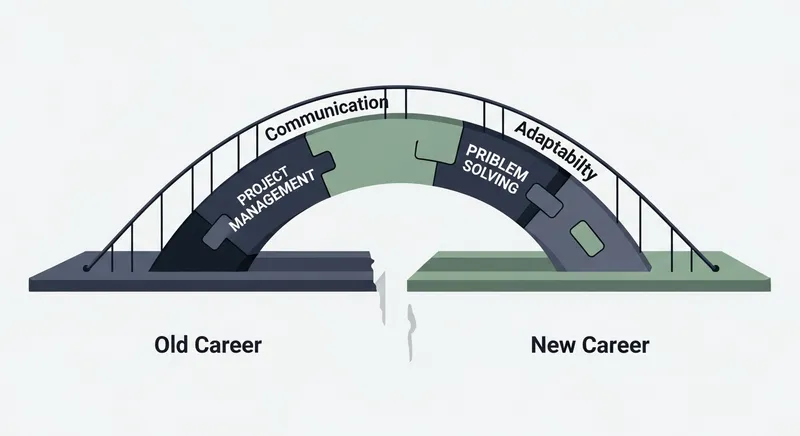
This feeling—that your past is irrelevant to your future—is the single biggest hurdle for career changers. But you aren't starting from scratch. You're standing on a foundation of valuable skills. You just need to build a 'Skills Bridge' to your next opportunity.
This guide is your blueprint. We will walk you through a 10-step process designed for the Australian job market to help you identify, translate, and powerfully articulate your transferable skills, turning your experience into your greatest advantage.
Quick Navigation
- Step 1: Understand What Transferable Skills Are
- Step 2: Recognise Why They're Crucial in the AU/NZ Market
- Step 3: Identify Your Hidden Assets
- Step 4: Use This Common Transferable Skills Checklist
- Step 5: Build Your 'Skills Bridge' to a New Career
- Step 6: Quantify Your Achievements to Prove Your Value
- Step 7: Showcase Skills on Your Australian Resume
- Step 8: Tell Your Story in a Cover Letter and Interview
- Step 9: Use Specialised Strategies for Your Journey
- Step 10: Execute Your Search with Confidence
- Frequently Asked Questions
Step 1: Understand What Transferable Skills Are
Before you can leverage them, you need to know what you're looking for. Think of transferable skills as a universal power adapter; they are abilities and knowledge that can be taken from one job and plugged directly into another, regardless of the industry or role. They are the currency of a modern career pivot.
There are three main types of skills:
- Hard Skills: Teachable, technical abilities that are easy to quantify, like proficiency in Python, operating a forklift, or accounting standards.
- Soft Skills: Interpersonal attributes that define how you work and interact with others. These include communication, teamwork, and problem-solving.
- Transferable Skills: This is the umbrella term that covers both hard and soft skills that have value across different contexts. While specific software knowledge is a hard skill, the ability to learn software quickly is a highly valuable transferable skill.
Step 2: Recognise Why They're Crucial in the AU/NZ Market
Transferable skills aren't just a 'nice-to-have'; they are what Australian and New Zealand employers are actively seeking. With significant parts of the economy facing skills shortages, employers are increasingly looking for candidates who have the foundational abilities to adapt and grow into a new role.
Research from Australia's top job board, SEEK, shows that employers consistently rank transferable skills like communication, teamwork, and critical thinking as paramount. Furthermore, the government's own analysis via Jobs and Skills Australia highlights that with nearly a third of occupations in shortage, companies are more open than ever to hiring candidates with the right underlying skills who can be trained for specific technical needs.
Step 3: Identify Your Hidden Assets (A Practical Exercise)
Most people vastly underestimate the number of transferable skills they possess. They are often so ingrained in your daily work that you don't even see them as distinct skills. It's time to conduct an audit.
Actionable Task: The Role Deconstruction Exercise
- List Your Last 3 Roles: Write down your last three significant jobs, volunteer positions, or major projects.
- Break Down Your Duties: Under each role, list 5-7 key responsibilities or tasks you performed regularly. Don't just list what your job description said; list what you actually did.
- Identify the Skill Behind the Task: For each task, ask yourself: "What skill did I need to do this well?"
- Task: "Wrote the weekly team report." -> Skill: Written Communication, Data Synthesis, Attention to Detail.
- Task: "Handled a customer complaint." -> Skill: Conflict Resolution, Empathy, Problem-Solving.
- Task: "Organised the annual team offsite." -> Skill: Project Management, Budgeting, Vendor Negotiation.
As you uncover these skills, store them in a central place. JobSparrow's Master Career Profile is designed for this, creating a comprehensive database of everything you've ever accomplished. You can import an old resume to get started and then use our AI to help enhance your descriptions.
Quick Win: Open your last performance review or a recent work email where you solved a problem. What skill did you use? Add it to a notes document—you've just started your skills audit!
For a broader look at potential career paths, the Australian Government's YourCareer.gov.au website offers tools and a career quiz to help you explore options based on your interests.
Step 4: Use This Common Transferable Skills Checklist
As you perform your self-assessment, compare your findings against this list of in-demand transferable skills. How many of these have you used in your past roles?
Communication & Interpersonal Skills
- Written and Verbal Communication
- Public Speaking & Presentation
- Active Listening
- Negotiation & Persuasion
- Teamwork & Collaboration
- Customer Service
Leadership & Management Skills
- Project Management
- Team Leadership & Mentoring
- Strategic Planning
- Decision Making
- Budget Management
- Conflict Resolution
Analytical & Problem-Solving Skills
- Critical Thinking
- Data Analysis & Interpretation
- Research
- Troubleshooting
- Creativity & Innovation
Technical & Digital Skills for 2026
- Data Literacy
- AI Fluency & Digital Adaptability
- Social Media Management
- Proficiency with specific software (e.g., Microsoft Office, Adobe Suite, Salesforce)
- Ability to learn new technologies quickly
Step 5: Build Your 'Skills Bridge' to a New Career
With your list of skills identified, you can now start building the bridge to your new career. This involves researching roles not by their title, but by the skills they require.
- Identify In-Demand Fields: Use resources like the Jobs and Skills Australia report to see which sectors are actively hiring. Right now, there are major needs for Technicians, Trade Workers, and Professionals like nurses and teachers.
- Analyse Job Descriptions: Find 3-5 job descriptions for a role that interests you. Ignore the title for a moment and highlight the skills and duties listed in the "Requirements" or "What you'll do" sections.
- Map Your Skills: Create a simple two-column chart. In the left column, list the key requirements from the job description. In the right column, write down your corresponding transferable skill and a brief example. This document is for your eyes only and will become the foundation for your resume and cover letter.
Step 6: Quantify Your Achievements to Prove Your Value
Saying you have a skill is one thing; proving its impact is another. This is where most career changers fail. To stand out, you must quantify your achievements using numbers, percentages, or concrete outcomes. Vague statements like "Improved team efficiency" become powerful when framed as "Reduced project completion time by 15% by implementing a new workflow."
To structure these achievements, use the STAR method, a technique widely recommended by career services at institutions like the University of Sydney.
- Situation: Briefly describe the context. (e.g., "The team was consistently missing deadlines.")
- Task: What was your specific responsibility? (e.g., "I was tasked with improving the project workflow.")
- Action: What specific steps did you take? (e.g., "I introduced a new project management tool and trained the team on it.")
- Result: What was the measurable outcome? (e.g., "This led to a 15% reduction in average project time and a 20% increase in on-time delivery.")
Struggling to quantify every achievement? JobSparrow's Gap Filler tool can help. Its AI-powered Q&A walks you through your past roles, asking targeted questions to uncover the metrics and achievements you've forgotten, strengthening your profile. Try it now and see the difference
Step 7: Showcase Skills on Your Australian Resume
Your resume is not a historical document; it's a marketing tool for your future career. For a career change, you must ensure your transferable skills are front and centre. For a complete guide, check out our post on the Australian Resume Format 2026.
Here's how to structure it:
- Professional Summary: Start with a powerful 3-4 line summary at the top. Instead of stating your old job title, lead with your key skills relevant to the new role. Example: "A strategic Project Manager with over 10 years of experience in stakeholder management and process optimisation, now seeking to apply these skills to drive operational excellence in the renewable energy sector."
- Skills Section: Create a dedicated section right below your summary that lists 8-10 of your most relevant transferable skills. Use keywords directly from the job description.
- Work Experience: Under each role, use your quantified, STAR-method bullet points. Lead with the achievements that are most relevant to the new job, even if they weren't the primary part of your old role.
Before & After: Transforming a Bullet Point
- BEFORE:
Managed social media accounts for the company. - AFTER:
Grew organic social media engagement by 45% across four platforms by developing and executing a data-driven content strategy, resulting in a 15% increase in web traffic from social channels.
Manually tailoring your resume for every single application is exhausting. JobSparrow's Job-Specific Resume Tailoring automates this. It analyzes a job description and intelligently selects the most relevant skills and experiences from your Master Profile, creating a perfectly tailored, ATS-friendly resume in seconds.
Pro Tip: Not sure how your current resume stacks up? Get a confidential, AI-powered Free Resume Review to see where you stand.
Step 8: Tell Your Story in a Cover Letter and Interview
Your resume shows the 'what'. Your cover letter and interview explain the 'why'. This is your chance to connect the dots for the hiring manager.
In Your Cover Letter: Dedicate a paragraph to explicitly addressing the career change. Don't hide it.
- Example: "While my background has been in the retail sector, I have spent the last decade honing my skills in inventory management, supply chain logistics, and team leadership—the very skills required for your Warehouse Supervisor position. My experience in reducing stock shrinkage by 25% at XYZ Corp is directly applicable to the efficiency goals outlined in your job description."
JobSparrow's Intelligent Cover Letter Generator can help you craft these narratives without sounding robotic.
In Your Interview: Be prepared to answer questions about your career change confidently. Practice your story. When you're ready, build confidence with JobSparrow's AI Mock Interviews, which provide a safe space to practice with questions tailored to the specific role.
For more preparation, review our list of 100+ Common Interview Questions for AU & NZ.
Step 9: Use Specialised Strategies for Your Journey
Now that you understand the universal strategies for highlighting transferable skills, let's address the unique challenges and opportunities specific to your situation.
For Mature Workers (45+)
The fear of age bias is real. A national inquiry by the Australian Human Rights Commission found that over a quarter of people over 50 have experienced age discrimination. The key is to frame your experience as a strategic advantage.
- Highlight Wisdom, Not Age: Emphasise skills like mentorship, strategic thinking, stability, and deep industry knowledge. For example, Sarah, 52, leveraged her 20 years of retail management experience to transition into supply chain consulting by reframing her inventory optimisation skills as 'strategic asset management'. Within 4 months, she secured multiple interviews and an offer.
- Focus on Recent Achievements: Keep the focus of your resume on the last 10-15 years.
- Leverage Government Support: The Australian Government's Career Transition Assistance (CTA) program is a free service specifically designed to help people aged 45 and over build confidence and skills for the modern job market.
For Migrant Job Seekers
Your international experience is a huge asset, but it needs to be translated for the local market.
- Get Qualifications Assessed: For general employment, the Department of Education provides guidance on how to get an assessment of your overseas qualifications. For specific trades, you'll need to go through an organisation like Trades Recognition Australia (TRA).
- Localise Your Language: Change terminology on your resume (e.g., "CV" is common, but "resume" is understood; "HR" is often "People & Culture"). Research the common language in your target industry.
- Explain Your 'Why Australia': Be prepared to explain why you chose to bring your skills to Australia. This shows commitment and initiative.
For Upskillers and Reskillers
Sometimes there's a specific hard skill gap you need to close. Australia has a wealth of options.
- TAFE: Offers vocational courses that are highly respected by employers.
- Micro-credentials: Short, university-led courses that can quickly give you a specific, in-demand skill.
- Industry Certifications: Look for certifications that are recognised in your target field (e.g., Project Management Professional (PMP), Certified Practising Accountant (CPA)).
Step 10: Execute Your Search with Confidence
You've done the work. You've identified your skills, built your bridge, and tailored your story. Now it's time to apply. The average Australian job search takes 3-6 months and over 50 applications; view each one as practice that refines your approach. Stay organised, prepare for each interview, and remember to follow up. You can find templates and guides on how to follow up after an interview on our blog.
Your experience is not just relevant; it's your competitive edge.
Ready to build your career bridge? JobSparrow is your personal AI career assistant, designed to help you at every step of this journey.
Tailor your first resume in under two minutes and see how your transferable skills can open doors you never thought possible.
Frequently Asked Questions
What are the most in-demand transferable skills in Australia in 2026?
Based on employer surveys and labour market analysis, the most consistently sought-after transferable skills in Australia are:
- Communication: (Written and Verbal) The ability to clearly articulate ideas, listen actively, and present information effectively.
- Teamwork and Collaboration: Working well with others towards a common goal.
- Problem-Solving and Critical Thinking: Analysing information, identifying potential solutions, and making logical decisions.
- Adaptability and Flexibility: The ability to adjust to new challenges, technologies, and work environments.
- Digital Literacy & AI Fluency: Confidence in using digital tools and the ability to learn new software and AI systems quickly.
As cited by sources like SEEK, employers often value these foundational skills even more than specific technical experience, especially for career changers.
How do I write a resume for a career change in Australia?
For a career change, a standard chronological resume can work against you. Instead, you need a hybrid format that emphasizes skills. As detailed in Step 7 and our Australian Resume Format Guide, the key is to:
- Use a Professional Summary: Start with a powerful summary that focuses on your key skills and future goals, not your past job title.
- Add a Prominent Skills Section: Place a curated list of your most relevant transferable skills directly below the summary.
- Translate Your Experience: Re-write your work history bullet points using the STAR method to quantify achievements and connect them to the requirements of the new role.
Is 40, 50, or 60 too old for a career change in Australia?
Absolutely not, but it requires a strategic approach. While the Australian Human Rights Commission confirms that age discrimination is a real concern, you can combat it by framing your extensive experience as a unique advantage. Focus on skills that come with experience: strategic thinking, mentorship, crisis management, and stakeholder relations. Furthermore, leverage government programs like the Career Transition Assistance (CTA), which is specifically designed to help job seekers aged 45 and over.
How can I get my overseas skills and qualifications recognised in Australia?
This is a critical step for many migrants. The process depends on your profession. For general employment purposes, the Australian Department of Education provides information on getting an assessment of your qualifications. For trade occupations (like an electrician or plumber), you must go through a skills assessment with an authority like Trades Recognition Australia (TRA). Always check the specific requirements for your industry.
What is a skills-based resume and is it good for career changers?
A skills-based (or functional) resume focuses on your abilities by grouping your experience under skill headings (e.g., "Project Management," "Communication") rather than chronological job titles. While it can be effective for highlighting transferable skills, many recruiters in Australia are wary of this format because it can obscure work history. A safer and more effective option is the 'hybrid' resume format recommended in this article, which combines a strong skills summary with a detailed, achievement-focused work history.
Tags
Keep reading
Recommended articles.
resume summary · career change
Career Change Resume Summary: 10+ AU/NZ Examples & Guide
Craft a winning career change resume summary for the AU/NZ market. Get 10+ examples and a step-by-step formula to land your dream role.
career change · resume writing
Teacher to Corporate Trainer: A Step-by-Step Guide to Rewriting Your Resume for the Australian Job Market
Turn your teaching experience into a corporate trainer career in Australia. This guide shows you how to rewrite your resume and translate your skills to land the job.
resume writing · career change
Transferable Skills for Career Change Resume (AU/NZ Guide)
Master your career change with Job Sparrow. Use AI to identify and showcase transferable skills on your CV. Beat the ATS in Australia & NZ. Start for free!