
new zealand cv format
Careers Govt NZ CV PDF: How to Optimize the Standard New Zealand Format for 2026 ATS
By Job Sparrow Team
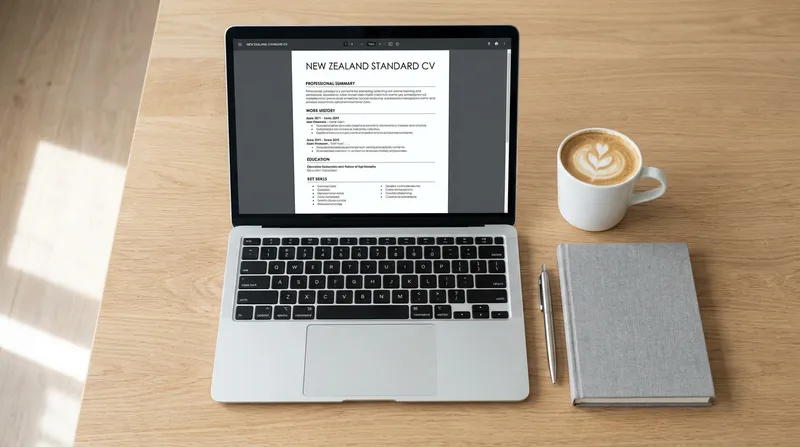
You have sent out 50 applications this month. Radio silence. If that sounds familiar, you are not alone, and it is not a reflection of your ability. The problem is often not your experience; it is your CV format. If you are looking for the old Careers Govt NZ CV PDF builder, you aren't alone. If you are using a generic template - whether you are a migrant or a local job seeker - you may be getting automatically rejected before a human ever reads your name. These templates hide visa status, use American spelling, and lack the cultural fit elements expected by Kiwi recruiters.
At JobSparrow, we have reviewed over 100,000 resumes and hired across four markets: Australia and New Zealand, the United States, Singapore, and Hong Kong. Our recruiter-lens reveals that 75% of applications never reach human eyes, according to data from Jobscan. They are filtered out by Applicant Tracking Systems (ATS) because of poor formatting.
JobSparrow is your AI career advisor, guiding you from diagnosis to the final offer. In this guide, we will show you how to optimize the standard New Zealand CV format for 2026, beat the local ATS software, and land more interviews.
What happened to the Careers Govt NZ CV builder?
For years, job seekers relied on the Careers Govt NZ CV builder to create a New Zealand style CV. However, the New Zealand government officially retired that website.
According to the Tertiary Education Commission, Tahatū Career Navigator replaced the careers.govt.nz website in December 2025. Tahatu is now the primary career planning resource for all New Zealanders. While Tahatu offers excellent career exploration tools and its feature set may evolve over time, it currently leaves a gap for proactive job seekers who need advanced, ATS-friendly document generation.
This is where JobSparrow steps in. Instead of just giving you a static template, our master career profile acts as your central database. You store every skill, project, and role in one place. When you are ready to apply, our AI enhances your descriptions and generates a tailored CV in seconds.
What is the standard New Zealand CV format?
Resume vs CV in New Zealand: what is the difference?
In New Zealand, the terms "resume" and "CV" (Curriculum Vitae) are used interchangeably. However, the expected format differs significantly from a US resume or a European CV.
A standard New Zealand CV is typically two to three pages long. It focuses heavily on quantifiable achievements and relevant skills. Standard professional practice dictates that experience sections must be listed in reverse chronological order, utilizing past tense action verbs to demonstrate field knowledge effectively.
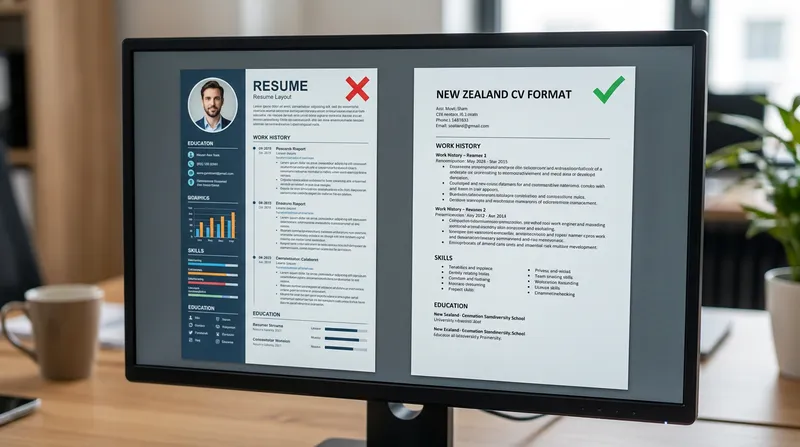
Kiwi employers value a clean, professional layout. You should avoid heavy graphics, photos, or complex tables. These elements confuse modern parsing software. If you are struggling to structure your history, JobSparrow's gap filler acts as an interactive AI coach. It identifies missing metrics and walks you through targeted questions to strengthen your profile.
How to make an ATS friendly CV for NZ employers
Most job seekers do not realize that New Zealand employers use specific ATS platforms like Snaphire, JobAdder, and LiveHire, alongside global giants like Workday. These systems scan your document for keywords and structure before a human recruiter ever sees it.
Understanding the local ATS landscape
While global platforms are common in large enterprise companies, the New Zealand market heavily relies on local software. Snaphire is widely used by the New Zealand Government and large public sector entities. JobAdder is incredibly popular among recruitment agencies.
Snaphire often requires candidates to manually verify parsed data. If your CV uses complex tables or text boxes, Snaphire will extract the text out of order. This forces you to spend 20 minutes manually correcting your employment dates and job titles. By using a clean, text-based PDF, you ensure a seamless upload process.
To pass these strict parsers, you must follow specific formatting rules. Industry-observed best practice from our own recruiter experience shows that systems like Workday parse documents in reading order. A single-column layout maps cleanly to the candidate profile, while a two-column layout scrambles your experience.
Here is how to optimize your New Zealand CV for 2026 ATS platforms:
- Use single-column layouts: Avoid sidebars that confuse the parser.
- Stick to standard headings: Use "Work Experience" and "Education" instead of creative titles.
- Save as a text-based PDF: Do not upload scanned images or graphic-heavy files.
- Mirror the job description: Use the exact keywords found in the job posting.
Manual tailoring takes hours. JobSparrow's job-specific resume tailoring analyzes the job description and intelligently selects the most relevant experience from your master profile. It rewrites your bullet points to match the exact keywords, saving you from job search burnout.
Not sure if your current CV passes these checks? Get your free recruiter-lens score using JobSparrow's resume tailoring feature and see exactly what needs fixing before your next application.
Translating a US resume to a New Zealand CV
If you are relocating from the United States or the United Kingdom, you will notice distinct differences in hiring culture. A standard US resume is aggressively self-promotional, often condensed to a single page, and highly focused on individual achievements.
In contrast, a New Zealand CV balances individual success with team collaboration. Kiwi employers appreciate a humble but confident tone. You should still quantify your achievements, but frame them within the context of team goals. For example, instead of writing "Single-handedly increased sales by 50 percent," write "Collaborated with the regional sales team to drive a 50 percent increase in revenue."
This applies across multiple industries. In the IT sector, instead of writing "Built a new software architecture that saved $1M," try "Partnered with cross-functional engineering teams to deploy a new software architecture, resulting in $1M in cost savings."
Furthermore, US resumes rarely exceed one page unless the candidate has decades of experience. In New Zealand, a two-page or even three-page CV is perfectly acceptable and often expected for mid-level to senior roles. This extra space allows you to provide more context about your responsibilities and the scale of the businesses you worked for.
The migrant's guide: visas, NZQA, and cultural fit
If you are moving to New Zealand, your CV must address specific local requirements upfront. Recruiters will automatically reject your application if they cannot determine your legal right to work.
According to Immigration New Zealand, you must clearly state your visa status. Place this information at the very top of page one, right next to your contact details. If you hold an Accredited Employer Work Visa (AEWV) or a resident visa, make it impossible to miss.
Additionally, you should address your qualifications. If you have international degrees, mention if they have been assessed by the New Zealand Qualifications Authority (NZQA). This reassures employers that your education meets local standards.
Finally, Kiwi employers look for a strong cultural fit. New Zealand workplaces highly value community involvement and cultural competencies, such as an understanding of te reo Māori or local volunteer work. Include a brief section highlighting these community contributions without sounding boastful.
Best CV templates for the New Zealand job market
Choosing the right template is critical for ATS success. Many online builders offer beautiful, graphic-heavy designs that fail instantly when uploaded to an online portal. You need a template that balances human readability with machine parsing.
JobSparrow offers five professional templates: Professional, Two Column, Elegant, Colorful, and Contemporary. If you are applying to a creative agency or design studio where your CV will be reviewed by a human first, the Colorful or Elegant templates add visual distinction. For government roles or strict enterprise ATS systems, your safest choices are the Professional or Contemporary single-column templates. They ensure your data is extracted perfectly every time.
If you are transitioning careers or have a complex work history, you might benefit from learning about the hybrid combination resume format. This format highlights your transferable skills while maintaining the reverse-chronological structure that parsers expect.
What to include and exclude in a Kiwi CV
To create a truly localized document, you must pay attention to the details. Here is a quick checklist for your New Zealand CV.
What to include:
- Local spelling: Use New Zealand English (e.g., "organise" instead of "organize").
- NZD metrics: If you managed a budget, convert the currency to New Zealand Dollars (NZD) to provide immediate context.
- A tailored cover letter: Never apply without one. JobSparrow includes an intelligent cover letter generator that writes personalized letters alongside each application.
- Local phone number: If you are already in the country, use a local +64 number.
What to exclude:
- Photographs: New Zealand strictly follows anti-discrimination laws. Including a photo will often get your CV discarded.
- Personal details: Do not include your date of birth, marital status, or religion.
- Generic objectives: Replace outdated objective statements with a sharp, value-driven professional summary.
Once your CV is ready, you need a system to manage your applications. Discover how to build a personal ATS job application tracker to keep your search organized.
How to handle career gaps on a New Zealand CV
Employment gaps are increasingly common, whether due to travel, redundancy, or family care. New Zealand employers are generally understanding of career breaks, provided you explain them clearly.
Do not try to hide a gap by stretching your employment dates. ATS parsers and background checks will easily catch this discrepancy. Instead, address the gap transparently. If you took time off to travel, frame it as a period of cultural exploration and personal growth. If you were affected by company downsizing, you can learn more about formatting a resume after layoff to ensure you do not look like a hiring risk.
JobSparrow's gap filler AI coach helps you navigate these tricky areas. It identifies unexplained gaps in your master profile and guides you on how to frame them positively before you generate your final document.
Prepare for the interview phase
Getting your CV past the ATS is only the first step. The ultimate goal is to close the offer. Once your optimized New Zealand CV lands you an interview, preparation becomes your biggest competitive advantage.
Our AI mock interviews simulate real scenarios tailored to your specific role. You can practice answering questions in a safe environment and receive real-time feedback on your clarity and delivery. This builds the natural confidence you need to impress Kiwi hiring managers. You can explore more about AI interview prep in New Zealand to maximize your practice sessions.
Secure your next job offer
Relying on outdated formats or generic templates will only prolong your job search. By adopting the standard New Zealand CV format for 2026, you will beat the ATS and showcase your true value to employers.
A career consultant charges around US$300 for a single resume. JobSparrow's full Offer Path - diagnosis, tailoring, interview prep, and more - costs US$45 per month, or US$99 every three months, and you can cancel anytime.
Ready to land more interviews? Start with a free diagnosis today. JobSparrow will analyze your current CV, provide a recruiter-lens score out of 100, and reveal the exact gaps costing you interviews. Start your free diagnosis now and take the first step toward your next job offer.
Frequently asked questions
Is a CV the same as a resume in New Zealand?
Yes, employers in New Zealand use the terms CV and resume interchangeably. However, the expected format is generally two to three pages long, detailing quantifiable achievements and a strong team-focused narrative, which differs from the aggressive one-page US resume.
How long should a New Zealand CV be in 2026?
A standard New Zealand CV should be two to three pages long. For graduate roles, aim for two pages maximum. For senior leadership or board-level positions, three pages is acceptable if every line earns its place. This provides enough space to detail your responsibilities without overwhelming the Applicant Tracking System (ATS).
Should I include a photo on my NZ CV?
No. New Zealand strictly follows anti-discrimination laws. Including a photograph can cause employers to discard your application to avoid unconscious bias, and it can also confuse automated ATS parsers. Only include a photo if you are applying for an acting or modeling role where appearance is a strict job requirement.
What happened to the Careers Govt NZ CV builder?
The New Zealand government retired the careers.govt.nz website and its CV builder in December 2025. It was replaced by Tahatu Career Navigator. While Tahatu is an excellent tool for students mapping out their future, experienced professionals will need dedicated software to build highly tailored applications.
Where do I list my visa status on a New Zealand CV?
You must list your visa status, such as an Accredited Employer Work Visa (AEWV) or a resident visa, at the very top of page one. Place it directly alongside your contact information so recruiters immediately know your legal right to work.
Tags
Keep reading
Recommended articles.
career change · resume summary
Career Change Resume Summary & Objective Examples (2026 Guide)
Write a career change resume summary that passes ATS and gets recruiter attention with fill-in-the-blank templates and real examples for 2026. Try free.
resume localization · migrant job search
Resume Localization for AU/NZ: How Migrants Can Use AI to Adapt Tone & Beat 'Tall Poppy Syndrome'
Master the AU/NZ resume format for migrants. Use AI resume localization to beat Tall Poppy Syndrome, adapt your tone, and land interviews with JobSparrow.
new zealand cv · resume formatting
NZ CV Format 2026: What Kiwi Employers Want | JobSparrow
Master the New Zealand CV format for 2026. Pass ATS filters, highlight visa status, and land Kiwi jobs faster with JobSparrow's AI templates.