
personal ats
Beyond Spreadsheets: How to Build a Personal ATS (Job Application Tracker)
By Job Sparrow Team
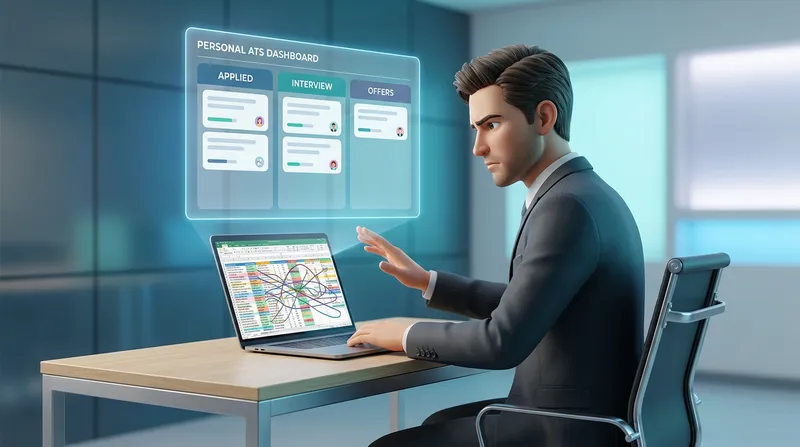
You have sent out 50 applications this month. You are tailoring your resume for every single role, writing custom cover letters, and trying to keep track of it all in a massive Excel file. If you are managing dozens of applications, you need a personal ATS (a job application tracker) that does more than a basic spreadsheet.
Then, a recruiter calls. They want to interview you for the "Marketing Manager" position. Panic sets in. Which version of your resume did you send them? What specific skills did you highlight?
This is the core pain point for modern job seekers. The sheer volume of applications required today leaves candidates overwhelmed. They lose momentum and forget crucial context, leading to botched interviews and black hole anxiety. According to Glassdoor, every corporate job opening attracts an average of 250 resumes. Furthermore, data from Jobscan and Ashby reveals that applications per hire have tripled since 2021, with recruiters now managing up to 291 applications per hire.
You cannot manage this level of competition with a basic spreadsheet. Not sure where your CV stands? See your recruiter-lens score in minutes with a free diagnosis at JobSparrow.
What is a Job Application Tracker (Personal ATS)?
A job application tracker is a specialized tool or software designed to help you organize, monitor, and optimize your entire job search process. Think of it as a job search CRM (Customer Relationship Management) system, but instead of tracking sales leads, you are tracking your career opportunities.
While employers use an ATS to filter candidates, a personal ATS empowers you to manage employers. It moves beyond simple status updates (like "Applied" or "Interviewing") and stores the vital context of your job hunt. A robust automated job tracker will link the exact job description to the specific resume version you submitted, log your networking contacts, and remind you when to follow up.
Ready to land more interviews? Start with a free diagnosis at JobSparrow. The diagnosis is free. The full Offer Path (including resume tailoring, cover letters, mock interviews, and tracking) is a one-time $129 with no subscription.
If you are still manually typing company names into Google Sheets, it is time to ditch your job application tracking sheet and upgrade to an AI job search tracker.
Why You Should Ditch the Job Search Spreadsheet
Spreadsheets are fantastic for accounting, but they are terrible for managing a dynamic job search. Here is why the traditional job tracking spreadsheet template is failing you.
1. They Track Status, Not Context
A spreadsheet can tell you that you applied to a role in Sydney on Tuesday. It cannot tell you which specific achievements you highlighted in that application. When you finally get the interview, you are left guessing what the hiring manager actually read. Context is everything in an interview, and spreadsheets strip all context away.
2. They Cause Job Search Burnout
Manually updating rows and columns after spending hours writing cover letters is exhausting. This administrative burden contributes heavily to job search burnout, which is why an AI resume and cover letter creator saves your energy. You should be spending your energy preparing for interviews, not doing data entry.
3. They Cannot Store Complex Documents
You cannot easily embed a PDF resume, a tailored cover letter, and a web-scraped job description into a single Excel cell. This forces you to create a messy folder system on your computer, leading to lost files and version control nightmares.
4. They Ignore the Hidden Job Market
Most spreadsheets are designed for formal applications. However, networking is widely cited as the main route into the hidden job market, with some frequently quoted estimates suggesting it accounts for as much as 85% of roles filled. If your tracker does not handle informal coffee chats and LinkedIn messages, you are missing out on the majority of opportunities.
5. They Lack Mental Health and Momentum Tracking
Job hunting is emotionally draining. Spreadsheets only show you a sea of "Rejected" or "Pending" statuses, which can destroy your confidence. A modern system helps you celebrate small wins, like completing a gap analysis or finishing a mock interview, keeping your momentum high.
Key Features of a Modern Personal ATS
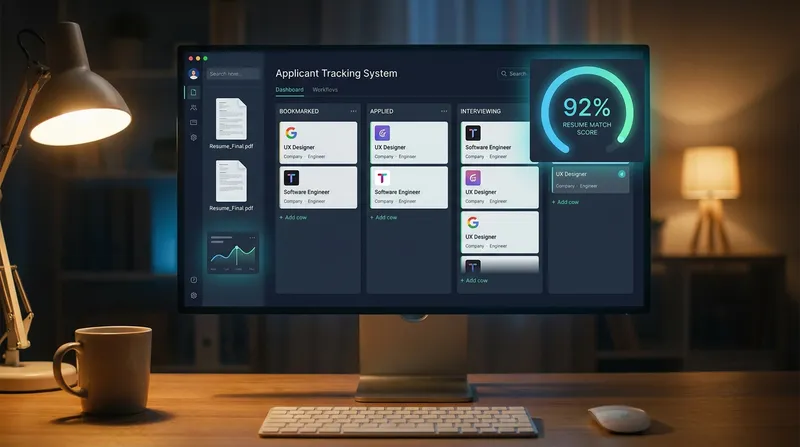
When building or choosing a job search dashboard, you need features that actively coach you toward a job offer. Here is what a top-tier personal ATS must include.
Centralized Master Career Profile
The biggest mistake job seekers make is starting from scratch for every application. Your tracker should connect to a single source of truth for your career history. JobSparrow uses a Master Career Profile where you store every skill, project, and role. When you find a job you want, the AI pulls the most relevant experience from this master database to create a targeted application.
Job-Specific Resume Tailoring and Version Control
Generic applications have a success rate of less than 1%. Your tracker must save the exact resume variant you used for each application. Advanced tools analyze the specific job description and intelligently select the most relevant experience, rewriting bullet points to match the requirements. With JobSparrow, you can choose from five distinct resume templates (Professional, Two Column, Elegant, Colorful, Contemporary) and download your tailored document in PDF or DOCX format. You can also use the Instant Resume feature to generate a role-based resume even without a specific job listing.
Visa and Location Tracking for Migrants
If you are a migrant targeting a new country, location and work rights are critical. A good tracker allows you to tag roles by visa sponsorship availability or specific geographic requirements. This prevents you from wasting time on roles you cannot legally accept.
Resume Match Score and Gap Analysis
Before you apply, you should know your chances. A modern tracker provides a resume match score by comparing your profile to the job description. Some platforms go a step further with gap analysis features, identifying missing metrics or unexplained employment gaps and walking you through targeted questions to fix them before you submit.
External AI Agent API Integrations
Job seekers use various AI assistants for different tasks. Making them switch apps is friction. Look for platforms that offer a public API. JobSparrow offers a SKILL.md-compatible API that lets external AI agents (like Claude Desktop or Cursor) help you apply for jobs, from job analysis to PDF download, all without leaving your preferred tool.
How to Build Your Job Search Dashboard
Building an effective application pipeline requires strategy. Here is a step-by-step guide to organizing your search for maximum efficiency.
Step 1: Establish Your Core Database
Stop starting from scratch every time you apply. Build a comprehensive database of your entire work history. If you are a career changer, this is where you map out all your transferrable skills. Need help framing this? Review these career change resume summary and objective examples.
Step 2: Define Your Pipeline Stages
Your job search dashboard should visualize your progress. Set up clear stages:
- Bookmarked: Research the company culture and save the job description.
- Preparing Documents: Use AI to analyze the job description and restructure your bullet points. You might choose to use the hybrid combination resume format for maximum impact.
- Applied: Log the exact date and set a reminder for a follow-up.
- Networking: Find 2nd-degree connections on LinkedIn who work there.
- Interviewing: Utilize real-time audio recording and AI analysis to practice.
- Offer / Negotiation: Track salary details and benefits.
- Rejected / Ghosted: Archive the role but save the networking contacts.
Step 3: Integrate Your Networking Efforts
Do not just track jobs; track people. The Columbia University Center for Career Education strongly suggests tracking your positions of interest alongside networking contacts and interview processes. Add alerts and reminders to your calendar so you never miss a follow-up deadline.
Step 4: Prepare for the Interview Phase
Your tracker should seamlessly transition you from applicant to interviewee. When a company calls, you should be able to click on the job entry, review the exact resume you sent, and launch into practice mode. With JobSparrow, you can initiate AI mock interviews directly from your saved job application. For regional specifics, check out our guide on AI interview prep in New Zealand.
The Migrant and Career Changer Perspective
Standard job trackers often ignore the nuances of complex career transitions. If you fall into these categories, your personal ATS needs to work harder for you.
For Migrants Targeting Australia and New Zealand
If you are moving to the APAC region, you are dealing with different resume formats, unique job boards like Seek.com.au, and specific compensation language. Your tracker should help you manage these localized details. For example, you need to track whether a role is offering a salary package that includes superannuation. Learn more about salary expectations in Australia and how to answer 'plus super' vs. 'including super'.
For Career Changers and Founders
Pivoting industries requires careful positioning. A standard spreadsheet will not help you reframe your past experience. If you are transitioning from business ownership, you need a system that helps you translate those unique skills. Read our guide on how to write a resume after owning a business and pass the ATS.
Similarly, if you have broad experience, learn how to focus a 'jack of all trades' resume. Even if you are staying within your company, tracking your internal networking and applications is vital. See our advice on how to update your resume for an internal promotion.
Best Job Tracker Tools and CRM Software
The market is flooded with tools promising to organize your search. Here is how the different approaches stack up.
| Feature | Manual Trackers (Excel, Trello) | Auto-Apply Bots | JobSparrow (Personal ATS) |
|---|---|---|---|
| Resume Tailoring | No | No (Generic) | Yes (AI-driven) |
| Interview Prep | No | No | Yes (Mock Interviews) |
| Status Tracking | Yes (Manual) | Yes | Yes (Automated) |
| Cost | Free | Varies (Subscription) | $129 (One-time) |
Manual Trackers (Trello, Notion, Excel)
These are free and highly customizable, but they require massive manual upkeep. They do not generate resumes, they do not analyze job descriptions, and they certainly do not practice interviews with you. They rely entirely on your discipline to maintain them.
Auto-Apply Bots
Some platforms focus entirely on volume, applying to hundreds of jobs on your behalf. While this sounds appealing, it often results in low-quality, untailored applications that get instantly rejected. If you are interested in this route, you must do it intelligently. Learn how to automate job applications with AI by building an auto-apply bot using Claude and APIs.
Traditional Career Coaches vs. AI-Powered Tools
Traditional career coaches charge $300+ per resume and $2,000+ per program. They offer great advice, but they cannot sit with you at 2:00 AM while you tailor your 15th application of the week. An AI-powered personal ATS provides expert-level guidance on demand.
The Comprehensive Solution: JobSparrow
JobSparrow is not just a job application status tracker; it is an AI career advisor that coaches you through the whole hunt to the offer. Our platform combines a smart job search engine (aggregating LinkedIn, Indeed, and Seek) with a centralized tracking dashboard.
When you save a job in JobSparrow, the AI instantly fetches the details, provides a match score, and guides you through our five-stage Offer Path: Diagnose, Position, Execute, Prepare, and Close. You generate a hyper-personalized resume, create a custom cover letter, and track the status all in one place. Unlike per-document career consultants, JobSparrow is one flat $129 for the whole Offer Path.
Frequently Asked Questions
What is a personal ATS (Applicant Tracking System)?
A personal ATS is a specialized software tool designed specifically for job seekers to organize, monitor, and optimize their entire job search process. While companies use an employer ATS to filter out candidates, a personal ATS acts as your private job search CRM (Customer Relationship Management). It allows you to track job listings, monitor application statuses, manage tailored resumes, log networking contacts, and schedule interview follow-ups in one centralized digital dashboard.
Is a job search spreadsheet better than a tracker app?
No. While a basic Excel or Google Sheets file is better than having no system at all, it requires heavy manual data entry and quickly becomes overwhelming. Spreadsheets only track static status updates. A dedicated tracker app automates data collection, links your specific tailored PDF resumes directly to the job postings, and provides actionable insights like resume match scores. Upgrading to a personal ATS saves you hours of administrative work.
How do I keep track of different resume versions for different jobs?
The most effective way to manage version control is by using a job search CRM that automatically saves your specific resume file within the individual job application record. If you use a platform like JobSparrow, every highly tailored resume you generate is permanently linked to the specific job URL you applied for. When a recruiter calls, you can instantly pull up the exact document they are reading.
What specific stages should I include in my job application pipeline?
A highly effective job search dashboard should include the following Kanban-style stages:
- Bookmarked: Roles you are researching.
- Tailoring Documents: Jobs where you are currently adapting your resume and cover letter.
- Applied: Submitted applications waiting for a response.
- Networking: Roles where you are actively reaching out to company insiders.
- Interviewing: Active interview processes (which can be broken down into Round 1, Round 2, etc.).
- Offer Stage: Roles where you are negotiating salary and benefits.
- Rejected or Archived: Roles that did not work out, kept for historical data and networking contacts.
How often should I follow up on a job application without being annoying?
If you have not heard back after submitting an application, sending a polite follow-up email after one to two weeks is the standard professional timeline. If you have already completed an interview, always ask the recruiter for their expected timeline at the end of the meeting. You should then follow up exactly one business day after that specific deadline passes. A personal ATS will let you set automated calendar reminders for these exact dates.
Can a job application tracker help with the hidden job market?
Yes, absolutely. The hidden job market consists of roles that are never publicly posted, and they are accessed purely through networking. A modern personal ATS allows you to track informational interviews, coffee chats, and LinkedIn messages right alongside your formal applications. By treating your networking contacts as leads in your job search CRM, you can tap into the 85% of jobs filled through professional connections.
Take Control of Your Job Search Today
Relying on memory and messy spreadsheets is a guaranteed way to lose momentum in a competitive job market. By upgrading to a personal ATS, you ensure that every application is highly tailored, every follow-up is timely, and every interview is approached with confidence.
JobSparrow is built by hiring experts who have collectively reviewed 100,000+ resumes and bring 10+ years of hands-on recruiting experience across four markets: Australia, New Zealand, the United States, Singapore, and Hong Kong. We know what recruiters look for, and we have built a system to help you deliver it.
Ready to stop guessing and start tracking? Start with a free diagnosis today. See your recruiter-lens score, fix the gaps in your profile, and unlock the full Offer Path for a one-time fee of $129, with no hidden subscriptions.
Tags
Keep reading
Recommended articles.
resume tips · overqualified
How to Tailor Your Resume When You're 'Overqualified' (Without Dumbing It Down)
Learn how to tailor your resume when you are overqualified without hiding your experience. Get your free recruiter-lens score and land more interviews.
master resume · resume tailoring
The 'Master CV' Method: Why Managing 50 Resume Versions is Sabotaging Your Job Search
Stop drowning in PDFs. Learn how to manage multiple resumes using a master CV template and cure callback panic for a smarter, faster job search.
ai resume builder · job search tips
How to Use an AI Resume and Cover Letter Creator to Apply in Under 5 Minutes
Stop wasting hours. Use an AI resume and cover letter creator to tailor your profile and apply in under 5 minutes. Start your free CV diagnosis today.