
career gap
How to Explain a Career Gap in Australia & NZ: The 2026 CV & Interview Guide
By Job Sparrow Team

Staring at the empty space on your resume can feel daunting. You worry recruiters in the competitive job markets of Australia and New Zealand will see the gap and dismiss your application without a second thought. This uncertainty is a heavy weight for many talented professionals returning to the workforce.
But here's the truth: career gaps are a normal part of a modern career path. The key isn't to hide your gap, but to own it, frame it, and present it as a period of growth. This guide moves beyond generic advice to give you the AU/NZ-specific context, language, and confidence-building strategies you need to turn your career break into a compelling part of your professional story.
What Is a Career Gap and Why It's Normal in AU/NZ
A career gap is any period longer than a few months when you were not formally employed. In Australia and New Zealand, these breaks are increasingly common and understood. According to a survey by the recruitment firm Hays, 64% of women and 49% of men in Australia and New Zealand have taken a career break. The reasons are as varied as the people who take them.
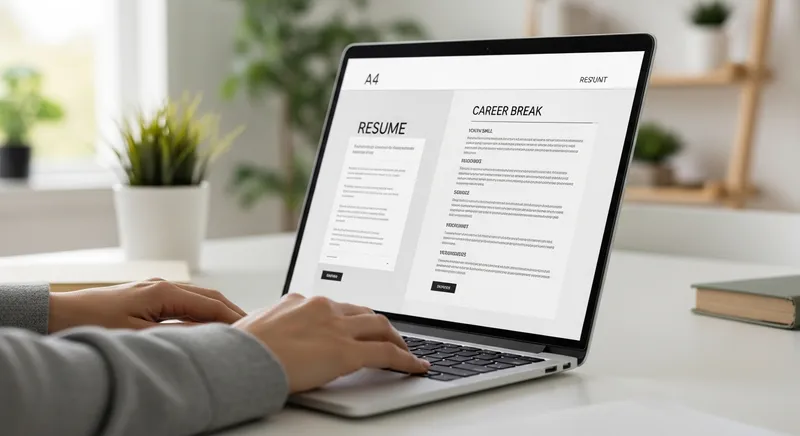
Crucially, the stigma around career gaps is fading. Recruiters are more interested in what you did during that time and how you are prepared for your next role. The key is to be proactive in your explanation.
Common Reasons for a Career Gap
Your reason for taking a break is a valid part of your journey. Here are some of the most common scenarios:
- Parental Leave: A significant number of professionals take time off to care for children. Data from the Australian Bureau of Statistics highlights how normal this path is.
- Travel or Sabbatical: A planned break for travel is common in Australia and New Zealand and is often seen as a source of valuable life experience.
- Study or Upskilling: Returning to university or taking a course to gain new qualifications is a highly respectable and strategic reason for a gap.
- Redundancy: Being made redundant is not a reflection of your skills, particularly in a shifting economy.
- Caring for a Family Member or Personal Illness: Focusing on health, whether your own or a loved one's, is a necessary and legitimate reason for a break.
- Starting a Business: The skills gained from entrepreneurship are immense, even if the venture didn't continue.
- Migration and Visa Processes: For new arrivals to Australia and NZ, gaps can occur while waiting for visa approvals or seeking the first local role.
Ready to frame your career break? Start by building your Master Career Profile with JobSparrow. Our AI will help you identify and articulate the valuable skills you gained during your time away. Start Your Free Profile.
The AU/NZ Context: What Local Recruiters Really Think
Generic advice from US-based blogs often misses the mark. In Australia and New Zealand, recruiters are generally pragmatic. A director at Robert Half Australia notes that while long, unexplained gaps can be a concern, breaks for family, travel, or study are understood and can even add value. The leading job board SEEK advises candidates to "own their journey" and be honest.
However, it's important to be aware of potential biases. The Australian Human Rights Commission found that nearly half of mothers experienced workplace discrimination. This makes it even more important to frame your parental leave gap with confidence and focus on your readiness to return.
Actionable Tip: From Vague to Valuable JobSparrow's Gap Filler feature helps you transform a simple explanation into a powerful statement. See the difference:
- Before: "Took a career break for personal development."
- After: "Undertook a planned career break to achieve a certification in Project Management (PMP) and travel through Southeast Asia, enhancing cross-cultural communication and budget management skills."
How to Explain a Career Gap on Your Resume or CV
Your resume's job is to get you the interview. You have a few strategic options for addressing a gap with clarity and confidence.
Option 1: The Single-Line Explanation
For shorter gaps or straightforward reasons, add a single italicized line within your chronological work history.
Example:
2023 - Present: Senior Marketing Manager, XYZ Corp
2022 - 2023: Planned career break for professional development and travel
2019 - 2022: Marketing Manager, ABC Ltd
Option 2: The 'Career Break' Entry
For longer breaks, create a dedicated entry just like a job. This is the most modern and confident approach.
Example:
Professional Sabbatical & Development | Self-Directed | Sydney, NSW Jan 2024 - Present
- Undertook a planned career break to travel extensively through Southeast Asia, enhancing cross-cultural communication and problem-solving skills.
- Completed certified online courses in Advanced Google Analytics and HubSpot Inbound Marketing to upskill in current digital marketing trends.
- Volunteered with a local community organisation, managing their social media presence and increasing engagement by 40%.
Which Resume Format is Best?
- Chronological Resume: Best for most professionals. It's what recruiters prefer. Use the methods above to address the gap directly.
- Hybrid or Combination Resume: This format leads with a strong skills summary but retains a clear chronological work history. It's an excellent choice for career changers or those with significant gaps, as it immediately showcases your value.
- Skills-Based/Functional Resume: Use this format with caution. While it can highlight skills, some recruiters find it can obscure work history and may view it as a red flag. For most job seekers in AU/NZ, a chronological or hybrid format is a stronger choice.
You've got this: JobSparrow offers five professional, ATS-compliant templates (from classic Professional to modern Contemporary). You can choose a design that reflects your industry and ensures your gap explanation is clearly visible and easy to understand. For more on this, check our guide to ATS-friendly resumes.
How to Address a Career Gap in a Cover Letter
Your cover letter is where you add context. You don't need to dedicate a lot of space to the gap; a single, well-crafted sentence is perfect. The best place is often in the second or third paragraph, after you've established your enthusiasm and key skills.
Example for a returning parent:
"After a planned career break to raise my young family, during which I further honed my skills in project management and budgeting, I am eager and excited to return to the marketing industry and contribute my expertise to your team."
Example for a redundancy:
"Following a structural reorganisation at my previous company, I have taken the opportunity to complete my Project Management Professional (PMP) certification and am now seeking a role where I can apply my enhanced skills."
Actionable Tip: JobSparrow's Intelligent Cover Letter Generator can create a compelling letter for you, weaving your experience into a narrative that perfectly addresses the job requirements. You can then easily add your one-sentence gap explanation for a personal touch.
How to Talk About a Career Gap in an Interview
This is where your preparation will truly pay off. The key is to have a concise, confident answer ready.
- Be Honest but Brief: Briefly state the reason without over-explaining or sounding defensive.
- Focus on the Positive: Immediately pivot to what you gained or learned. Did you learn a new language? Manage a household budget? Master time management with a newborn? These are all valuable skills.
- Connect to the Job: Link the skills from your break to the requirements of the job.
- Reiterate Your Enthusiasm: End by confirming your readiness and excitement to contribute.
Example Answer for a 2-year gap due to illness:
"I took a two-year break to focus on my health and have made a full recovery. That time taught me a great deal about resilience and prioritisation. I also stayed current with industry trends by completing a short course in digital strategy. Now, I'm fully re-energised and excited to bring my skills in [mention a key skill] to this role."
The best preparation is practice. Use JobSparrow's AI Mock Interviews to rehearse your answer. You can get ethical AI feedback on your delivery and build the confidence to deliver it smoothly and professionally on the day.
A Practical Guide to Returnship Programs in Australia & NZ
One of the most exciting developments for career returners is the rise of 'returnships'. These are paid, structured programs designed to help experienced professionals on-ramp back into the workforce. According to Michael Page, these programs provide training, mentorship, and a direct pathway to a permanent role.
As one returner shared, "After a 3-year parental break, a returnship at Deloitte helped me transition back into a senior marketing role within 6 months. It was the perfect bridge."
Companies in Australia offering Returnship Programs include:
- Deloitte
- EY
- Macquarie Group
- Lion
- CBA (Commonwealth Bank)
In New Zealand, while formal programs are less centralized, many large companies like Spark and Fonterra have supportive diversity and inclusion initiatives. Actively search for "returnship" or "return to work program" on SEEK and LinkedIn.
Special Advice for Migrants & Career Changers
For Migrants: Gaps can occur due to visa processing or securing a first role without local experience. Be upfront.
- On your CV: List "Relocating to New Zealand" or "Awaiting Visa Approval" in your timeline.
- In your cover letter: Briefly mention your move and express enthusiasm for contributing to the local industry.
- Focus on transferable skills: Emphasise globally relevant skills like software proficiency or project management.
For Career Changers: Your 'gap' might be the period you spent re-skilling. Frame this as a deliberate move.
- Highlight new qualifications: Place recent education prominently on your resume.
- Write a strong summary: Start your resume with a powerful career objective that states your new direction and highlights transferable skills.
- Leverage a hybrid resume: This format is highly effective for showing off new skills while maintaining a clear work history. Get more tips from our career change resume guide.
Frequently Asked Questions
How long is a career gap before it becomes a red flag in Australia?
Generally, any unexplained gap over six months warrants a brief explanation. The context is more important than the duration. A well-explained two-year sabbatical is far better than a mysterious six-month void.
Do I have to explain a career gap on my resume in NZ, or can I wait for the interview?
You should always address it on your resume. The official advice from Careers.govt.nz is to be prepared to explain gaps. Leaving a blank space allows a recruiter to assume the worst. By addressing it proactively, you control the narrative.
Is it better to omit months and only use years on my resume to hide a short gap?
Absolutely not. Experienced recruiters spot this instantly. It suggests you are hiding something and damages your credibility. It's far better to be transparent.
How do I explain a career gap taken for mental health reasons?
You are not required to disclose personal health details. Use professional phrases like "took a planned break for personal reasons" or "took a sabbatical to focus on health and wellbeing." The key is to pivot quickly to the fact that you are now recovered, re-energised, and ready to contribute.
What are Australian recruiters' real opinions on career gaps?
Major firms like Robert Half and platforms like SEEK confirm that attitudes have shifted. The red flag is not the gap itself, but an inability to articulate what you did or learned during that time.
How should I format a 'sabbatical for travel' on my CV for an NZ job?
Treat it like a job. Create a dedicated entry under your 'Work Experience' or a new section called 'Professional Sabbatical'. For example:
Travel Sabbatical | Self-Directed June 2024 - Dec 2024
- Independent travel through South America, developing budget management, cross-cultural communication, and problem-solving skills.
- Volunteered on a conservation project in Costa Rica, collaborating with an international team.
Turn Your Career Gap Into Your Greatest Strength
A career gap is not a liability; it's a part of your unique story. By framing it with confidence, focusing on the skills you gained, and aligning it with your future goals, you can turn a perceived weakness into a compelling strength.
Ready to build a CV that tells your story with confidence? JobSparrow's AI-powered platform helps you craft a tailored, ATS-friendly resume that gets you noticed for the right reasons.
Tags
Keep reading
Recommended articles.
career gap · resume writing
How to Explain Career Gaps on Your Resume: 2026 Australia & NZ Guide
Turn career gaps into strengths on your AU & NZ resume. Expert examples for redundancy, parental leave & travel. 2026 guide with proven strategies.
employment gap · career break
Explain Employment Gaps: AU/NZ Resume Guide | Job Sparrow
Learn how to confidently explain career gaps on your AU/NZ resume. Get expert tips and real-world examples to land your next role. Start your search now!
panel interview · interview tips
Panel Interview AU & NZ (2026): 15+ Questions & Answers to Succeed
Master your 2026 panel interview in Australia & NZ. Get 15+ STAR questions, expert tips for introverts, migrants, and virtual interview tactics.