
digital marketing
AI Mock Interview for Digital Marketing Manager (Australia): 2026 Questions & Expert Answers
By Job Sparrow Team
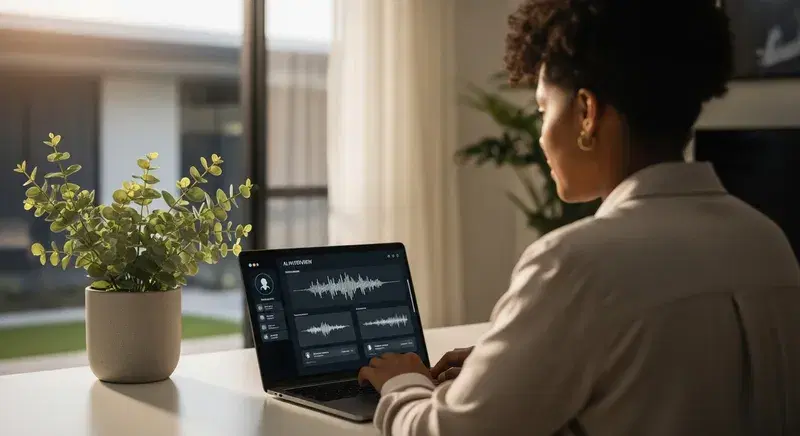
Landing a Digital Marketing Manager role in Australia requires more than just knowing your craft. It demands a specific blend of strategic thinking, commercial acumen, and cultural fluency. Generic interview advice simply doesn't cover this unique market. You have the experience, but you're facing a nagging uncertainty: Are your answers strategic enough for a manager role? Will they resonate with Australian hiring managers? How do you prove your value if you're a recent migrant or changing careers?
This is the core challenge for so many talented professionals. You're not just looking for a list of questions; you need a system to build confidence and prove you are the right leader for the job. This guide is your system. We will break down real questions asked in Australian interviews, provide expert analysis on what hiring managers really want to hear, and show you how to use AI to practice and perfect your delivery.
Stop guessing and start preparing with strategic intent. With JobSparrow's AI Mock Interview tool, you can simulate the real experience, get instant feedback, and walk into your next interview with the confidence of a local expert.
Why Australian Digital Marketing Interviews Are Different
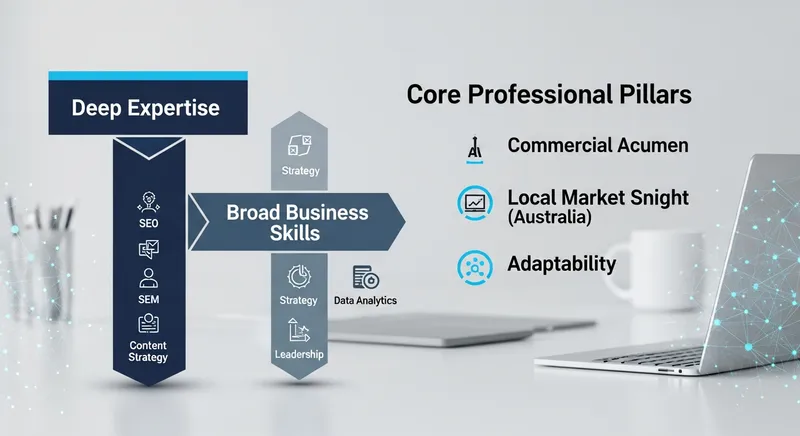
Unlike roles in other markets that might focus purely on technical execution, Australian employers hiring for management positions place a huge emphasis on two things: commercial acumen and a T-shaped skill set. They are not just hiring a marketer; they are hiring a business leader who understands how marketing drives profit. The good news? Once you understand these expectations, you can systematically prepare to exceed them.
According to insights from the Australian Marketing Institute (AMI), the most critical skills for today's marketers are bravery, adaptability, and strategic thinking. This means your interview answers must connect marketing activities directly to business outcomes like revenue growth, market share, and customer lifetime value.
Actionable Tip: Before your interview, find a recent successful (or even unsuccessful) Australian marketing campaign. Be prepared to discuss why it worked or failed from a strategic and commercial perspective. This demonstrates local awareness and analytical skill.
The 2026 Australian Digital Marketing Landscape: What Managers Must Know
To succeed in your interview, you must speak the language of the current Australian market. The landscape is dynamic, with strong growth and shifting priorities. For instance, SEEK projects an impressive 11.4% job growth for digital marketing managers over the next five years, indicating a competitive but opportunity-rich environment.
Your strategic recommendations should reflect where the money is going. The latest IAB Australia report shows that while search and display remain the largest segments, video advertising is the fastest-growing area. A savvy manager will discuss a balanced and forward-looking channel mix.
Furthermore, the conversation around AI is maturing. As Australia's national science agency, the CSIRO, advises the government on AI strategy, its integration into business is a national priority. By 2026, you will be expected to have a clear viewpoint on how AI can create efficiencies and new opportunities in a marketing team.
Actionable Tip: When asked about budget allocation, use this data. For example: "Given the trends shown by IAB Australia, I'd propose a core investment in search to capture intent, but I would allocate a significant portion of our growth budget to video to build brand and engage audiences on platforms where consumption is rising."
Finally, be prepared for the salary conversation. For a detailed breakdown, it's wise to consult a guide on how to answer 'what are your salary expectations?' tailored for the Australian market.
How to Prepare with an AI Mock Interview
Knowing the trends is one thing; articulating your experience under pressure is another. This is where AI mock interviews become a game-changer. While some job seekers are skeptical, with a Gartner survey showing low trust in AI for evaluation, using it for practice is a powerful, private advantage.
As noted by industry experts, candidates must get comfortable speaking to a non-reactive screen. An AI mock interview provides a safe space to do exactly that. In fact, over 85% of our users report feeling more confident after just three practice sessions.
JobSparrow's AI Mock Interview tool takes this a step further. It allows you to input the specific job description you're applying for, generating tailored questions a real hiring manager would ask. After you record your answers, you get instant feedback on:
- Answer Quality: Does your response directly address the question with substance?
- Clarity: Are you speaking clearly and concisely?
- Delivery Tone: Do you sound confident and professional? The AI analyzes your pacing, use of filler words, and vocal tone to give you specific pointers.
Actionable Tip: Use the AI mock interview to rehearse your STAR (Situation, Task, Action, Result) method answers. Record your response, review the AI feedback, and watch your recording. Did you sound convincing? Was the 'Result' clear and quantified? Repeat until the story is impactful and flows naturally.
Common Digital Marketing Manager Interview Questions (And How to Answer Them in Australia)
Great preparation involves mastering common questions with a senior, Australian-specific lens. Here's how to approach them.
General & Culture Fit Questions
These questions assess your personality, motivation, and team fit. Your goal is to sound competent, authentic, and well-researched.
-
"Tell me about yourself."
- Weak Answer: A chronological history of your resume.
- Strong Australian Answer: A concise 90-second pitch connecting your past experience to the future needs of their company. Structure it as: 1. Present: "I'm currently a Digital Marketing Manager at X, where I drove a 30% increase in lead generation." 2. Past: "Before that, my experience at Y gave me strong skills in SEO and team leadership." 3. Future: "I'm excited by this role at [Company Name] because I can apply my skills in [mention a specific challenge from the job description] to help you achieve [mention a company goal]."
-
"Why are you interested in this role at our company?"
- Weak Answer: "I need a new job and your company seems great."
- Strong Australian Answer: Show you've done your homework. Reference a specific aspect of the company that appeals to you. Example: "I've been following your 'Aussie Goodness' campaign and was impressed by its authentic tone. My experience in building community-focused content strategies aligns perfectly with that approach, and I'm keen to bring my skills to a brand that clearly values connecting with its customers on a local level."
Strategic & Leadership Questions (For Managers)
This is where you differentiate yourself from junior candidates. Your answers must demonstrate strategic oversight and leadership, aligning with advanced competencies taught in programs like RMIT's Graduate Certificate in Digital Marketing Leadership.
-
"Describe your leadership style."
- Weak Answer: "I'm a people person" or "I'm results-driven."
- Strong Australian Answer: Show sophistication. "I practice situational leadership. With an experienced team member, I'm collaborative and grant autonomy. For a junior marketer, I'm more of a coach, providing clear direction and development opportunities. For example, I once mentored a coordinator who is now a successful SEO specialist by creating a structured learning plan and giving them ownership of smaller projects."
-
"How do you measure and report on ROI to senior stakeholders?"
- Weak Answer: "I use Google Analytics."
- Strong Australian Answer: "I focus on translating marketing metrics into business outcomes. For stakeholders, I'd create a dashboard that moves beyond vanity metrics. It would feature: 1. Lead-to-customer conversion rate; 2. Customer Acquisition Cost (CAC) by channel; 3. Customer Lifetime Value (CLV); and 4. The marketing-originated revenue pipeline. For example, in my last role, I showed that a $50k investment in content marketing generated $300k in qualified sales pipeline within six months."
Technical & Skills-Based Questions
Here, you prove you have the hands-on knowledge defined by government bodies like Jobs and Skills Australia as core to the role. This is where you solidify your 'T-shaped' expertise, and practicing with an AI tool helps bridge any gaps between your knowledge and your ability to articulate it under pressure.
- "Walk me through a successful multi-channel campaign you've led."
- Use the STAR method.
- Situation: "Our goal was to launch a new B2B software product in a competitive market with a limited budget."
- Task: "My task was to generate 100 qualified leads in the first quarter."
- Action: "I developed an integrated strategy using targeted LinkedIn ads, a deep-dive webinar, a sequenced email nurture campaign for attendees, and a pillar content page for organic SEO."
- Result: "We exceeded our goal, generating 135 qualified leads. The webinar had a 40% attendance rate, and the campaign delivered a 6x return on ad spend within three months."
The Digital Marketing Case Study: An Australian Deep Dive
Many manager interviews include a case study. They are not looking for a perfect answer, but a logical, structured approach.
Example Case Study: "We're launching a new plant-based meat alternative into the Sydney and Melbourne grocery markets with a 6-month marketing budget of $150,000. Walk me through your high-level plan."
How to Structure Your Answer:
- Ask Clarifying Questions (Crucial!): "Before I dive in, could you clarify the primary target audience and our main point of difference? What does success look like in 6 months: sales volume or brand awareness?"
- State Your Assumptions: "Assuming our target is health-conscious millennials and our key differentiator is superior taste..."
- Define SMART Goals: "My primary goal would be to achieve a 5% market share in targeted postcodes. A secondary goal is to build an engaged online community of 10,000 followers."
- Propose a Channel Mix (with Justification): "I'd use a phased approach. Phase 1 (Launch - 60% budget): Focus on awareness and trial through in-store sampling, PR with food bloggers, and geo-targeted social video ads, which IAB data shows is a high-growth area. Phase 2 (Sustain - 40% budget): Focus on performance marketing like SEM and retargeting to drive repeat purchases."
- Outline Measurement: "We'd track retail scan data for sales, coupon redemption for trial, and social engagement for community growth, reporting on progress monthly."
Special Advice for Migrants & Career Changers
Your unique background is a strength, not a weakness. Here's how to frame it.
For Migrants
The dreaded "you have no local experience" is a hurdle, but it's beatable. Your task is to de-risk yourself as a candidate.
- Frame Global as a Strength: "My experience in the UK market gives me a unique perspective on mature digital ecosystems, which I can adapt to the Australian context."
- Do Your Homework (and show it): Proactively mention Australian brands, trends, and publications to show you are engaged and learning the local landscape.
- Localize Your Resume: Ensure your resume is tailored for the market. A free resume review can help you catch common mistakes.
For Career Changers
You need to connect the dots for the hiring manager. Focus on your transferable skills.
- Use the T-Shape Model: If you were a project manager, your transferable skills are budget management and stakeholder communication. These form the broad top of your 'T'. Then, show you've built marketing-specific depth through courses or small projects.
- Build a Portfolio: You don't need a full-time marketing job to get experience. Offer to help a friend's business, or build a blog to demonstrate your SEO and content skills.
- Rewrite Your Narrative: Your resume needs to tell a story of deliberate change. A guide on how to write a career change resume is essential for this.
You're Almost Ready: Your Final Pre-Interview Success Checklist
- Tailor Your Resume, Flawlessly: Your application needs to shine. Use a tool that helps you create an ATS-friendly resume tailored to the specific job description.
- Research Deeply: Go beyond the homepage. What are their business challenges? Who are their competitors in Australia? What was their last major campaign?
- Prepare Your Questions: Have 3-5 intelligent questions ready, such as: "What is the biggest challenge the marketing team is facing right now?" or "How does this role interact with the sales and product teams?"
- Run a Full AI Mock Interview: Use JobSparrow to simulate the entire experience. Paste the job description, practice your answers, and refine your delivery based on AI feedback.
- Track Everything: Stay organized. Use a job application tracker to manage your progress.
Confidence in an interview comes from having practiced until your answers feel natural. You have the skills. By preparing with a focus on Australian business context and leveraging AI, you can turn your next interview into a confident conversation.
Ready to prove you're the best candidate? Upload your resume and a target job description to JobSparrow and run your first tailored AI mock interview today.
Frequently Asked Questions
What are the most common digital marketing interview questions in Australia?
Beyond standard questions, Australian interviews for manager roles focus on commercial acumen. Expect questions on ROI, budget management, and market-entry case studies. Behavioral questions using the STAR method, such as "Tell me about a time a campaign failed," are also standard.
What salary should a Digital Marketing Manager expect in Australia?
According to SEEK, the typical salary is between $110,000 and $130,000. This varies by city and experience, with Sydney often commanding higher figures. Always research the specific company and location before your interview.
How can I prepare for a digital marketing case study interview?
The key is structure. First, ask clarifying questions to understand goals. Then, state your assumptions, define SMART goals, propose a justified channel mix, and explain how you will measure success. This logical process is more important than a single "right" answer.
What technical skills are most in-demand for Australian digital marketers in 2026?
Employers seek 'T-shaped' marketers with deep expertise in one area (like SEO) and broad knowledge across others. As per leaders like RMIT, key managerial skills include leading digital transformation, assessing MarTech, and using data for strategic planning, not just reporting.
How can I demonstrate 'culture fit' for an Australian company?
Australian workplace culture is often collaborative and direct. Show you're a team player who is open to feedback. Research the company's values and connect your past experiences to them. For example, if they value efficiency, share a story about how you simplified a complex process.
Tags
Keep reading
Recommended articles.
job search · interview tips
Thank You Email After an Interview in Australia & NZ: 2026 Guide + 5 Winning Templates
Nail your post-interview thank you email in AU & NZ with our 2026 guide. Get 5 winning templates and cultural tips to stand out. Apply smarter with JobSparrow.
job search · interview tips
How to Follow Up After an Interview & Job Application in AU & NZ (+ Templates)
Master the art of the follow-up in Australia & New Zealand. Get professional templates, exact timelines, and expert tips to stay top-of-mind without being pushy.
interview tips · job search
Illegal Interview Questions in Australia & NZ: Your Guide to Answering with Confidence
Know your rights. Learn how to answer illegal interview questions in Australia & NZ with confidence. Get scripts to protect yourself and land the job.