
career change
How to Write a Career Transition Resume That Translates Your Skills (2026 Guide + Examples)
By Job Sparrow Team

You have spent years building a successful career. You have managed projects, led teams, and solved complex problems. But now, you are ready for a change. Whether you are writing a career transition resume to pivot to a new industry, moving from the military to the civilian workforce, or migrating to Australia, New Zealand, or the UK, you are likely facing a massive psychological hurdle.
You feel like you are starting from scratch.

This is the core pain point for almost every career changer. You fear looking unqualified or being labeled a job hopper. You stare at a blank page, struggling to connect the dots for a hiring manager without sounding desperate. But here is the truth: you are not starting from scratch. You simply need to learn how to translate your past experience into the language of your future employer.
At JobSparrow, our team has reviewed 100,000+ resumes. We bring 10+ years of hands-on recruiting experience across four markets (Australia, New Zealand, the United States, Singapore, and Hong Kong) in industries ranging from IT to hospitality. We know exactly what recruiters look for in the first few seconds of a resume scan. Our AI career advisor is built on a five-stage Offer Path: Diagnose, Position, Execute, Prepare, and Close. This guide focuses on the Position and Execute stages, giving you the exact framework to translate your past experience into your next opportunity.
What is a Career Change Resume?
A career change resume is a strategically formatted document designed to highlight your transferable skills rather than your chronological job titles. A standard resume relies on a linear progression in a single field. If you are an accountant applying for a senior accounting role, the recruiter understands your trajectory instantly.
However, if you are a retail manager applying for an IT helpdesk role, a chronological list of your retail jobs will confuse the recruiter. A career change resume bridges this gap. It acts as a translation guide, proving that the skills you acquired in your previous career are exactly what the new industry requires.
The Anti-Functional Resume Stance (Why Recruiters Hate Them)
If you search the internet for career change advice, you will inevitably find outdated blogs telling you to use a "functional resume." A functional resume groups your experience by skill categories (like "Leadership" or "Communication") and completely hides your work history, dates, and job titles at the bottom of the page.
Do not do this.
Recruiters actively dislike functional resumes. When a hiring manager cannot easily see where and when you gained a specific skill, they immediately assume you are hiding something. They suspect massive employment gaps or a lack of real experience. Instead of making you look qualified, a functional resume makes you look deceptive.
Furthermore, Applicant Tracking Systems (ATS) cannot parse functional resumes properly. ATS algorithms look for a chronological timeline of job titles and dates. When they scan a functional resume, they scramble the data. This results in a blank or heavily distorted candidate profile, meaning your application is rejected by the bots before a human ever sees it.
So, what is the alternative? The hybrid format.
Best Resume Format for a Career Change: The Hybrid Approach
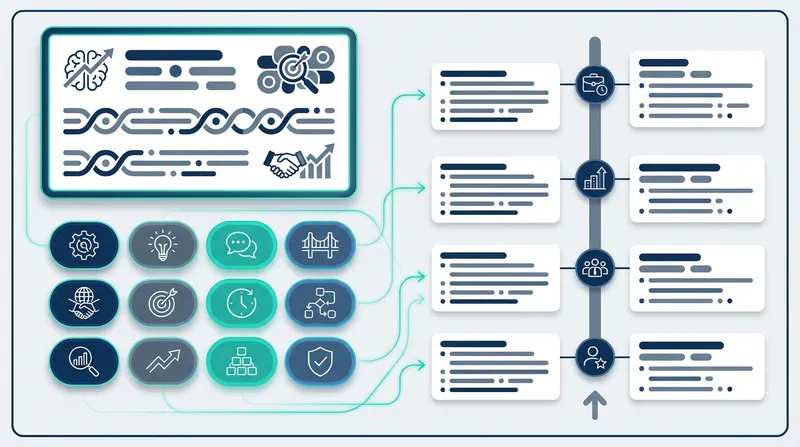
The hybrid resume (also known as a combination resume) is the ultimate solution for career changers. It provides the best of both worlds. It highlights your transferable skills at the top of the page while maintaining a clear, chronological work history below.
According to career experts at the University of Pennsylvania, a combination resume format is ideal for career changers. It places equal emphasis on both transferable skills and work experience, starting with a clear objective and skills summary.
Here is how to structure your hybrid resume:
- Contact Information: Keep it simple (Name, Phone, Email, LinkedIn).
- Professional Summary: A targeted paragraph explaining your pivot.
- Core Competencies (Transferable Skills): A bulleted list of 6 to 9 highly relevant skills.
- Professional Experience: Your chronological work history, but with bullet points translated for the new industry.
- Education and Certifications: Highlight any new courses relevant to your target role.
How to Write a Career Change Resume Summary
Your professional summary is your elevator pitch. This is where you control the narrative. Do not leave it up to the recruiter to guess why a teacher is applying for a data analyst position. Address the elephant in the room immediately.
Research from Harvard Business School recommends addressing the career change transparently in the Professional Summary. This positions the transition as a strategic advantage rather than a liability.
A strong summary for a career change includes three elements:
- Who you are (your current professional identity).
- What you bring to the table (your top transferable skills).
- Where you are going (your target role and how you will add value).
Example: "Detail-oriented operations manager with 5 years of experience in logistics and supply chain optimization. Recognized for streamlining processes and reducing costs by 15 percent. Now transitioning into project management within the tech sector, bringing a proven track record of cross-functional team leadership, risk mitigation, and agile problem-solving to deliver complex software implementations on time and under budget."
Highlighting Transferable Skills (The Secret Weapon)
Transferable skills are the bridge between your old career and your new one. But many job seekers confuse transferable skills with basic soft skills.
"Hard-working" and "team player" are generic soft skills. "Stakeholder management," "budget forecasting," and "client onboarding" are highly valuable transferable skills.
Guidance from Jobscan notes that a dedicated skills section is the most straightforward way to showcase transferable skills, with the average U.S. resume listing between 6 and 20 targeted skills.
When building your Core Competencies section, look closely at the target job description. If the new role requires "vendor negotiation" and you used to negotiate with suppliers in your retail job, list "Vendor Negotiation" prominently. If you need help identifying these, JobSparrow's Master Profile acts as a centralized database for your career. Our AI analyzes your Master Profile and automatically suggests the most impactful transferable skills for your specific target job.
Formulaic Bullet Point Translation (Before and After Examples)
This is where most career changers fail. They leave their old bullet points exactly as they were, forcing the recruiter to do the translation work. You must rewrite your past experience using a specific formula: Action Verb + Transferable Skill + Result.
According to hiring insights from Indeed, you should add brief bullet points to each past employment entry that focus specifically on the skills used rather than just job duties. This makes past experience appealing to employers in a new field.
Let us look at how to translate non-relevant achievements into highly relevant ones.
Example 1: Teacher transitioning to Corporate Trainer
- Before: "Taught 5th-grade math to a class of 30 students."
- After: "Designed and delivered engaging instructional materials to audiences of 30+ individuals, resulting in a 20 percent improvement in standardized testing metrics."
Example 2: Hospitality Worker transitioning to IT Helpdesk
- Before: "Dealt with angry customers at the front desk and fixed booking errors."
- After: "Resolved complex client escalations in a high-pressure environment, utilizing CRM software to troubleshoot system errors and maintain a 98 percent customer satisfaction rating."
Example 3: Retail Store Manager transitioning to Human Resources
- Before: "Hired new cashiers and made the weekly shift schedules."
- After: "Spearheaded full-cycle recruitment and onboarding for a team of 15+ employees, optimizing workforce scheduling to reduce labor costs by 10 percent while maintaining operational efficiency."
Struggling to rewrite your bullets? Upload your CV for a free recruiter-lens diagnosis and see exactly what is holding you back. Start your free diagnosis.
The Migrant Career Pivot: Translating Overseas Experience (AU, NZ, UK Focus)
Migrating to a new country like Australia, New Zealand, or the UK is already a massive life change. Trying to pivot careers at the same time adds an extra layer of complexity. Local recruiters may not recognize your previous employers, and they might be skeptical of how your overseas experience translates to the local market.
To beat this bias, you must contextualize your overseas experience. If you worked for a massive telecom company in your home country that no one in Australia has heard of, add a brief bracketed description next to the company name.
Example: "Marketing Manager, TechCorp (Top 3 software provider in Southeast Asia with $50M annual revenue)."
This instantly builds credibility. Furthermore, you must ensure your resume aligns with local formatting standards. In Australia and New Zealand, resumes are typically 2 to 3 pages long and require a highly detailed breakdown of achievements, unlike the strict one-page limit common in the US. For UK applicants, CVs typically run 2 pages, use British English spelling, and do not include photos.
If you are navigating visa transitions, read our guide on From WHV to Sponsorship: The 2026 Guide to the 417/462 to 482 Visa Transition.
Additionally, if you are struggling to land interviews without local references, check out our comprehensive guide on How to Get a Job in Australia Without Local Experience (2026 Guide).
Translating Military Experience to a Civilian Resume
Veterans form a massive portion of the career-changing audience. The military provides world-class training in leadership, logistics, and crisis management. However, military jargon is a foreign language to private-sector recruiters.
If a hiring manager reads "MOS 88M, SGT, B Co 1-503rd IN," they will likely skip to the next resume. You must demilitarize your document.
Experts at Texas State University provide highly specific, actionable examples of how to translate military jargon into civilian terms. They recommend changing "Soldiers" to "staff or employees" and "Uniforms and weapons" to "supplies or equipment."
Instead of "Commanded a platoon of 40 infantrymen," write "Directed and mentored a cross-functional team of 40 personnel, managing $2M in operational assets and ensuring 100 percent compliance with safety protocols."
Handling Temp Work and Clarifying Job Titles
Many career changers take on contract or temp work to gain initial experience in their new field. This is a brilliant strategy, but it can make your resume look scattered. You must format this correctly to avoid looking unreliable. Learn exactly how to do this in our guide on How to List Temp Work and Contracting on Your Resume (Without Looking Like a Job Hopper).
A common question career changers ask is whether they can slightly alter their past job titles to sound more relevant to the new industry. The answer is nuanced. You cannot lie, but you can clarify. For the full recruiter perspective on this, read Can You Change Your Job Title on a Resume? A Recruiter's Guide to Background Checks & ATS.
How JobSparrow Makes Career Pivots Effortless
Navigating a career transition is exhausting. You are already learning a new industry, networking, and upskilling. You should not have to spend hours manually tailoring your resume for every single application.
This is where JobSparrow changes the game. We are not just a resume builder. We are an AI career advisor that coaches you from diagnosis to offer. You can start with a free CV diagnosis and unlock the full Offer Path for a one-time flat fee of $129, with no ongoing subscriptions.
- The Master Profile: The first thing most career changers tell us is that they do not know where to start. That is why we built the Master Profile. It acts as a single place to store every skill, role, and achievement you have ever had. Import your existing CV in seconds, and our AI coach begins identifying the gaps and vague descriptions that are costing you interviews.
- The Gap Filler: Most career changers undersell themselves. Our Gap Filler identifies missing metrics or vague descriptions and walks you through targeted Q&A to fix them.
- The Instant Resume: Not sure which roles to target in your new field? Our instant resume feature analyzes your Master Profile and recommends the best-fit roles for your background. It then generates a polished resume instantly, which is perfect when you are still exploring your pivot options.
- Job-Specific Tailoring: When you find a specific job you want, our job-specific resume tailoring feature takes over. It analyzes the job description and selects the most relevant transferable skills from your Master Profile, generating a laser-focused resume in seconds.
- Intelligent Cover Letters: Writing a cover letter explaining a career pivot is daunting. Our cover letter generator creates personalized narratives that seamlessly explain your transition. Read more about Why Traditional Templates Are Ineffective in 2026 (Use AI Instead).
- AI Mock Interviews: Once your tailored resume lands you the interview, the Prepare and Close stages of the Offer Path are waiting for you. Practice your narrative with our AI mock interviews. It simulates real interview scenarios tailored to your target role, helping you build confidence. See A Recruiter's Take: Why You Need an AI Voice-Based Mock Interview Tool.
Finally, a career pivot requires a high volume of targeted applications. You cannot rely on a messy Excel sheet to track your progress. Our job application tracking dashboard gives you a command center for your entire search. Learn more in our article, Ditch the Spreadsheet: Why You Need a Dedicated Job Application Tracker in 2026.
Ready to land more interviews in your new field? Start with a free diagnosis today to see your recruiter-lens score and the exact gaps costing you interviews.
Frequently Asked Questions
How do I write a resume with no experience in the new field?
Focus entirely on transferable skills, relevant projects, and parallel achievements. Use a hybrid resume format that places your core competencies at the top. Highlight any independent coursework, certifications, or volunteer work that relates directly to the new industry, proving your proactive commitment to the pivot.
Should I use a functional resume for a career change?
No. Recruiters and hiring managers strongly dislike functional resumes because they obscure your work history, making it look like you are hiding employment gaps or lack of tenure. Furthermore, Applicant Tracking Systems (ATS) struggle to parse them. Always use a hybrid (combination) resume format instead.
How do I explain a career change in my resume summary?
Be transparent and confident. State your current professional background, highlight your top 2-3 transferable skills, and clearly state the new role you are targeting. Frame your unique background as a strategic advantage (e.g., bringing a fresh perspective or cross-functional expertise) rather than a weakness.
How far back should a career change resume go?
Generally, you should only go back 10 to 15 years. However, if you have older experience that is highly relevant to your new career path, you can include it in a brief "Previous Relevant Experience" section without detailing every bullet point. This keeps your resume concise while still capturing essential, targeted information.
What are the best transferable skills to put on a resume?
The best transferable skills depend entirely on the target job description. However, universally high-demand skills include project management, stakeholder communication, budget forecasting, data analysis, and cross-functional leadership. Always mirror the specific language used in the job posting to ensure ATS optimization.
Tags
Keep reading
Recommended articles.
career change · resume tips
The Master Profile Strategy: How to Write a Career Transition Resume Without Erasing Your Past
Learn how to write a career change resume that highlights transferable skills and preserves your seniority using the hybrid format and master profile strategy.
career change · resume summary
Career Change Resume Summary & Objective Examples (2026 Guide)
Write a career change resume summary that passes ATS and gets recruiter attention with fill-in-the-blank templates and real examples for 2026. Try free.
career change · salary negotiation
How to Change Careers Without Taking a Pay Cut: A Recruiter's Playbook for Transferable Skills
Learn how to change careers without a pay cut. Use adjacent pivot strategies and AI tools to reposition your transferable skills. Start your free diagnosis today.